






Definition and Purpose of Form 8888
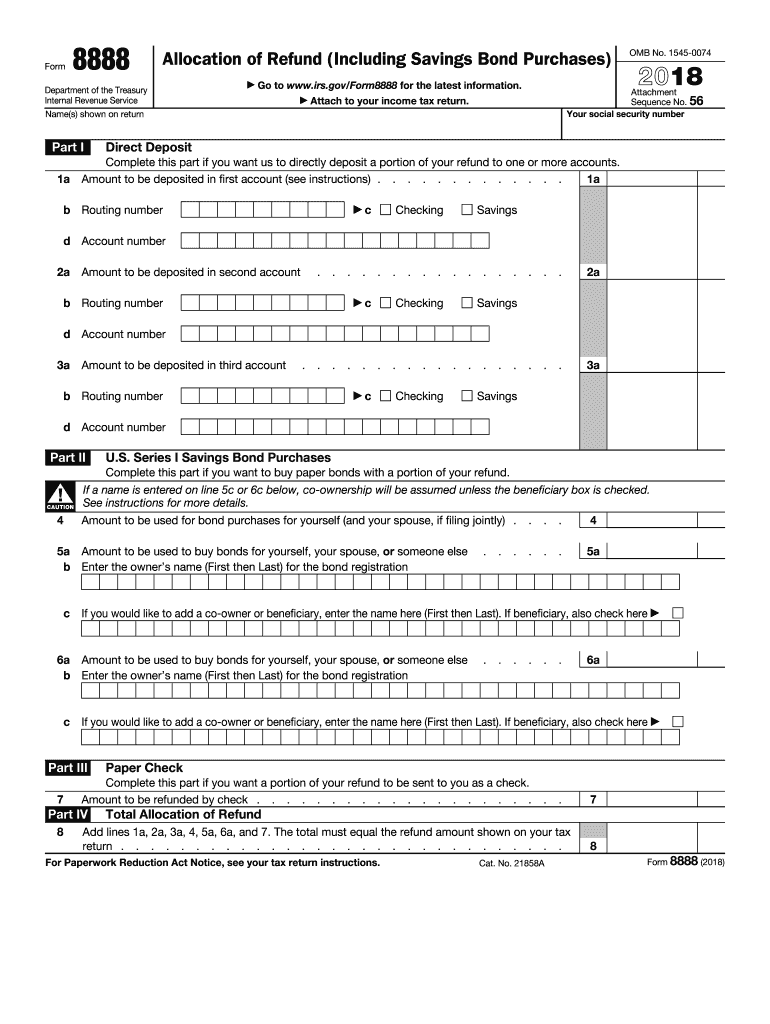
Form 8888 is a tax form used by individuals who wish to allocate their federal income tax refund across multiple financial accounts. This form enables taxpayers to designate portions of their refund for direct deposit into up to three separate accounts, such as checking accounts, savings accounts, and Individual Retirement Accounts (IRA). Additionally, Form 8888 offers an option for purchasing U.S. Series I Savings Bonds, which can be an appealing method for saving and investing a portion of the tax refund.
Key Features of Form 8888
- Multiple Account Deposits: Taxpayers can split their refund into three accounts, which allows for diversified financial management.
- Investment Allocation: Offers the ability to invest in I Bonds, providing a low-risk investment backed by the U.S. government.
- Direct Deposit: Enhances security and efficiency by eliminating the need for receiving paper checks.
How to Use Form 8888
Utilizing Form 8888 involves several steps to ensure accurate allocation of your tax refund. It’s essential to complete this form correctly to prevent any issues with receiving your funds.
Step-by-Step Instructions
- Download the Form: The form can be obtained from the IRS website or through tax filing software.
- Provide Personal Information: Fill in your name, social security number, and other identifying details.
- Designate Accounts: Enter the routing numbers and account numbers of the financial institutions where you want your refund deposited.
- Specify Amounts: Allocate specific amounts to each account, ensuring the total equals your expected refund.
- Submit With Tax Return: Attach Form 8888 to your tax return before submission, whether it's filed electronically or by mail.
Steps to Complete Form 8888
Proper completion of Form 8888 requires attention to detail. Here is a detailed look at the necessary steps:
Key Fields to Fill Out
- Part I: Enter your details, including name and social security number, ensuring accuracy since this information links the form to your tax return.
- Part II: Allocate your refund. Specify the amount for each account and provide the necessary bank details including routing and account numbers.
- Part III: If purchasing I Bonds, indicate the amount of the refund to be used for the bond purchase.
Verification and Submission
- Review all entries for accuracy before submission.
- Submit the completed form along with your tax return by the IRS filing deadline.
Why Utilize Form 8888
Form 8888 offers several benefits that can enhance the financial management of your tax refund. Here’s why one might consider using it:
Benefits of Using Form 8888
- Financial Planning: Directing funds to multiple accounts helps in managing financial goals effectively.
- Security: Direct deposit reduces the risks associated with check theft or loss.
- Time-Saving: Eliminates the wait time associated with processing paper checks.
Important Terms Related to Form 8888
Understanding specific terms related to Form 8888 can help in accurately completing the form:
- Routing Number: A nine-digit code used to identify the financial institution during a transaction.
- Account Number: A unique number associated with your specific account at a financial institution.
- Direct Deposit: An electronic transfer of funds directly into a bank account.
Legal Use of Form 8888
Using Form 8888 correctly is critical to comply with IRS regulations. Here are key legal considerations:
Compliance Requirements
- Correct Information: Ensure accurate bank information to avoid misdirected funds.
- IRS Approval: Use the form solely for intended purposes, such as splitting refunds or investing in bonds.
IRS Guidelines for Form 8888
Adhering to IRS guidelines is essential for utilizing Form 8888 effectively:
General IRS Instructions
- Accuracy: Ensure all details match your tax return.
- Submission: Submit the form alongside your 1040 or 1040-SR tax return.
- Refund Allocation: Total allocation must match the expected refund to avoid processing delays.
Filing Deadlines and Important Dates
Meeting filing deadlines is crucial to ensure timely processing of your tax return and refund allocation:
Key Dates
- Tax Filing Deadline: Typically April 15; always verify the current year's deadline.
- Extended Deadline: If applicable, submit by the later date provided by the IRS if an extension is filed.
Each of these sections offers an insightful look into the utility and processes surrounding Form 8888, addressing its comprehensive application for managing tax refunds effectively.