







Definition and Meaning
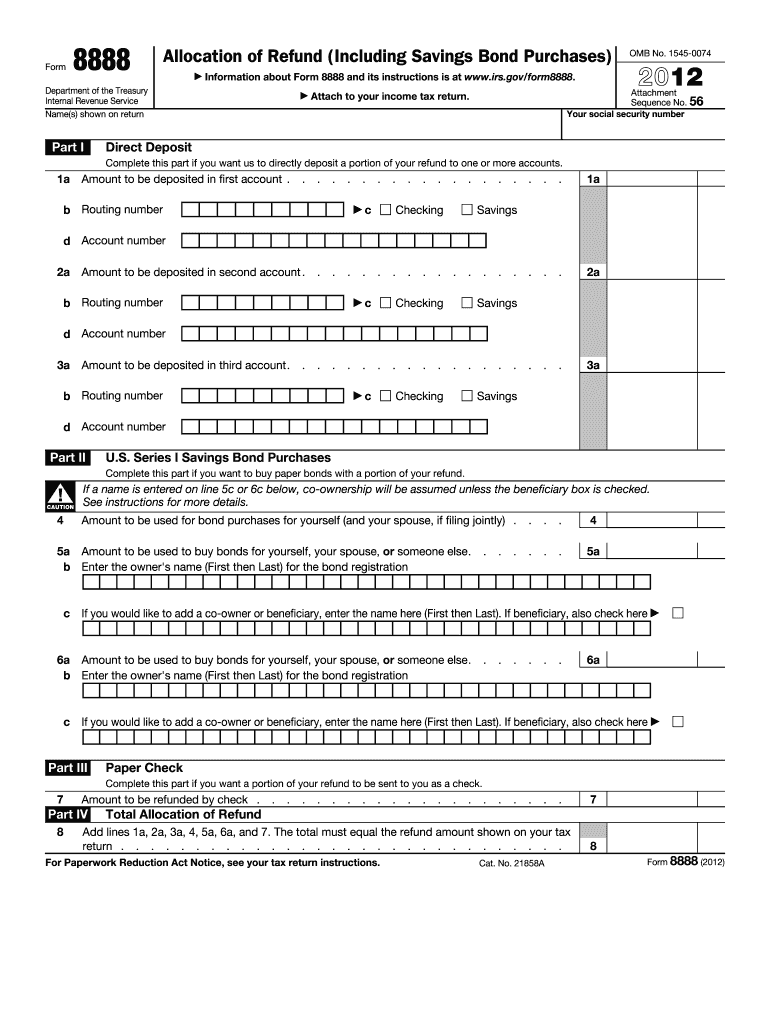
Form 8888 is utilized by taxpayers to allocate their federal income tax refund into multiple accounts or to purchase U.S. Series I Savings Bonds. This form empowers taxpayers to have up to three bank accounts for the distribution of their refund. It also includes a mechanism for purchasing savings bonds, making it a versatile tool for financial planning. The use of Form 8888 can help taxpayers manage their refunds efficiently, directly depositing funds into savings or investment accounts, thereby promoting financial discipline and planning.
How to Use the 2012 IRS Form 8888
-
Obtain the Form: Form 8888 can be downloaded from the IRS website or obtained from a tax preparation service.
-
Complete Personal Information: Enter your name, Social Security Number, and other pertinent personal information as required at the beginning of the form.
-
Direct Deposit Allocations:
- Specify bank account details, including account and routing numbers, for each account you wish to credit.
- Allocate the dollar amount to be deposited in each account. Ensure the total does not exceed your refund amount.
-
Savings Bonds:
- Indicate the amount to be used for Series I Bonds purchase, if desired, and provide necessary details for the bond issuance.
Steps to Complete the 2012 IRS Form 8888
-
Personal Details: Fill in your name and Social Security Number.
-
Refund Distribution:
- Section I: Provide details for the direct deposit accounts. Include bank name, account type (checking or savings), routing number, and account number.
- Section II: Specify if part of the refund will be allocated to Series I Savings Bonds.
-
Verification: Double-check all allocated amounts and account details to avoid errors and ensure the total refund allocation matches your refund amount.
-
Submission: Attach the form to your tax return and submit it via your preferred method (e-file or paper filing).
Key Elements of the 2012 IRS Form 8888
- Account Information: Account types, numbers, and routing details must be accurately entered.
- Refund Allocation: Ensure that the total allocation matches the refund for proper processing.
- Series I Bonds Purchase: Clearly indicate investment in savings bonds if chosen.
Important Terms Related to 2012 IRS Form 8888
- Direct Deposit: Electronic transfer of your tax refund into a bank account.
- Routing Number: A nine-digit number used to identify your bank.
- Series I Savings Bonds: A type of U.S. savings bond that earns interest based on a combination of a fixed rate and an inflation rate.
Who Typically Uses the 2012 IRS Form 8888
- Individual Taxpayers: Those looking to distribute their tax refunds across multiple accounts or purchase savings bonds.
- Taxpayers Planning for Savings: Individuals who wish to manage their future savings directly through their refund allocation.
- Financial Planners: Advisors who assist individuals in financial planning by optimizing refund allocations.


IRS Guidelines
- Adhere strictly to IRS instructions for filing Form 8888 to ensure timely and accurate refund deposits.
- Verify bank account details for accuracy to prevent refund delays.
- Use Form 8888 only for federal refunds; it cannot be used for state refunds.
Legal Use of the 2012 IRS Form 8888
- Security and Accuracy: Enter account information accurately to protect your refund’s security.
- Adherence to Federal Guidelines: Ensure compliance with IRS rules for distributing refunds or purchasing bonds using this form.
- Application for Federal Refunds: Reserve the use of this form for federal tax refund allocation, as stipulated by IRS regulations.
Filing Deadlines and Important Dates
- Tax Filing Season: Align the submission of Form 8888 with your annual tax filing deadline.
- Refund Processing Time: Account for the processing period, typically within 21 days for e-filed returns with direct deposit.
Examples of Using the 2012 IRS Form 8888
- Scenario 1: A taxpayer allocates part of their refund for immediate needs in a checking account and directs the remainder into a retirement savings account.
- Scenario 2: An individual uses the form to purchase Series I Savings Bonds for long-term investment purposes, thereby contributing to personal financial growth.
- Scenario 3: A married couple distributes their joint refund into accounts for vacation savings, child education costs, and an emergency fund.




