






Definition & Use of Form 945-A
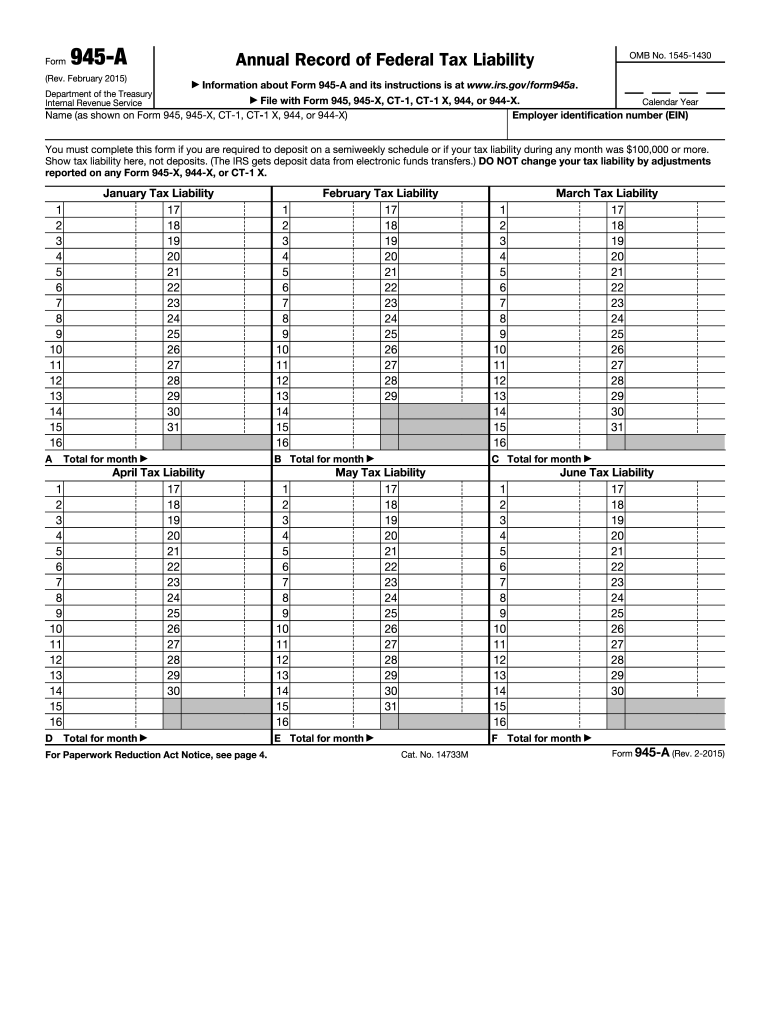
Form 945-A, Annual Record of Federal Tax Liability, is designed for employers in the United States who need to report federal tax liabilities. The form is used particularly by those on a semiweekly deposit schedule or who have a tax liability exceeding $100,000 in any month. It is employed in conjunction with other forms, such as Form 945, to ensure accurate reporting of federal tax liabilities.
Key Elements of Form 945-A
- Monthly Tax Liability Reporting: Captures tax liabilities based on payment dates, not deposit dates.
- Related Forms: Should be filed with a 945 form, CT-1, or 944.
- Correction of Errors: Includes instructions for rectifying any reporting inaccuracies from previous filings.
IRS Guidelines for Form 945-A
Filing Instructions
- Completeness: Ensure all sections are filled to avoid processing delays.
- Alignment with Other Forms: Must be consistent with Form 945 and other related forms.
- Accuracy: Double-check all figures to match your payroll records.
Required Accompanying Documents
- Payroll records for the reporting period.
- Previous filings if corrections are needed.
Steps to Complete Form 945-A
-
Gather Necessary Information:
- Verify all payroll records.
- Confirm the tax liabilities to report.
-
Complete Each Section:
- Enter liabilities for each month accurately.
- Make necessary corrections to previous entries.
-
Review and Submit:
- Ensure all data is accurate.
- Submit alongside Form 945 by the IRS deadline.
Important Dates and Deadlines
- Annual Filing Deadline: Typically aligns with Form 945 filing, due by January 31.
- Quarterly Liabilities: Report liabilities by the due date for each relevant quarter.
Obtaining Form 945-A
- IRS Website: Accessible as a downloadable PDF.
- Physical Copies: Request via IRS forms hotline or local IRS office.
Electronic Filing Options
- Many tax software solutions, such as TurboTax, support Form 945-A e-filing.
- Maintain digital copies for audit and review purposes.
Legal Implications of Form 945-A
Usage Compliance
- Ensures adherence to federal tax laws and regulations.
- Provides a paper trail in case of audits or disputes.
Penalties for Non-Compliance
- Accrued interest on unpaid liabilities.
- Possible fines for late submission or inaccuracies.
Who Uses Form 945-A
Business Entities
- LLCs and Corporations: Typically required to report using Form 945-A.
- Partnerships: Might need the form based on payroll and tax schedules.
Individual Scenarios
- Self-Employed: Occasionally relevant if payroll hits thresholds.
- Contractors: When employed by entities required to file.
Software Compatibility and Integration
Popular Software Options
- TurboTax and QuickBooks: Offer features for easy Form 945-A reporting.
- DocHub's Digital Tools: Facilitate editing and managing your records digitally.
Benefits of Digital Over Paper
- Efficiency: Quicker submission process and error-checking.
- Accessibility: Easier to store and retrieve digital records.
Examples of Using Form 945-A
Common Scenarios
- High Payroll Months: Essential for businesses experiencing unexpected profit spikes.
- Multiple Employees: Necessary when payroll responsibilities increase due to expanded operations.
Practical Usage
- Reviewing annual payroll changes can help avoid penalties and verify reported tax liabilities.
- Real-world cases highlight the importance of timely and accurate filing to prevent costly fines.
Conclusion: The Importance of Form 945-A
Form 945-A is indispensable for businesses required to report federal taxes under strict deposit schedules. By mastering the form's complexities and deadlines, organizations can ensure compliance with IRS regulations and mitigate potential legal and financial risks.