01. Edit your form online
Type text, add images, blackout confidential details, add comments, highlights and more.

Type text, add images, blackout confidential details, add comments, highlights and more.

Draw your signature, type it, upload its image, or use your mobile device as a signature pad.

Send it via email, link, or fax. You can also download it, export it or print it out.
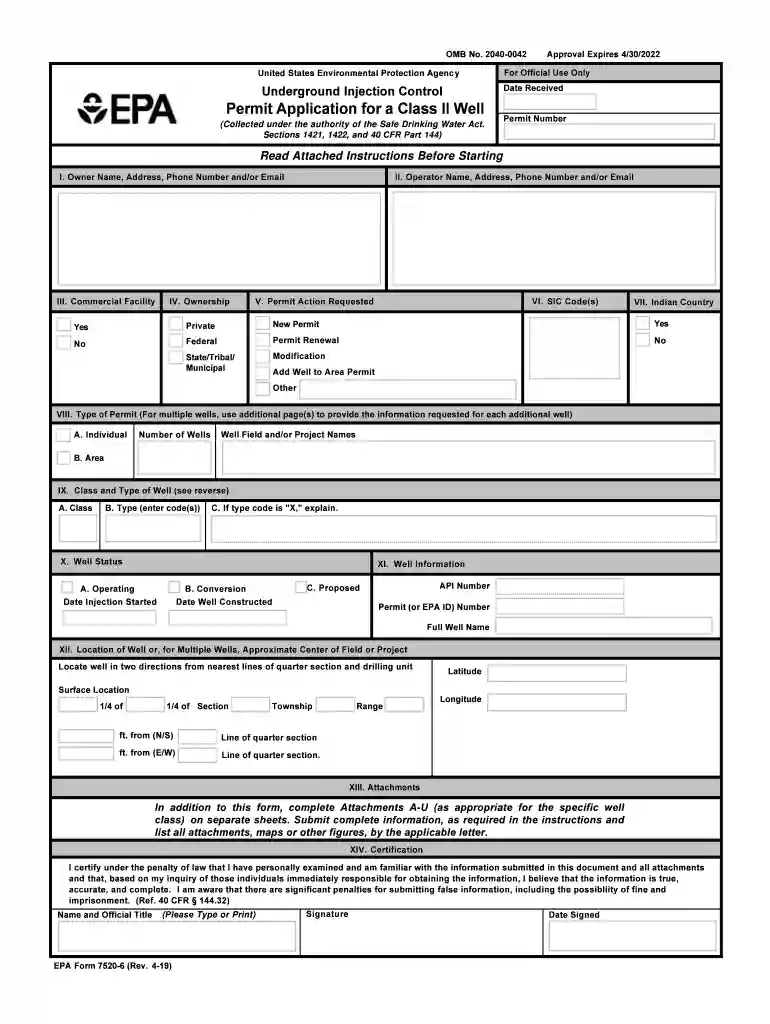
The EPA Form 7520-6 is an official document used to apply for a permit for a Class II well under the Underground Injection Control (UIC) program. Mandated by the Safe Drinking Water Act, this form is vital for ensuring that subsurface fluid injection activities do not contaminate underground sources of drinking water. The form comprehensively captures essential information about the well, including its location, the type of permit being requested, and various attachments that demonstrate compliance with environmental regulations.
Using the EPA Form 7520-6 involves a clear understanding of what is required for each section. Beginning with the applicant information, it is essential to provide accurate and thorough details. The form also requires descriptions of the well’s geological and geographical context, which necessitates technical precision to ensure compliance.
Completing the EPA Form 7520-6 involves several specific steps. Each component must be filled out accurately to avoid the risk of application rejection.
The form captures numerous elements critical for the issuance of a Class II well permit. Some of the notable sections include:
This form is a legal requirement under federal law for anyone looking to operate a Class II well. The legal implications of non-compliance can be severe, including potential fines and suspension of well operations.
Different states may have additional requirements or variations in processing the EPA Form 7520-6. It is important to review state-specific guidelines where the well is located.
Generally, this form is used by entities involved in the operation of oil and natural gas wells since these wells typically fall under Class II. This includes:


Failure to accurately complete and submit EPA Form 7520-6 can result in severe penalties. These may include:
We've got more versions of the EPA Form 7520-6 Underground Injection Control Permit Application for a Class II Well OMB No 2040-004 form. Select the right EPA Form 7520-6 Underground Injection Control Permit Application for a Class II Well OMB No 2040-004 version from the list and start editing it straight away!
At DocHub, your data security is our priority. We follow HIPAA, SOC2, GDPR, and other standards, so you can work on your documents with confidence.