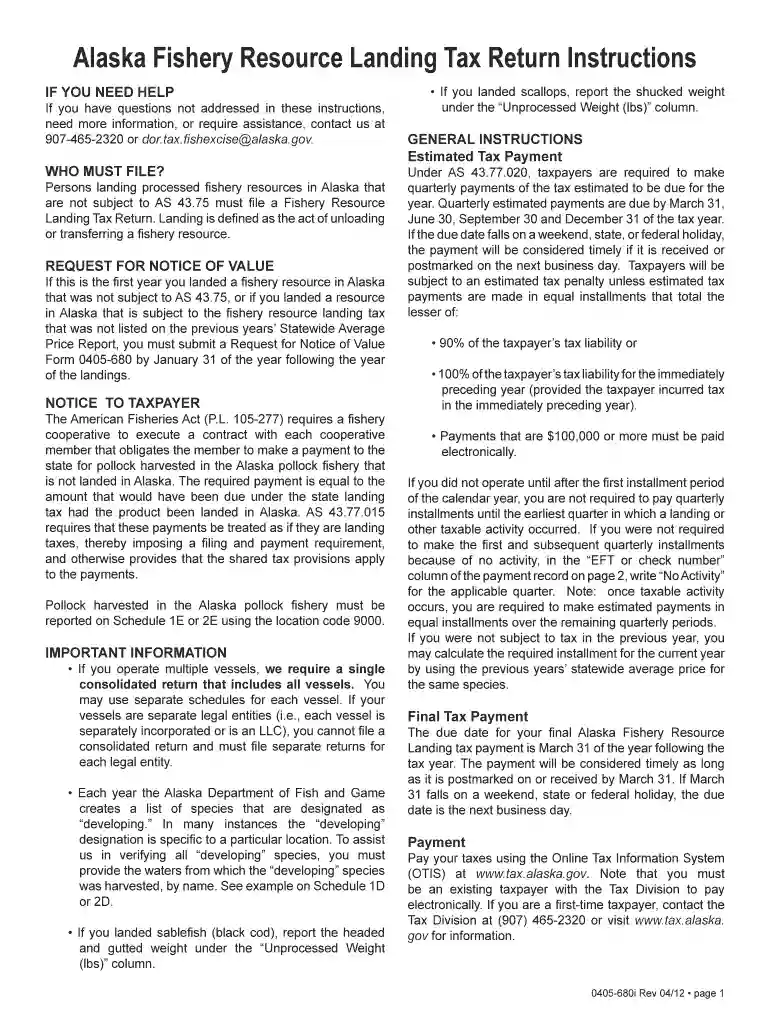
Definition & Meaning of the Alaska Fishery Resource Landing Tax
The Alaska Fishery Resource Landing Tax applies to individuals and businesses that manage or process commercial fishery resources in Alaska. This tax targets the economic benefits derived from fishing activities within the state's jurisdiction. Recognized under state tax legislation, it primarily seeks to capture revenue from the initial commercial landing of fish in Alaska, rather than subsequent sales or processing outside the state.
- Scope of the Tax: The tax encompasses a variety of fishery products that are landed in Alaska, irrespective of where they are harvested. Each landing event is a taxable occurrence under the state's fiscal policy.
- Purpose and Impact: This taxation framework helps fund state projects, including infrastructure improvements and community services. The intent is to ensure that the benefits of Alaska's natural resources are shared between commercial operators and the local communities.
How to Obtain the Alaska Fishery Resource Landing Tax Form
To comply with tax obligations efficiently, obtaining the relevant forms is essential. Here’s how you can acquire the necessary documentation:
- Online Access: Visit the Alaska Department of Revenue's website. The platform provides digital access to all state tax forms, including the fishery resource landing tax forms.
- Physical Copies: Forms can also be requested via mail. Contact the Alaska Department of Revenue to have a form mailed to your physical address.
- Third-Party Services: Various document management services, including cloud-based platforms, may offer downloadable versions of tax forms. Ensure compatibility and legitimacy by cross-verifying with the official Alaska Department of Revenue site.
Steps to Complete the Alaska Fishery Resource Landing Tax
Filling the Alaska Fishery Resource Landing Tax form requires accuracy and understanding. The following process can guide you through proper completion:
- Gather Required Information: Collect data related to the quantity and type of fishery resources landed. Ensure accurate measurement of fish weight and species identification.
- Fill Out General Information: Provide basic information about the business entity or individual filing the form, including tax identification numbers.
- Calculate Taxable Amount: Utilize the specified tax rates applicable to different fish categories. Calculate the total taxable value based on these rates.
- Enter Tax Liability: Input your tax liabilities on the form's designated sections. It’s essential for verifying the total amount due.
- Review for Accuracy: Double-check all entries for errors. Mistakes could lead to penalties or processing delays.
- Sign and Date the Form: Authorize the document by signing it. An unsigned form is considered incomplete and may be rejected.
- Submit the Form: Follow submission instructions, whether through electronic filing systems, mail, or in-person drop-off at a tax office.
Key Elements of the Alaska Fishery Resource Landing Tax
The Alaska Fishery Resource Landing Tax encompasses various critical elements:
- Tax Rates: Variable rates apply depending on the type of fish species and their ecological or commercial significance.
- Deductions and Credits: Specific deductions may be available, such as those for contributions to educational programs or credits for other state-imposed taxes.
- Species Codes: Accurate reporting of landings requires assigning correct species codes, which affect tax calculation.
State-Specific Rules for the Alaska Fishery Resource Landing Tax
Alaska has unique regulations pertaining to its fishery tax:
- Exclusive Jurisdiction: The state enforces its taxing authority within three nautical miles from its coastline. Beyond this, federal regulations might apply instead.
- Environmental Compliance: Adherence to environmental guidelines is paramount. Violations impacting sustainability may influence tax status or result in penalties.
Legal Use of the Alaska Fishery Resource Landing Tax
Compliance with legal norms fortifies the enforcement of the tax:
- Regulatory Compliance: Operators must ensure that all fisheries activities are conducted in accordance with local, state, and federal laws.
- Audit Trails: Maintain detailed records of fishery activities for audit purposes. Documentation provides evidence for tax reporting and can mitigate disputes during reviews.
Filing Deadlines and Important Dates
Meeting deadlines is crucial:
- Annual Submissions: Typically, forms are due annually, though the exact date can vary. Check with state notices for each fiscal period.
- Penalty Avoidance: Submit by the stipulated deadline to avoid late fees. Delayed submissions could incur financial or legal ramifications.
Required Documents for Submission
When filing, the following documents are typically needed:
- Harvest Records: Detailed landing and harvest reports detailing fish caught, including species and weight.
- Business Identification: Valid tax ID or business registration details.
- Payment Confirmation: For taxes paid previously, receipt or confirmation might be needed to support form entries.
Penalties for Non-Compliance
Failure to adhere to tax regulations can lead to:
- Financial Penalties: Late or inaccurate submissions may result in interest on the owed tax, alongside flat penalties.
- Legal Action: Repeated or severe non-compliance can trigger legal proceedings, potentially affecting the operator’s business licensing and operational clearance.
These comprehensive elements provide a structured understanding of the Alaska Fishery Resource Landing Tax, enabling individuals and businesses engaged in Alaskan fisheries to navigate necessary tax obligations effectively.