
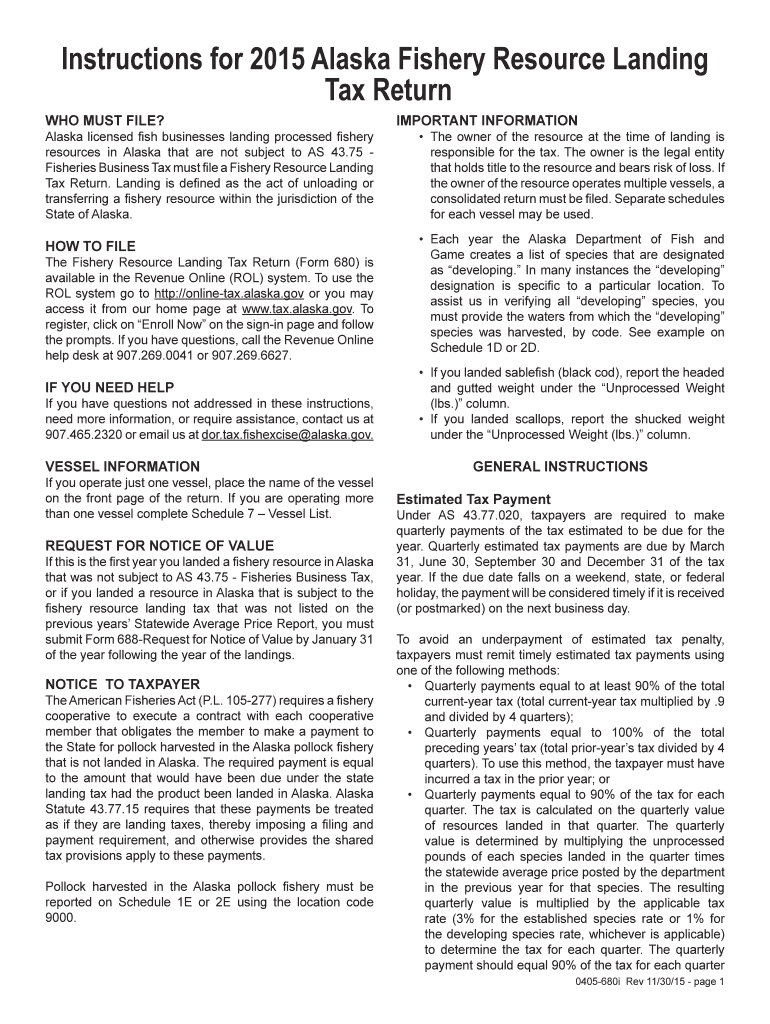







Definition & Meaning of the Alaska Fishery Resource Landing Tax
The Alaska Fishery Resource Landing Tax is a specific form of tax imposed by the state of Alaska on fish businesses that process and land fishery resources. This tax applies to entities involved in catching, processing, or purchasing fishery resources for commercial purposes within Alaska. The primary goal of this tax is to ensure that the state receives appropriate revenue from the exploitation of its natural fish resources. The tax is assessed based on the value of the fishery resources at the point of landing, accounting for the condition in which they are brought ashore.
How to Use the Alaska Fishery Resource Landing Tax
Utilizing the Alaska Fishery Resource Landing Tax involves understanding the requirements for filing and making accurate tax payments. Businesses must first determine whether they fall under the categories required to file, such as licensed fish processors or buyers. Once eligibility is established, they need to maintain detailed records of all transactions involving fishery resources, including quantities, species, and market value at landing. This information is crucial for completing the tax return form accurately. The form guides users through the necessary calculations to determine the tax owed based on the specific species codes and tax rates applicable.
Steps to Complete the Alaska Fishery Resource Landing Tax
-
Determine Eligibility: Verify whether your business activities fall within the scope of the Alaska Fishery Resource Landing Tax requirements.
-
Gather Necessary Documents: Collect all relevant financial records, including invoices, contracts, and receipts related to fishery landings.
-
Calculate Taxable Amounts: Using the records, calculate the total value of the landed fishery resources to ascertain the taxable amount.
-
Fill Out the Tax Return Form: Accurately complete the tax form, entering details about quantities, species, and the calculated tax amount.
-
Review and Submit: Double-check all entries for accuracy and completeness before submitting the form and payment by the specified deadline.
Important Terms Related to the Alaska Fishery Resource Landing Tax
- Landed Value: Refers to the market value of fishery resources when they are landed in Alaska.
- Species Codes: Identifiers used to categorize different types of fishery resources for tax purposes.
- Estimated Tax Payments: Advance tax payments based on expected liabilities, necessary to avoid penalties.
State-Specific Rules for the Alaska Fishery Resource Landing Tax
Alaska has implemented specific regulations for administering and collecting the Fishery Resource Landing Tax. These rules include the requirement for businesses to file estimated tax payments throughout the fiscal year. The tax rate and any applicable exemptions vary depending on the type of fishery resources and their market value at landing. Additionally, Alaska requires detailed reporting on the handling and processing of these resources, including any inter-state movement or export.
IRS Guidelines
While the Alaska Fishery Resource Landing Tax is primarily a state-level obligation, compliance with IRS guidelines is crucial for maintaining overall tax obligations. Businesses subject to this tax must ensure proper reporting of all income and related expenditures on their federal tax returns. The IRS provides supplemental guidance on how state taxes such as these should be documented and incorporated into federal filings.
Filing Deadlines and Important Dates
The Alaska Fishery Resource Landing Tax return must be filed annually, with specific deadlines that vary based on the fiscal year of the business. Typically, the state mandates submission within a set period following the end of the tax year. Businesses need to be aware of these deadlines to avoid penalties and interest on overdue taxes. Additionally, dates for estimated tax payments and any possible extensions must be adhered to avoid compliance issues.
Required Documents for Filing
Businesses are required to submit several documents when filing the Fishery Resource Landing Tax return:
- Transaction Records: Invoices, purchase orders, and sales receipts related to fishery catches and processing.
- Landings Reports: Detailed logs of landed resources, including species and quantities.
- Financial Statements: For substantiating the reported value of fishery resources.
Penalties for Non-Compliance
Failure to comply with the filing requirements for the Alaska Fishery Resource Landing Tax can result in significant penalties. These may include fines, interest charges on late payments, and additional penalties for underreporting tax liabilities. Non-compliance can also lead to audits and a subsequent requirement to furnish detailed records for review. In severe cases, persistent non-compliance may affect the business's ability to continue operating within the state.




