




01. Edit your form online
Type text, add images, blackout confidential details, add comments, highlights and more.

Type text, add images, blackout confidential details, add comments, highlights and more.

Draw your signature, type it, upload its image, or use your mobile device as a signature pad.

Send it via email, link, or fax. You can also download it, export it or print it out.
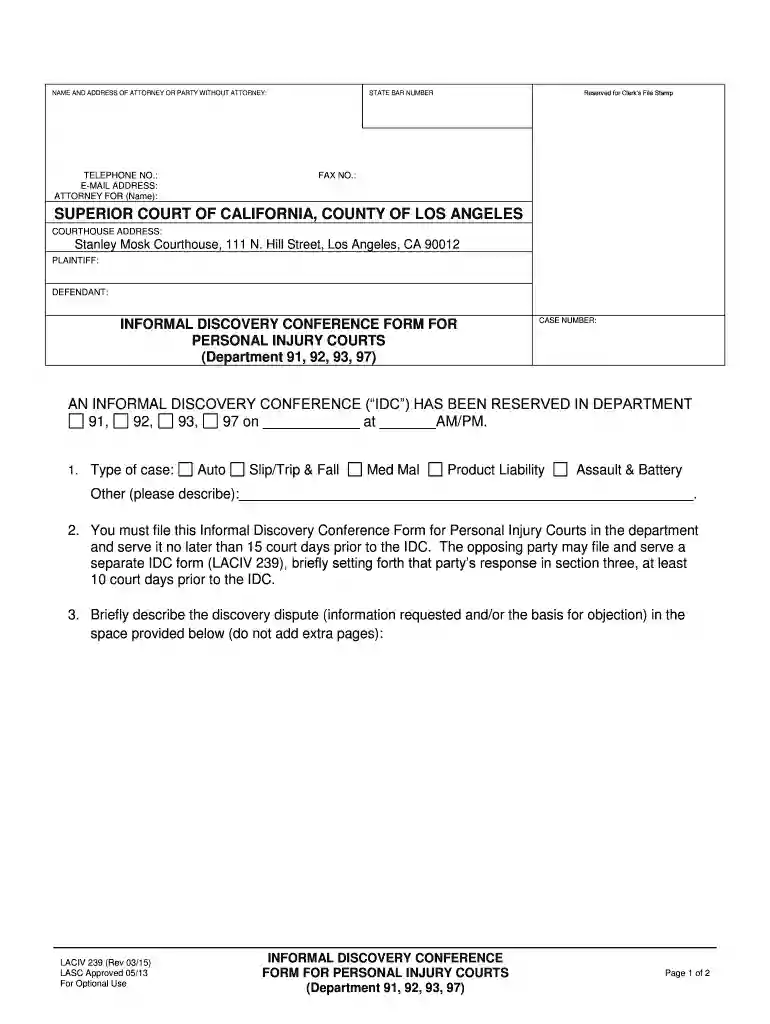
The section titled “NAME AND ADDRESS OF ATTORNEY OR PARTY WITHOUT ATTORNEY: TELEPHONE NO” is a standard component found in various legal documents and forms used within the United States. It is primarily designed to capture essential contact information for an attorney representing a party or for individual parties not represented by an attorney. This section is vital, as it ensures that all parties and pertinent court officials have the necessary contact information for communications regarding the legal matter at hand. It is a means of fulfilling legal and procedural requirements by documenting the presence or absence of legal representation.
When completing a form, this section must be filled out accurately to ensure proper correspondence. Here are the steps to follow:
Determine Representation Status: Ascertain whether you or the party in question is represented by an attorney. If you have legal representation, use the attorney’s information; if not, you must provide your contact details.
Provide Full Legal Name: Enter the full legal name of the attorney or party. For attorneys, include any titles or suffixes like “Esq.” or “Jr.” to maintain the professional standard.
Enter Full Address: Include the complete mailing address with street, city, state, and zip code. Ensure the address is current and easily accessible for receiving correspondence.
Include Telephone Number: Input a direct telephone number. If an attorney, this would typically be their office phone number; for unrepresented parties, a personal or work number is adequate.
Double-Check for Accuracy: Review all entered information for any typing errors or outdated details, as incorrect data can lead to communication delays or legal complications.
Obtaining this information depends on the party’s representation status.
To properly fill out this section, adhere to the following procedure:
Gather All Necessary Information: Before starting, ensure you have the complete and verified contact details at hand.
Fill in the Name: Clearly write or type the name without abbreviations unless necessary.
Enter the Address: Include all components of the address. Use official mailing standards to ensure deliverability.
Input the Telephone Number: Make sure this is a number where you or the attorney can reliably be reached during business hours.
Verify Your Entries: Cross-check all inputs against original sources or clients’/attorney’s business cards to avoid any miscommunication.
Failure to provide correct information can result in missed deadlines, ineffective service of documents, or even case dismissal.
This section is commonly used by various individuals and entities:


The primary components include:
Failure to comply with accuracy norms in this section can have several consequences:
Laws and procedural requirements can vary significantly between states.
Understanding these nuances across different jurisdictions ensures compliance and avoids procedural hiccups.
We've got more versions of the NAME AND ADDRESS OF ATTORNEY OR PARTY WITHOUT ATTORNEY: TELEPHONE NO form. Select the right NAME AND ADDRESS OF ATTORNEY OR PARTY WITHOUT ATTORNEY: TELEPHONE NO version from the list and start editing it straight away!
At DocHub, your data security is our priority. We follow HIPAA, SOC2, GDPR, and other standards, so you can work on your documents with confidence.
Defendants/Defendants attorney name, address, and telephone no. *For a defendant on active military duty, default judgment shall not be entered except as
If you do not have a lawyer, write your name, address, and phone number and put Self-represented on the Attorney for line on. If you do not have a case
An attorney appearing for a party in a case must file a notice of appearance containing the attorneys name, office address, and telephone numberunless the


