



01. Edit your 990 schedule e online
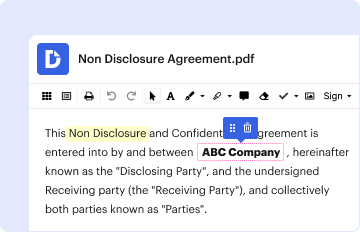
Type text, add images, blackout confidential details, add comments, highlights and more.

Type text, add images, blackout confidential details, add comments, highlights and more.
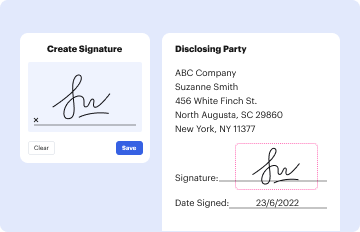
Draw your signature, type it, upload its image, or use your mobile device as a signature pad.
Send it via email, link, or fax. You can also download it, export it or print it out.
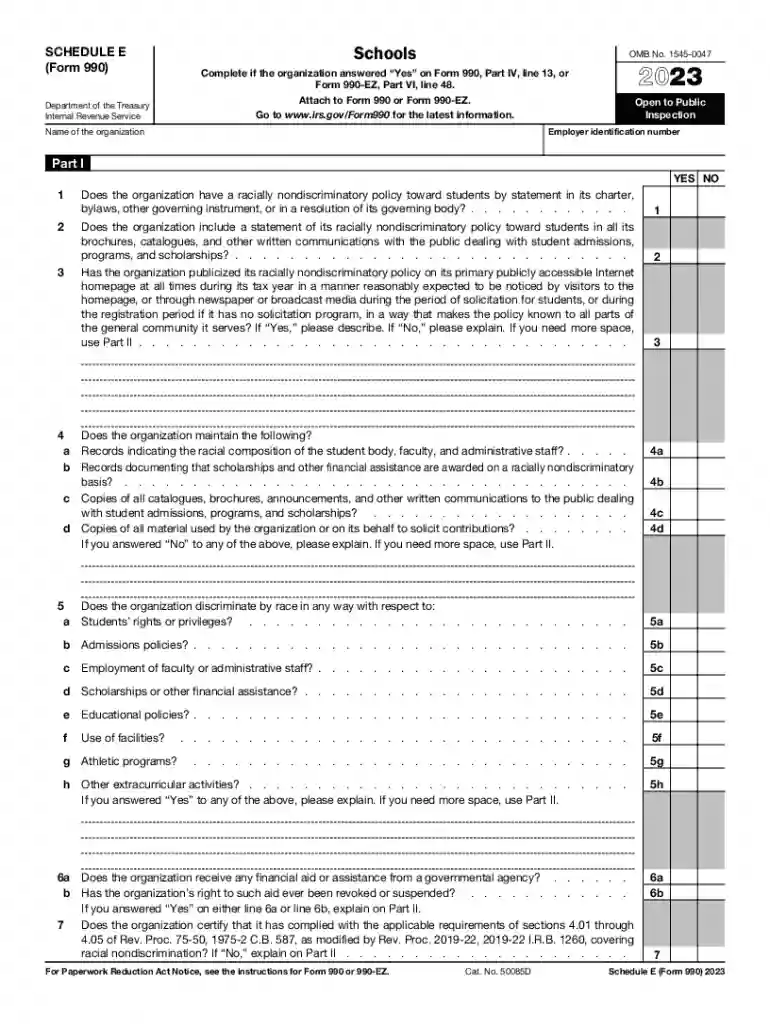
Schedule E (Form 990) is a necessary document for private educational institutions to demonstrate compliance with U.S. Internal Revenue Service (IRS) guidelines about racial nondiscriminatory policies. This form is crucial for both tax-exempt status management and transparency in school operations. Private schools must report their adherence to nondiscriminatory policies in student admissions, scholarship programs, and employment practices. This ensures not only regulatory compliance but also helps schools maintain an inclusive environment.
Key Aspects:
Schools must integrate Schedule E (Form 990) into their annual IRS submissions. This involves gathering and organizing the required documentation that relates to non-discriminatory policies and practices.
Steps for Use:
To access Schedule E (Form 990), schools can visit the IRS official website. The form can be downloaded, filled out, and submitted online, enhancing convenience and accessibility.
Methods to Obtain:
Completing Schedule E involves several precise steps that ensure all required information is correctly reported.
Detailed Steps:
Organizations must adhere to federal guidelines by using Schedule E to certify they do not engage in discriminatory practices. Misreporting or omission of required data could lead to significant legal penalties and impact the school's tax-exempt status.
Legal Implications:
Certain sections of the Schedule E are critical for demonstrating compliance and must be completed with due diligence.
Primary Elements:
Gathering appropriate documentation is essential for a legitimate and successful filing of Schedule E. Required documents substantiate the information provided on the form.
Important Documents:
Following IRS guidelines ensures that schools meet the standards for racially nondiscriminatory practices, impacting their federal tax status.
Guidance Focus:
By thoroughly understanding and addressing each of these areas, schools can effectively manage their obligations under the 2023 Schedule E (Form 990) Schools requirements, ensuring they support both community inclusivity and retain their tax-exempt status.
We've got more versions of the 990 schedule e form. Select the right 990 schedule e version from the list and start editing it straight away!
| Versions | Form popularity | Fillable & printable |
|---|---|---|
| 2024 | 4.7 Satisfied (48 Votes) | |
| 2023 | 4.4 Satisfied (36 Votes) | |
| 2022 | 4.1 Satisfied (53 Votes) | |
| 2021 | 4.8 Satisfied (72 Votes) | |
| 2020 | 4.3 Satisfied (97 Votes) | |
| 2019 | 4.2 Satisfied (103 Votes) | |
| 2018 | 4.2 Satisfied (24 Votes) | |
| 2017 | 4.4 Satisfied (248 Votes) | |
| 2016 | 4.4 Satisfied (181 Votes) | |
| 2015 | 4.3 Satisfied (169 Votes) |
At DocHub, your data security is our priority. We follow HIPAA, SOC2, GDPR, and other standards, so you can work on your documents with confidence.
Paperwork Reduction Act Notice, see the Instructions for Form 990 or 990EZ. Cat. No. 50085D. Schedule E (Form 990) (2023). Page 38. Schedule E (Form 990) (2023).Read more
Purpose of Schedule. Schedule E (Form 990) is used by an organization that files Form 990 or. 990-EZ to report information on private schools. Who Must File.Read more


