







Understanding the ST Form
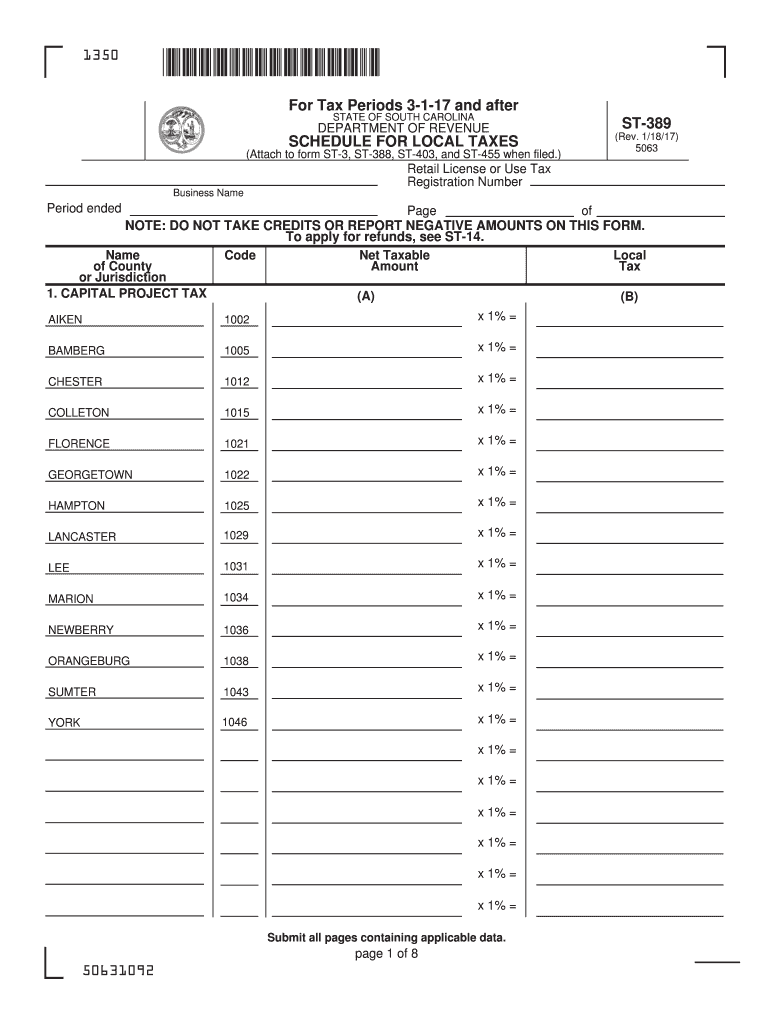
The ST-389 form, a tax reporting document, is issued by the South Carolina Department of Revenue. It is designed for reporting local taxes related to retail sales and use. This form covers various local taxes such as Capital Project Tax, School District Tax, Transportation Tax, Catawba Tribal Tax, and Tourism Development Tax. It includes sections for claiming deductions and exemptions while also providing codes specific to counties and municipalities. It is crucial to follow the guidelines meticulously, like refraining from reporting negative amounts and using a separate form (ST-14) for refunds.
How to Use the ST Form
Using the ST-389 form requires an understanding of local taxation. Users should accurately report applicable local sales and use taxes while adhering to the instructions provided for each tax type. Details regarding allowable deductions and exemptions must be meticulously filled out to ensure compliance and accuracy. The form also requires listing sales data that corresponds to designated county or municipal codes, which are essential for correct processing by the Department of Revenue.
Navigating the Form Structure
- Section Headers: Start with identifying information like name, address, and tax identification number.
- Sales Data: Enter gross sales data, indicating whether taxes apply and noting any deductions.
- Deductions and Exemptions: Detail any applicable reductions which must align with legal guidelines.
- County and Municipality Codes: Ensure all local taxes are correctly attributed using provided location codes.
Steps to Complete the ST Form
- Review Instructions: Begin by thoroughly reading the form instructions to understand which sections are applicable.
- Gather Necessary Information: Collect all sales records, tax identification numbers, and documentation for deductions.
- Fill Out Identification Sections: Enter basic business and taxpayer information to ensure the form is correctly attributed.
- Enter Sales Data: Carefully record all sales transactions, applying correct local tax codes.
- Apply Deductions: List any exemptions and allowable deductions, supported by appropriate documentation.
- Check for Accuracy: Review all entries for accuracy and completeness.
- Submit the Form: Follow submission guidelines, which can be through mail, in-person, or online if the service is available.
Who Typically Uses the ST Form
This form is predominantly used by retail businesses operating within South Carolina. Companies engaged in the sale of goods or services subject to local sales and use taxes must submit this form. Businesses across various industries, such as retail stores, service providers, and online retailers fulfilling orders locally, utilize this document to ensure compliance with South Carolina tax laws.


Legal Use of the ST Form
The form must be completed in accordance with South Carolina state tax regulations to ensure lawful tax reporting. Users must ensure all provided information is truthful and accurate. Misrepresentations or omissions may result in penalties or audits. The Department of Revenue outlines detailed requirements for allowable exemptions and deductions, which must be comprehensively followed.
Important Terms Related to the ST Form
- Capital Project Tax: A levy used to fund local infrastructure projects.
- School District Tax: Taxes dedicated to funding public education at the district level.
- Transportation Tax: A tax imposed to support local transportation projects.
- Exemptions: Allowances that reduce taxable sales, governed by specific criteria stipulated by tax regulations.
Key Elements of the ST Form
The form includes various sections crucial for accurate tax reporting:
- General Instructions: Offers guidance on how to correctly complete each section.
- Sales Reporting: Encompasses gross sales, taxable sales, and deductions segments.
- Local Tax Codes: Provides a comprehensive list of codes corresponding to different tax districts.
- Certification Section: Requires an authorized signature to validate the submitted information.
Form Submission Methods
The South Carolina Department of Revenue accepts form submissions through traditional mail and online platforms where available. Submitting online can expedite processing and improve accuracy by reducing manual entry errors. Users need to ensure submissions are timely and verify receipt with the department to prevent any late filing penalties.
Penalties for Non-Compliance
Failure to properly complete or submit the ST-389 form may result in penalties issued by the Department of Revenue. These can include financial fines, interest on unpaid taxes, or further legal action in cases of significant non-compliance. Businesses should take care to meet all deadlines and ensure the accuracy of their tax reporting to avoid these consequences.




