







Definition and Purpose of the Commercial Permit Application
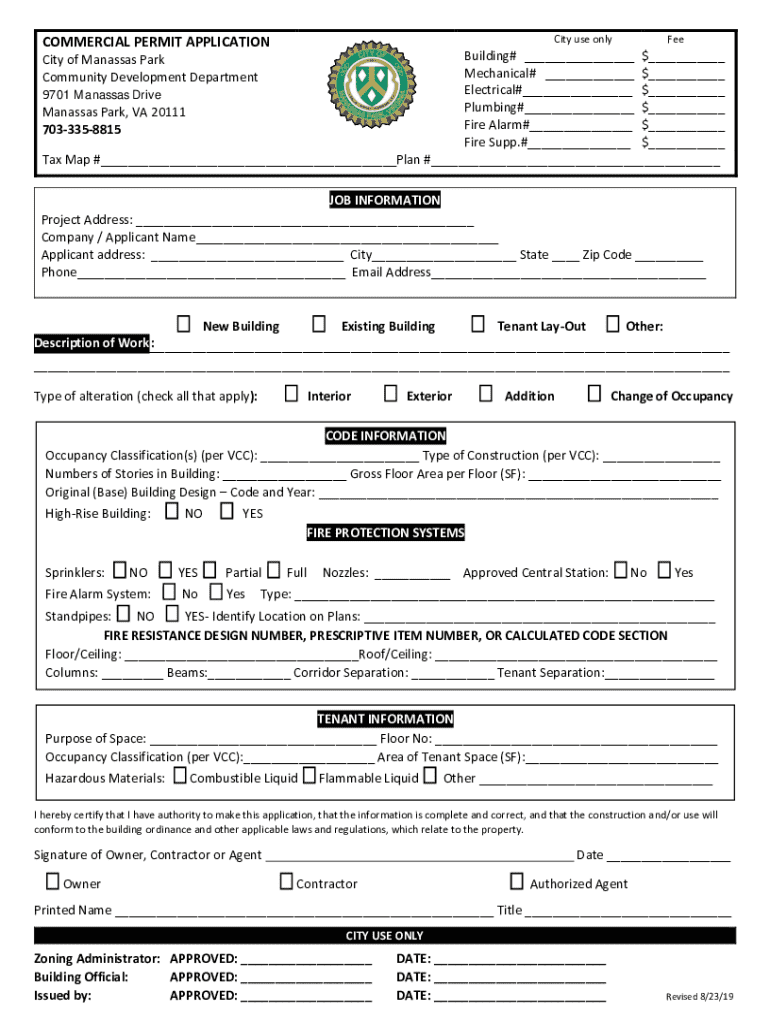
The Commercial Permit Application is a vital document required for construction projects within specific jurisdictions such as the City of Manassas Park. It serves as a formal request to local authorities for permission to start or modify construction activities on a business site. Its primary aim is to ensure that all construction projects comply with local building codes, zoning laws, and health and safety standards. This application provides a comprehensive overview of the project, including information on the job scope, code compliance, contractor details, and trade responsibilities. By obtaining this permit, stakeholders can proceed with their projects while minimizing legal and safety risks.
Steps to Complete the Commercial Permit Application
Completing the Commercial Permit Application involves several detailed steps that ensure accuracy and completeness. Here’s a step-by-step guide for applicants:
- Gather Required Information: Collect all necessary project details, including job information, contractor details, and specific trade responsibilities.
- Understand Compliance Requirements: Review relevant local building codes and regulations applicable to your project.
- Fill Out the Application: Input accurate information into each section of the form, particularly on compliance and contractor details.
- Attach Supporting Documents: Submit any required supplementary documentation, such as blueprints or legal approvals.
- Certification and Signatures: Certify the accuracy of the information provided and ensure all required signatures are obtained.
- Review: Double-check all entries for completeness and accuracy before submission.
- Submit the Application: Follow the designated submission method, be it online, mail, or in-person delivery to the appropriate authority.
Key Elements of the Commercial Permit Application
Several crucial elements form the backbone of the Commercial Permit Application, each serving a unique function in the application process:
- Job Information: Provides specific details about the construction project, including its scope and objectives.
- Code Compliance: Includes sections to demonstrate adherence to local building standards and regulations.
- Fire Protection Systems: Outlines any fire control systems to be implemented, reflecting the safety measures in place.
- Tenant Information: Identifies the property’s current or future occupants, relevant for assessing project impact.
- Contractor Details: Lists information about the contractors or subcontractors responsible for various project components.
- Trade Responsibilities: Specifies the tasks assigned to different trades, such as electrical, mechanical, or plumbing work.
How to Obtain the Commercial Permit Application
Acquiring the Commercial Permit Application involves contacting the issuing authority, which for the city-specific case of Manassas Park, would be the city's building department:
- Online Access: Check the relevant city or county’s official website for a downloadable version of the form.
- In-Person Requests: Visit the local building department’s office to obtain a physical copy.
- Phone or Email Inquiry: Contact the department directly to request an application form via email or post.
Who Typically Uses the Commercial Permit Application
The Commercial Permit Application is primarily utilized by a range of stakeholders involved in the construction and real estate sectors:
- Property Developers: To secure permissions for new constructions or significant renovations.
- Contractors and Builders: To verify that their construction plans align with local regulations.
- Architects and Engineers: To ensure that their design plans meet safety and structural standards.
- Business Owners: When altering existing business premises that require construction work.
- Real Estate Agencies: When facilitating the sale or development of commercial properties.


Legal Use and Compliance of the Commercial Permit Application
The Commercial Permit Application ensures legal compliance and is used as a risk mitigation tool:
- Building Code Compliance: Ensures that the construction adheres to local codes, which might include particular permits for electrical and plumbing work.
- Zoning Regulations: Verifies that the project aligns with the designated land use for the area.
- Safety Standards: Confirms that all necessary safety protocols, such as fire protection systems, are integrated into the plan.
- Legal Validation: Acts as an official document sanctioned by municipal authorities, which holds legal standing should disputes or inspections arise.
State-Specific Rules for the Commercial Permit Application
While the application structure is similar across various jurisdictions, specific rules may vary:
- Local Variances: Some states or cities may require additional documentation or vary in the specifics of what must be included in an application.
- Processing Times: Approval durations can differ significantly depending on local demand and the project's complexity.
- Fee Structures: Application fees and other related charges may vary by location and size of the project.
- Environmental Regulations: Some areas may have additional environmental assessments or impact studies as part of the application.
Examples of Using the Commercial Permit Application
To provide further clarity, here are examples of scenarios where the Commercial Permit Application would be used:
- Office Building Renovations: A property owner plans to renovate an office building to modern standards, requiring structural changes and updated safety systems. The application will identify changes to be made, ensuring compliance with current codes.
- Retail Space Construction: A retailer wishes to build a new store in a developing area. The permit confirms that all architectural and engineering plans meet municipal standards before construction begins.
- Restaurant Fire System Installation: A restaurant decides to install a comprehensive fire protection system to increase safety. The application helps outline compliance against fire safety regulations, ensuring legal operability.
Leveraging the Commercial Permit Application correctly ensures that commercial projects progress smoothly and adhere to all necessary legal, safety, and operational standards.




