



01. Edit your form online
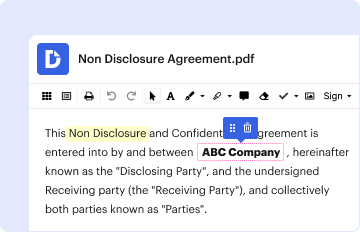
Type text, add images, blackout confidential details, add comments, highlights and more.

Type text, add images, blackout confidential details, add comments, highlights and more.
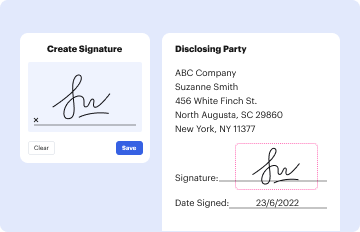
Draw your signature, type it, upload its image, or use your mobile device as a signature pad.

Send it via email, link, or fax. You can also download it, export it or print it out.
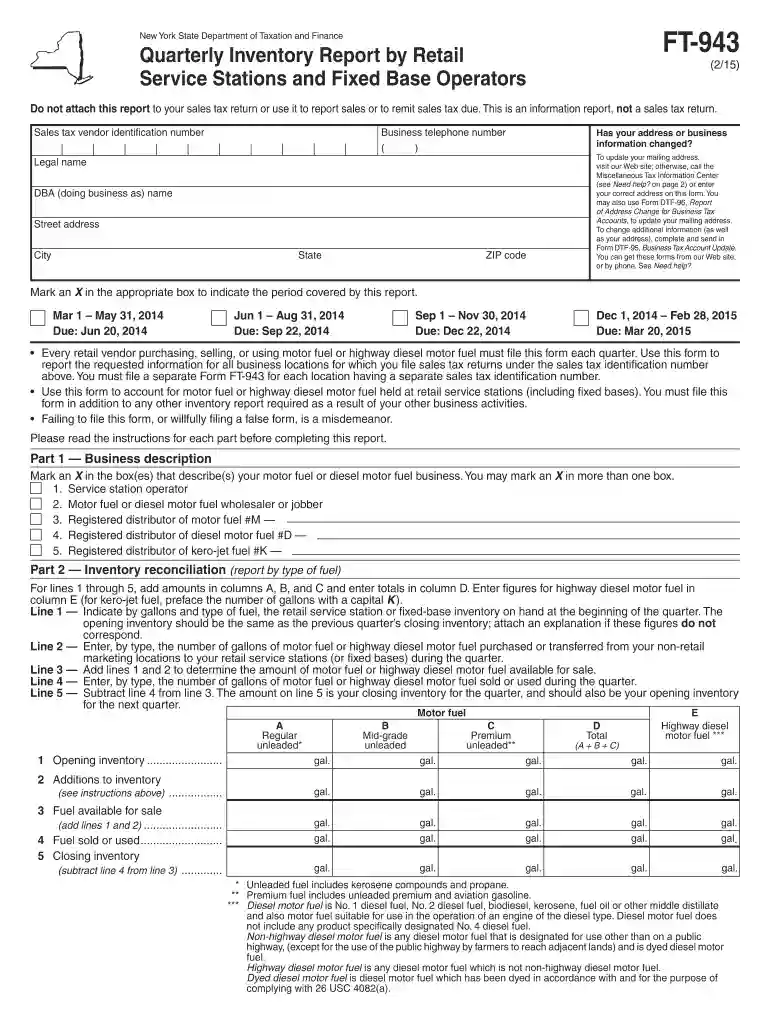
The FT-943 form is a Quarterly Inventory Report mandated by the New York State Department of Taxation and Finance. It serves to document and report the inventory levels of motor fuel and highway diesel motor fuel for retail service stations and fixed base operators. The form is pivotal in ensuring accurate tax reporting and compliance with state laws regarding fuel inventory management. It helps track inventory for tax assessment and establishes a clear record of fuel quantities handled throughout the quarter.
Using the FT form involves understanding its various sections and the importance of maintaining accurate inventory records. The form is divided into parts that allow users to report different aspects of their inventory management. Each section must be filled with precise information related to the business's operations, including inventory reconciliation and purchase summaries. Users must consistently monitor their inventory to ensure the data reported aligns with the actual goods on hand.
The FT-943 form is a legally binding document that must be filed quarterly to comply with New York state regulations. It helps track fuel inventories used to assess sales and related taxes. For legal compliance, businesses must ensure the information provided is truthful and complete. Failure to comply can result in audits, penalties, and legal action.
The FT-943 form is due every quarter. Key filing dates include:
Meeting these deadlines is crucial to avoid penalties and ensure compliance.
Supporting documentation is necessary for accurate FT-943 form submission. This includes:
Non-compliance with the FT-943 filing requirements can result in financial penalties or legal repercussions. Failing to file on time or providing inaccurate information can trigger audits and additional fines. It's crucial to maintain accurate and current records to avoid potential infractions.
The FT-943 form can be submitted digitally or via paper, with both options having specific guidelines:
Evaluating both methods enables businesses to choose the most convenient and reliable option for their circumstances.
Filing the FT-943 form can be streamlined using accounting software such as TurboTax or QuickBooks. These solutions facilitate accurate data entry and ensure all necessary calculations are performed. Software compatibility ensures seamless data transfer, reducing the likelihood of errors in manual entry.
We've got more versions of the ft 943 2015 form form. Select the right ft 943 2015 form version from the list and start editing it straight away!
| Versions | Form popularity | Fillable & printable |
|---|---|---|
| 2025 | 4.5 Satisfied (52 Votes) | |
| 2024 | 4.5 Satisfied (27 Votes) | |
| 2023 | 4.7 Satisfied (37 Votes) | |
| 2022 | 4.9 Satisfied (45 Votes) | |
| 2021 | 4.9 Satisfied (30 Votes) | |
| 2020 | 4.3 Satisfied (70 Votes) | |
| 2019 | 4.3 Satisfied (62 Votes) | |
| 2018 | 4.4 Satisfied (219 Votes) | |
| 2016 | 4.4 Satisfied (52 Votes) | |
| 2015 | 4.4 Satisfied (404 Votes) | |
| 2015 | 4 Satisfied (54 Votes) | |
| 2014 | 4.2 Satisfied (66 Votes) | |
| 2013 | 4 Satisfied (27 Votes) | |
| 2011 | 4.1 Satisfied (75 Votes) | |
| 2002 | 4 Satisfied (21 Votes) |
At DocHub, your data security is our priority. We follow HIPAA, SOC2, GDPR, and other standards, so you can work on your documents with confidence.
The Arkansas Legislature passed Act 943 in 2015 which directs Arkansas colleges and universities to develop an implement an action plan to help students preventRead more
Use this form to account for motor fuel or highway diesel motor fuel held at retail service stations (including fixed bases). You must file this form in.Read more


