Part 356 Probation Services for Article 3 Juvenile Delinquency 2026

Get Form
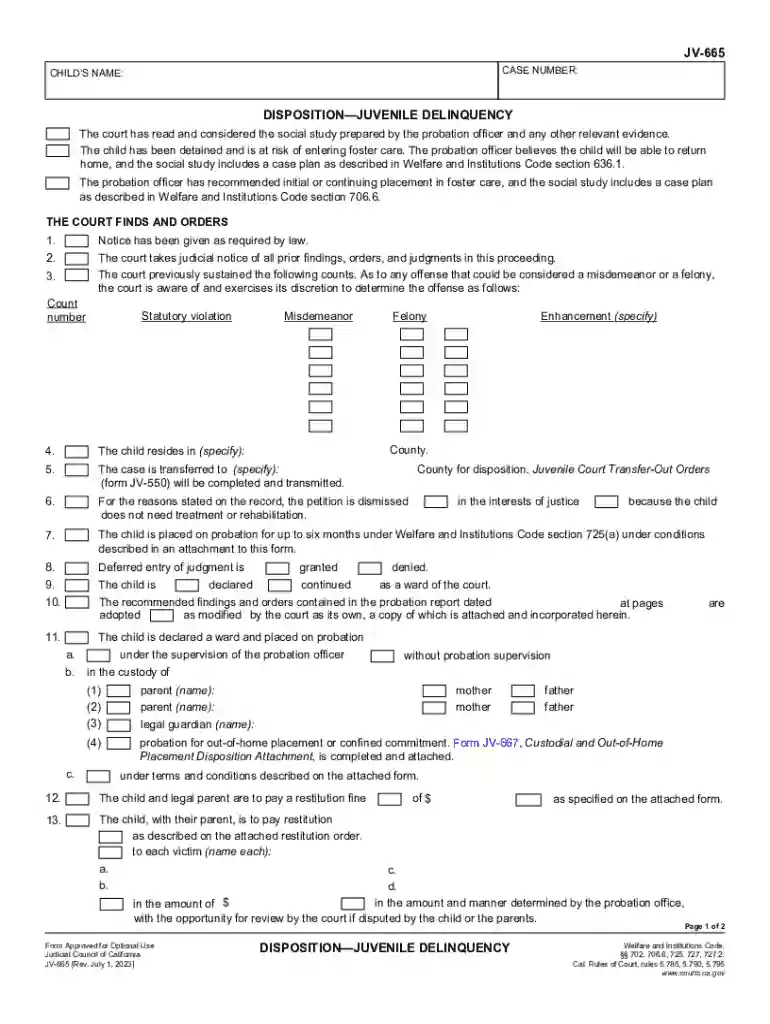
Part 356 Probation Services for Article 3 Juvenile Delinquency Preview on Page 1

Here's how it works

01. Edit your form online
Type text, add images, blackout confidential details, add comments, highlights and more.

02. Sign it in a few clicks
Draw your signature, type it, upload its image, or use your mobile device as a signature pad.

03. Share your form with others
Send it via email, link, or fax. You can also download it, export it or print it out.

Definition and Meaning

"Part 356 Probation Services for Article 3 Juvenile Delinquency" refers to a set of guidelines and procedures specifically designed to cater to juvenile delinquents classified under Article 3. This document helps manage the probation services for minors who have been adjudicated as delinquent by the court system. The fundamental goal of these services is to rehabilitate the juvenile and safely integrate them back into society while maintaining community safety. Probation services often include supervision, counseling, rehabilitation programs, and community service. These services may be tailored to the unique circumstances of each juvenile, focusing on reducing recidivism and addressing the root causes of delinquent behavior.

Key Elements of the Part 356 Probation Services

Part 356 probation services encompass several critical elements to ensure comprehensive rehabilitation and support for juveniles. Key elements include:

  • Supervised Probation: Juveniles are closely monitored by probation officers, who ensure compliance with court-mandated conditions and provide necessary guidance.
  • Counseling and Therapy: Programs are offered to address behavioral health issues, substance abuse, or emotional difficulties.
  • Community Service: Encourages responsibility and restitution through community-oriented tasks.
  • Educational Programs: Focuses on improving educational outcomes and vocational skills to provide better future opportunities for juveniles.
  • Family Involvement: Families are often engaged in the process to promote a supportive environment at home, essential for successful rehabilitation.

Steps to Complete the Part 356 Probation Services

Completing the Part 356 probation process involves several steps, each aimed at ensuring the juvenile's adherence to the court's requirements:

  1. Initial Assessment: A comprehensive evaluation of the juvenile's circumstances, motivations, and needs.
  2. Probation Plan Development: A tailored probation plan is created based on the assessment.
  3. Implementation: The juvenile begins the prescribed activities, such as attending court-ordered therapy or participating in educational programs.
  4. Regular Check-ins: Scheduled meetings with a probation officer to review progress, address challenges, and adjust the plan if necessary.
  5. Completion Review: Once all requirements are fulfilled, a final review determines the dissolution of probation.

Who Typically Uses the Part 356 Probation Services

Part 356 probation services are primarily utilized by:

  • Juvenile Courts: To ensure that minors convicted of delinquent acts receive appropriate monitoring and rehabilitation.
  • Probation Officers: To guide and manage each juvenile's probation plan effectively.
  • Juvenile Justice Agencies: Providing resources and collaborating with courts and families to facilitate rehabilitation.
  • Families and Guardians: Engaged in the process, offering additional support to the juvenile at home.
decoration image ratings of Dochub

How to Obtain the Part 356 Probation Services

To initiate Part 356 probation services, the process typically begins in the juvenile court system:

  • Court Adjudication: Upon judging a minor delinquent, the court will determine if probation under Part 356 is appropriate.
  • Assignment: A probation officer will be assigned to implement and oversee the rehabilitation plan.
  • Resource Allocation: Depending on the juvenile's needs, resources such as counseling services or community programs will be provided.
  • Ongoing Administrative Support: The probation officer coordinates with various institutions to offer comprehensive support to the juvenile.

Legal Use of the Part 356 Probation Services

The legal framework surrounding Part 356 probation services ensures that processes comply with juvenile justice standards:

  • Confidentiality: Juvenile records are sealed and protected to encourage rehabilitation without lifelong stigma.
  • Rights and Protections: Juveniles under probation maintain their legal rights, with additional protections tailored to their age and developmental stage.
  • Compliance with State Laws: While federal guidelines exist, each state's specific laws and procedures shape the implementation of probation services.

Important Terms Related to Part 356 Probation Services

  • Adjudication: A legal process by which a court reaches a verdict regarding a juvenile's involvement in delinquent behavior.
  • Recidivism: The tendency of a juvenile to re-engage in delinquent or criminal behavior post-rehabilitation.
  • Restitution: Compensation for harm caused by the juvenile, which may include financial payment or community service.
  • Rehabilitation: Processes aimed at improving a juvenile's behavior and reducing future delinquency.

State-Specific Rules for the Part 356 Probation Services

The approach to Part 356 probation services may vary from state to state due to differing legal requirements and resources:

  • Funding: Some states allocate more resources to juvenile probation services, impacting the breadth of available programs.
  • Family Engagement Requirements: Certain jurisdictions may impose stricter requirements for family involvement in the probation process.
  • Diversion Programs: While some states offer extensive alternatives for low-risk juveniles to avoid formal adjudication, others may have more limited options.

Penalties for Non-Compliance

Failure to comply with the conditions set forth in the Part 356 probation can result in serious consequences for the juvenile:

  • Extended Probation: Additional time may be added to the juvenile's probation period.
  • Detention: Non-compliance could lead to detention in a juvenile facility.
  • Reevaluation: A court may reassess the juvenile's situation and impose a more stringent corrective measure.

By understanding and adhering to the requirements of Part 356 probation services, juveniles, their families, and involved legal officers can work together toward a positive outcome that supports rehabilitation and integration back into the community.

See more Part 356 Probation Services for Article 3 Juvenile Delinquency versions

We've got more versions of the Part 356 Probation Services for Article 3 Juvenile Delinquency form. Select the right Part 356 Probation Services for Article 3 Juvenile Delinquency version from the list and start editing it straight away!
Versions Form popularity Fillable & printable
2023 4.6 Satisfied (29 Votes)
2016 4.8 Satisfied (142 Votes)
2012 4.2 Satisfied (46 Votes)
be ready to get more

Complete this form in 5 minutes or less

Get form

Got questions?

We have answers to the most popular questions from our customers. If you can't find an answer to your question, please contact us.
Contact us
Juvenile probation officers act in a supervisory capacity, making both announced and unannounced visits to probationers homes to ensure that they comply with court orders. Beyond assessing compliance with probation orders, unannounced visits present an opportunity to build rapport with juveniles and their families.
Probation is the most frequent disposition for all juvenile arrests because: It is limitless: unlike training schools or private providers, probation departments cannot limit or control their intake.
What is the most common form of juvenile corrections? Probation supervision is the most common form of juvenile corrections. This option allows young offenders to remain in their community while they fulfill certain conditions set by the court.
In the United States, a juvenile delinquent is a person who commits a crime and is under a specific age. Most states specify a juvenile delinquent, or young offender, as an individual under 18 years of age, while a few states have set the maximum age slightly different.
Once the police officer refers a case to juvenile court, a prosecutor or juvenile court intake officer (often a probation officer) takes over. That person may decide to dismiss the case, handle the matter informally, or file formal charges (called petitioning the case).

Security and compliance

At DocHub, your data security is our priority. We follow HIPAA, SOC2, GDPR, and other standards, so you can work on your documents with confidence.

Learn more
ccpa2
pci-dss
gdpr-compliance
hipaa
soc-compliance

People also ask

Being on probation is one of the most common sentences. It means that the teenager is not in custody and continues to live at home. But the teen must obey the conditions ordered by the judge.
Supervised Probation: This is the most common form of probation. If an individual is placed on supervised probation, they have regular check-ins with their probation officer to help keep them on track and report progress to the Court.

Related links