
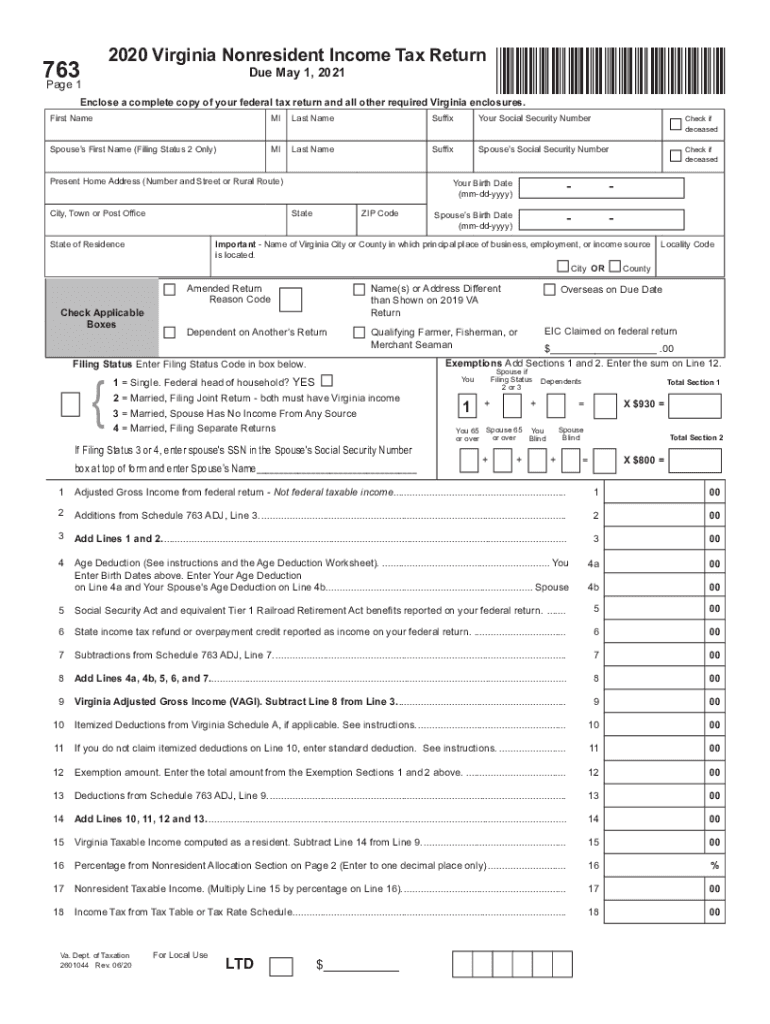







Definition & Overview of VA Form 763
VA Form 763 is the Virginia Nonresident Income Tax Return form. It serves as a structured document required by the Virginia Department of Taxation for individuals who earned income in Virginia but are not residents of the state. The form facilitates nonresidents in reporting their income generated from Virginia sources, ensuring proper taxation in accordance with state laws. It includes sections to detail personal information, income calculations, deductions, and applicable credits.
How to Obtain VA Form 763
There are several methods to acquire the VA Form 763. Primary channels include downloading the form from the Virginia Department of Taxation's official website. This digital version can be filled electronically or printed for manual completion. Alternatively, physical copies can be requested at local tax offices or by contacting the department directly. Retailers selling tax software often include this form in their packages, providing an option for those who prefer using digital tax preparation tools.
Steps to Complete VA Form 763
-
Personal Information: Begin by accurately filling out your personal details, including your name, social security number, and address.
-
Filing Status: Select the filing status that applies to you, which might require referencing your federal tax return.
-
Income Details: Report all income earned from Virginia sources. This includes wages, rental income, and any business-related earnings within the state.
-
Deductions and Credits: List any deductions you are eligible for, such as standard deductions, and any Virginia-specific credits you qualify for.
-
Calculate Tax Due: Use the instructions provided with the form to compute the amount of tax due or the refund you can expect.
-
Submit the Form: Once completed, submit the form either electronically through approved tax filing software or mail it to the Virginia Department of Taxation.
Important Terms Related to VA Form 763
- Nonresident: An individual who does not legally reside in Virginia but earns income within the state.
- Virginia Source Income: Any income earned, derived, or connected to a source within Virginia, necessitating taxation by the state.
- Subtractions: Allowable reductions from gross income specific to Virginia tax law, reducing taxable income.
- Credits: Financial allowances that reduce the tax amount owed.
Who Typically Uses VA Form 763
VA Form 763 is primarily used by nonresident individuals who have earned income in Virginia. This includes out-of-state workers temporarily employed in Virginia, nonresident business owners with operations in the state, and individuals with rental income or investments in Virginia. It is also applicable to those engaged in contractual work that geographically places them within Virginia but does not alter their residency status.
Legal Use of VA Form 763
The form is legally mandated for nonresidents who need to report and pay taxes on income earned from Virginia sources. It helps ensure compliance with the Virginia tax code and prevents double taxation by aligning with reciprocal agreements and federal tax guidelines. Proper filing of VA Form 763 allows nonresidents to document their tax liabilities accurately, availing them of any deductions and credits they are legally entitled to under Virginia law.
Key Elements of VA Form 763
- Income Section: Detailed area for listing all types of income subject to Virginia taxation.
- Adjustments and Deductions: Sections to report allowable subtractions and obtain reductions on taxable income.
- Credits: Includes spaces to apply relevant tax credits, benefiting the taxpayer by reducing the overall tax liability.
- Payment and Refund Info: Spaces to enter payment made with the return and any tax refund to be expected.
State-Specific Rules for VA Form 763
Virginia has specific rules surrounding income tax for nonresidents that impact how the VA Form 763 is completed. Key rules include statutory requirements for withholding tax, which may apply to nonresidents, certain deductions applicable only under Virginia law, and credits that are exclusive to the state. Nonresidents are also subject to different filing thresholds, necessitating a precise understanding of the Virginia tax code to ensure accurate return preparation.




