




01. Edit your 2023 form 1040 schedule 1 online
Type text, add images, blackout confidential details, add comments, highlights and more.

Type text, add images, blackout confidential details, add comments, highlights and more.

Draw your signature, type it, upload its image, or use your mobile device as a signature pad.

Send 2023 schedule 1 form 1040 via email, link, or fax. You can also download it, export it or print it out.
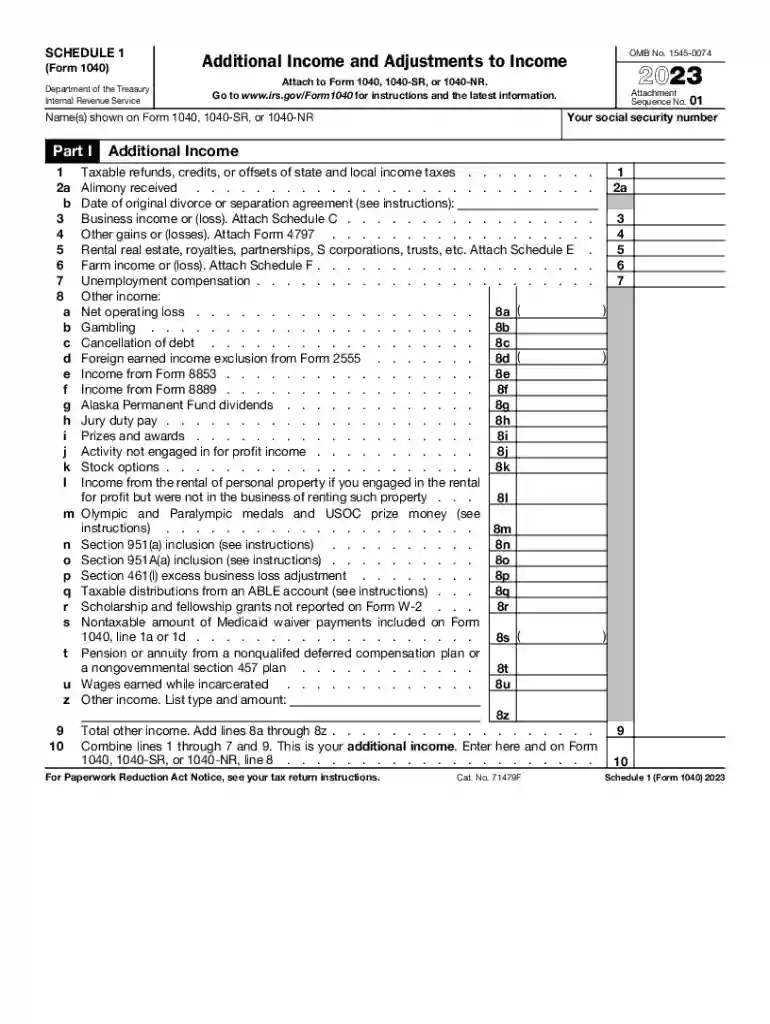
Schedule 1 (Form 1040) is a supplementary tax form used to report additional income that is not listed on the main Form 1040. It also allows for adjustments to income, providing a comprehensive view of one's financial situation during the tax filing period. This schedule captures various income types like taxable refunds, alimony received, and business income, along with deductions such as educator expenses and student loan interest. This extra detail often helps taxpayers accurately define their taxable income, ensuring a precise tax return submission.
Schedule 1's primary utility is providing a robust framework to report varied income types and eligible deductions, leading to a comprehensive financial overview. It is particularly crucial for taxpayers with income from sources beyond wages or significant deductions. This assists in achieving a clear and transparent tax reporting process, reducing potential issues with the IRS over unreported income or missed deductions.
Schedule 1 is integral to the complete filing of your tax return. Compliance requires truthful declaration of all additional income and eligible deductions. The IRS offers detailed instructions for each line of the form, ensuring accurate completion. Adhering to IRS guidelines helps avoid challenges, such as audits or fines due to discrepancies.
Each year's tax deadline is typically in mid-April, but one should verify this annually as it can vary slightly. Extensions are possible but require formal application via forms such as Form 4868. Keeping track of these timelines ensures you meet your obligations without penalties and allows sufficient time for gathering necessary documents.
Failure to file or misreporting income on Schedule 1 can result in several penalties. These may include fines, interest on unpaid taxes, and additional scrutiny from the IRS. Repeat offenses or deliberate misreporting can escalate repercussions, potentially leading to legal action. It’s crucial to be thorough and accurate in your financial disclosures.
Tax software like TurboTax and QuickBooks facilitate the completion of Schedule 1 by guiding users through the process, helping to input figures accurately. These tools often include checks and balances to validate entries and reduce errors, making them invaluable for individuals managing their tax filings without professional help.
We've got more versions of the 2023 form 1040 schedule 1 form. Select the right 2023 form 1040 schedule 1 version from the list and start editing it straight away!
At DocHub, your data security is our priority. We follow HIPAA, SOC2, GDPR, and other standards, so you can work on your documents with confidence.
Schedule 1 is used to report types of income that arent listed on the 1040, such as capital gains, alimony, unemployment payments, and gambling winnings.Read more
Apr 15, 1976 Increased section 179 deduction dollar limits. The maximum amount you can elect to deduct for most sec- tion 179 property you placedRead more
Additional Income and Adjustments to Income. Attach to Form 1040, 1040-SR, or 1040-NR. Taxable refunds, credits, or offsets of state and local income taxes.


