





Definition and Purpose
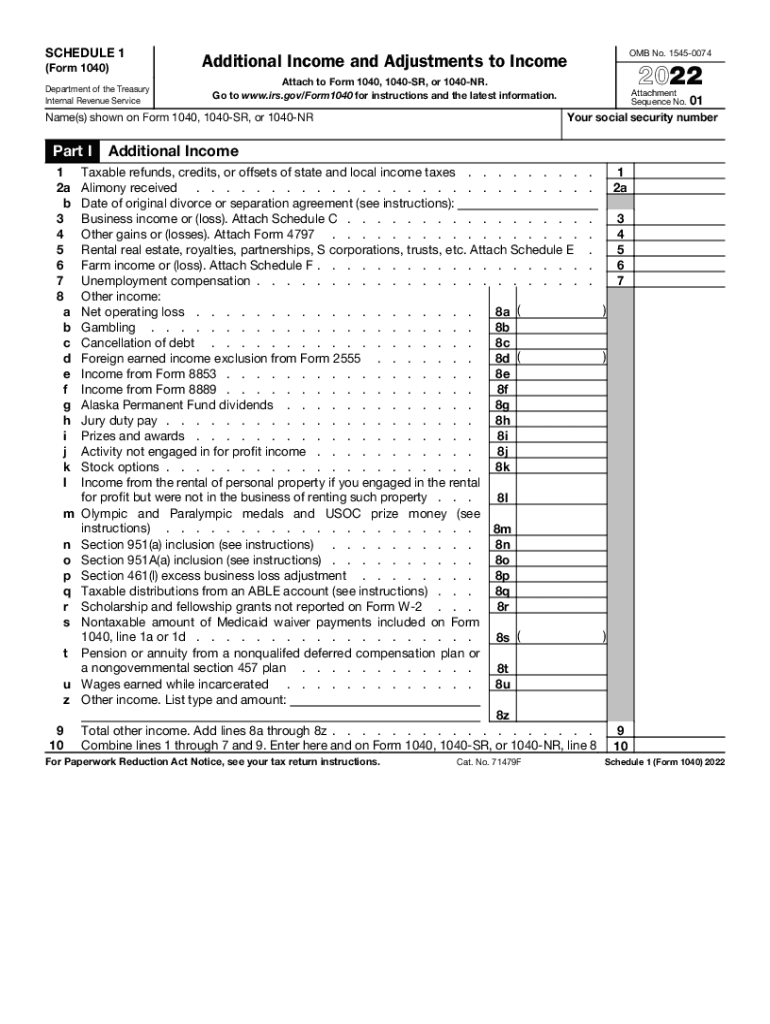
Schedule 1 (Form 1040) for the year 2022 is an integral form for individuals aiming to report additional income and claim adjustments to income. This form supplements the primary Form 1040, ensuring comprehensive declaration of various income types like taxable refunds, alimony, or rental income. Additionally, it facilitates the declaration of adjustments such as educator expenses and student loan interest deductions.
Important Terms Related to Schedule 1
Understanding the terminology associated with Schedule 1 can aid in accurate and efficient completion. Key terms include:
- Additional Income: Refers to income beyond what is typically reported on the main form, such as capital gains or unemployment compensation.
- Adjustments to Income: These are reductions that decrease total income, leading to adjusted gross income (AGI). Examples include IRA contributions and student loan interest.
- Taxable Refunds: Income from state and local refunds considered taxable for federal purposes.
How to Use the Schedule
Completing Schedule 1 involves a systematic approach to inputting detailed financial information:
- Enter Additional Income: Begin with reporting any untaxed income, ensuring that each category matches its respective line on the form.
- List Adjustments to Income: Document deductions that qualify under IRS guidelines for adjustments, thus lowering your AGI.
- Attach to Form 1040: After filling, attach Schedule 1 to your Form 1040 before submission to the IRS.
Steps to Complete the Form
Completing the 2022 Schedule 1 requires careful attention to detail:
- Gather Necessary Documents: Compile income statements, 1099 forms, and any documentation relating to deductions.
- Identify Income Sources: Classify various income streams, ensuring no income source is overlooked.
- Determine Adjustments: Assess eligible adjustments, keeping in mind limits and caps set by the IRS.
- Review and Verify: Double-check all inputs to avoid errors that could result in filing delays or penalties.
- Submit with Form 1040: Attach Schedule 1 and submit with your completed Form 1040 by the filing deadline.
Key Elements and Sections
Schedule 1 contains several crucial sections that need attention:
- Part I: Details various types of additional income such as winnings and discharge of indebtedness.
- Part II: Focuses on adjustments, where you declare contributions or expenses reducing taxable income.
In each part, ensure precision in reporting amounts to avoid discrepancies.
IRS Guidelines for Schedule 1
Adhering to IRS guidelines ensures compliance and accuracy:
- Reporting Requirements: Always report complete and accurate details of income and deductions.
- Recordkeeping: Maintain thorough records for all income and adjustment claims.
- Amendments: Understand procedures for amendments should errors in the reported data be identified.
Filing Deadlines and Important Dates
Complying with filing deadlines is crucial to avoid penalties:
- Filing Deadline: Typically April 15, unless it falls on a weekend or holiday, where extensions may apply.
- Extensions: Possible through Form 4868, which provides an extended deadline until October; however, any taxes owed are still due on April 15.
Examples of Use
Real-world scenarios assist in understanding the form's application:
- Self-Employed Individuals: Often use Schedule 1 to report business income.
- Retirees: May need to include distributions from retirement plans.
- Educators: Benefit from adjustments related to unreimbursed educator expenses.
Penalties for Non-Compliance
Failing to complete Schedule 1 accurately or on time can lead to:
- Late Filing Penalties: Generally 5% of the unpaid taxes for each month the return is late.
- Accuracy-Related Penalties: Can amount to 20% of any underpayment due to negligence or errors.
This in-depth guide to the 2022 Schedule 1 (Form 1040) should assist in an accurate and smooth filing process for those managing additional income and adjustments to income.