



01. Edit your form online
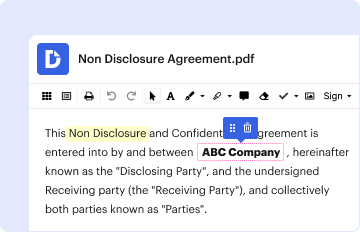
Type text, add images, blackout confidential details, add comments, highlights and more.

Type text, add images, blackout confidential details, add comments, highlights and more.
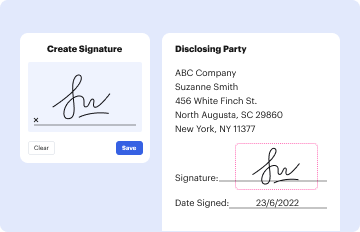
Draw your signature, type it, upload its image, or use your mobile device as a signature pad.

Send it via email, link, or fax. You can also download it, export it or print it out.
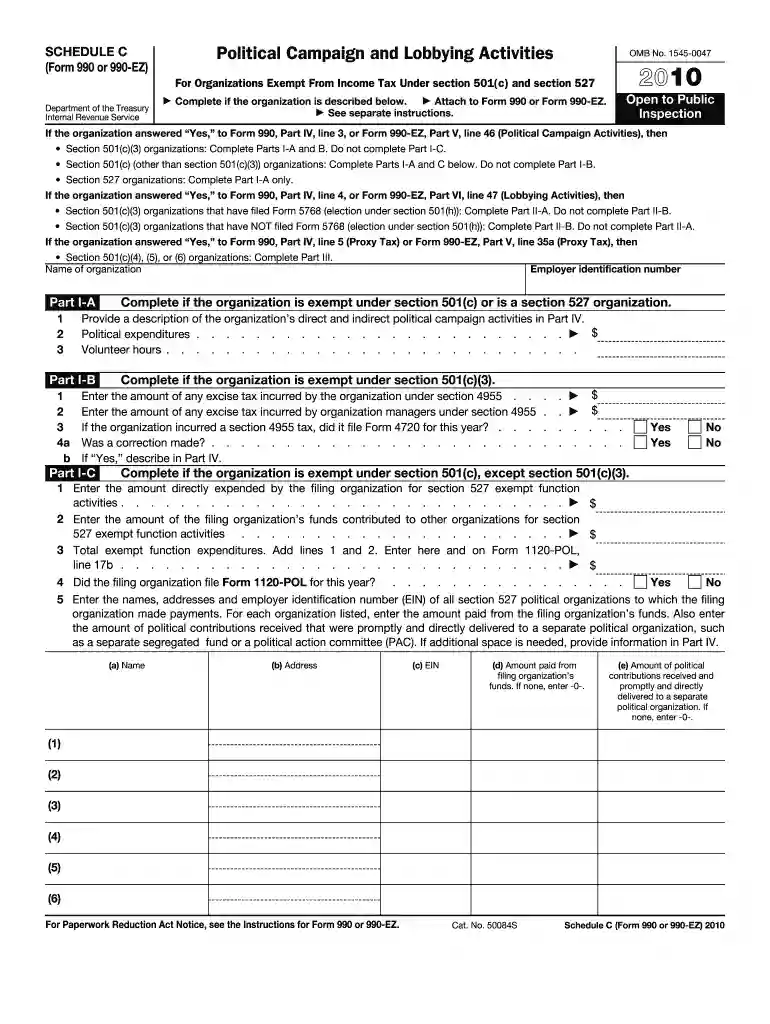
Schedule C of Form 990 or 990-EZ is used by tax-exempt organizations in the U.S. to report political campaign and lobbying activities. Specifically, it is intended for organizations exempt from income tax under sections 501(c) and 527 of the Internal Revenue Code. This form provides a detailed outline of the political expenditures made by these organizations, as well as volunteer hours dedicated to political activities. It includes specific instructions for different types of organizations based on their tax-exempt status. The primary purpose of this schedule is to ensure transparency in the political and lobbying activities of tax-exempt organizations.
To use the 2010 Form 990 Schedule C appropriately, it is vital to first identify the type of organization completing the form, as different sections apply to different entities. Users should:
Completing the form involves several steps:
Essential components of the form include:
The 2010 Form 990 Schedule C must be filed by the 15th day of the 5th month after the end of an organization’s accounting period. For organizations with a calendar year accounting period, this would typically mean a filing date of May 15th. Late filing can result in financial penalties, emphasizing the importance of timely submission.
The Internal Revenue Service (IRS) is responsible for issuing the Form 990 Schedule C. Organizations can access this form and additional instructions through the IRS website or their local IRS office. The IRS provides these resources to ensure that tax-exempt organizations comply with federal requirements regarding political and lobbying activities.
To complete the Form 990 Schedule C, organizations should compile:
Failing to file the 2010 Form 990 Schedule C, or providing inaccurate information, can lead to significant penalties. These may include fines and the potential revocation of tax-exempt status for the organization. The penalties underscore the importance of meticulous record-keeping and adherence to IRS requirements when engaging in political and lobbying activities.
Consider a 501(c)(3) charity that organizes a campaign to lobby for educational reforms. This organization must report the expenses related to these activities on Schedule C, Part II. Another example involves a 527 political organization making direct financial contributions to a candidate, which must be tracked and reported in Part III, ensuring compliance and transparency in political financing.
We've got more versions of the 2010 form 990 schedule c form. Select the right 2010 form 990 schedule c version from the list and start editing it straight away!
| Versions | Form popularity | Fillable & printable |
|---|---|---|
| 2025 | 4.4 Satisfied (41 Votes) | |
| 2024 | 4.9 Satisfied (55 Votes) | |
| 2023 | 4.9 Satisfied (35 Votes) | |
| 2022 | 4.5 Satisfied (28 Votes) | |
| 2021 | 4.8 Satisfied (200 Votes) | |
| 2020 | 4.4 Satisfied (131 Votes) | |
| 2019 | 4.1 Satisfied (32 Votes) | |
| 2018 | 4.4 Satisfied (352 Votes) | |
| 2017 | 4.4 Satisfied (236 Votes) | |
| 2016 | 4.4 Satisfied (52 Votes) | |
| 2015 | 4.4 Satisfied (64 Votes) | |
| 2013 | 4 Satisfied (45 Votes) | |
| 2010 | 4.3 Satisfied (49 Votes) |
eSignatures are a perfect replacement for traditional signing, as they save time, effort, and costs people spend on printing, scanning, and paper delivery. You can eSign your 2010 form 990 schedule c using a trustworthy and powerful online document processing services like DocHub. It complies with main eSignature policies (ESIGN and UETA), so all documents approved there are legally binding and have the same validity as physically signed ones.
Document editing with DocHub is equally convenient on desktop and mobile devices. You only need an internet browser to modify your 2010 form 990 schedule c on Android. Open our site and sign in to access the tools you need. Add your file and introduce your intended modifications. After that, you can keep your form in your file storage or send it out instantly.
At DocHub, your data security is our priority. We follow HIPAA, SOC2, GDPR, and other standards, so you can work on your documents with confidence.
50084S. Schedule C (Form 990 or 990-EZ) 2010. Page 20. Schedule C (Form 990 or 990-EZ) 2010 Schedule C (Form 990 or 990-EZ) 2010.Read more
Schedule C (Form 990 or 990-EZ) Complete if the organization is exempt under section 501(c)(3) and filed Form 5768 (election under section 501(h)).


