







Definition and Meaning
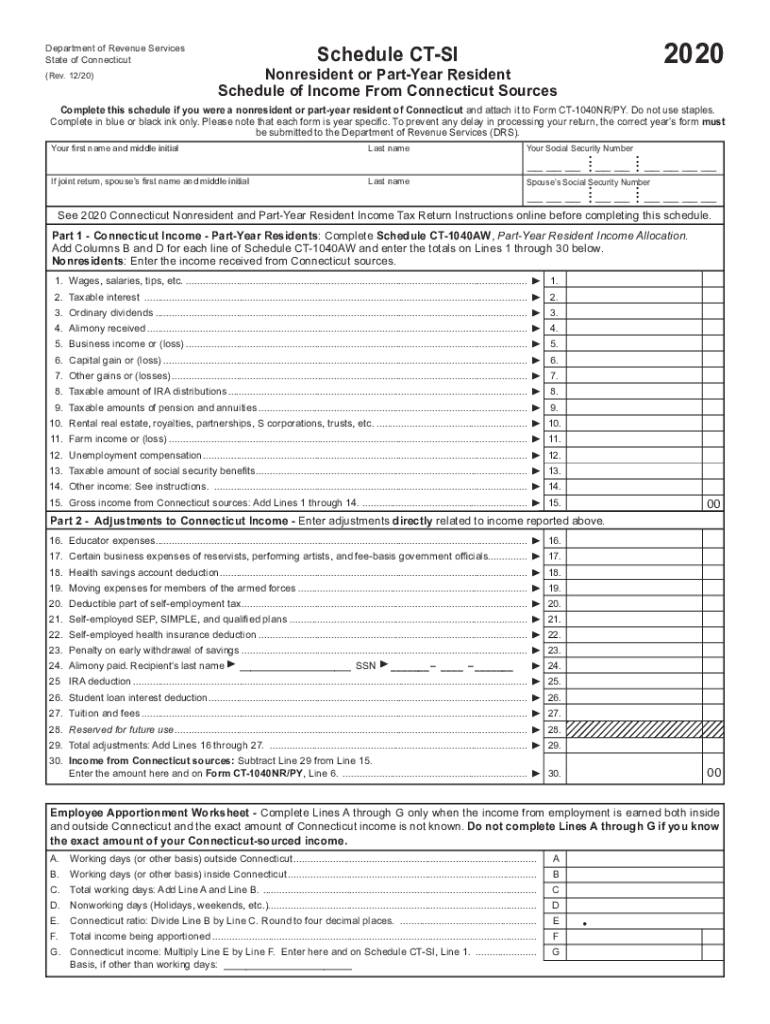
The Schedule CT-SI serves as a supplemental form for nonresidents or part-year residents of Connecticut, detailing income derived from Connecticut sources. It specifically requires taxpayers to report their income in relation to their residency status and the portions of the year they resided in Connecticut. This form is crucial in determining the correct state tax obligations, ensuring that only in-state income is taxed appropriately.
Steps to Complete the Schedule CT-SI
-
Gather Required Information: Collect relevant documents such as W-2s, 1099s, and other income documents to accurately report earnings from Connecticut sources.
-
Fill Out Personal Information: Include personal details such as name, address, and Social Security Number. Ensure this information matches the primary tax form.
-
Report Income Types: Clearly indicate various types of income such as wages, dividends, and business income from Connecticut. Each income type should be broken down and reported in the designated sections.
-
Adjustments and Deductions: List any allowable adjustments or deductions that apply to your state income, which may differ from federal adjustments.
-
Calculate Tax Liability: Use the reported amounts to compute the taxable income and determine the tax owed to Connecticut based on state rates.
-
Review and Attach: Double-check all entries for accuracy. Attach Schedule CT-SI to Form CT-1040NR/PY before submission.
Important Terms Related to Schedule CT-SI
- Nonresident: A taxpayer who did not reside in Connecticut during the tax year but earned income from Connecticut sources.
- Part-Year Resident: An individual who changed residency status during the tax year, spending part of the year as a resident and part as a nonresident.
- Source Income: Earnings derived from within the state, including wages from Connecticut employers and rental income from properties located in the state.
Legal Use of the Schedule CT-SI
The Schedule CT-SI is mandated by the Connecticut Department of Revenue Services for individuals who are nonresidents or part-year residents of Connecticut. It ensures compliance with state tax laws by providing a detailed account of state-specific income, preventing tax evasion or misreporting. The form must be completed accurately and submitted alongside the primary tax return Form CT-1040NR/PY to avoid penalties.
Who Typically Uses the Schedule CT-SI
This form is primarily utilized by individuals who earn income in Connecticut but do not maintain full-year residency. Common users include:
- Out-of-state residents working in Connecticut who need to report their wages and other income generated from in-state activities.
- Individuals who moved into or out of Connecticut during the tax year, requiring them to report income earned during their residency periods.
- Investors or property owners with income from Connecticut-based investments or real properties.


Required Documents
To accurately complete the Schedule CT-SI, the following documents are typically required:
- W-2 Forms: To report wages earned from Connecticut employers.
- 1099 Forms: For various incomes such as interest, dividends, or independent contractor payments.
- Statements of rental income or business earnings: To report non-wage income from activities within the state.
Filing Deadlines / Important Dates
- April 15 (or the next business day): The general deadline for submitting Form CT-1040NR/PY with the Schedule CT-SI. This date aligns with the federal tax filing deadline, although extensions can be granted under certain circumstances.
- Extension Requests: Must be filed by the original due date to extend the deadline six months, providing additional time for accurate filing without immediate penalties.
Form Submission Methods (Online / Mail)
- Online Submission: Taxpayers may file their Schedule CT-SI as part of their entire tax return electronically through the Connecticut Department of Revenue Services web portal. This method is efficient and provides instant confirmation of receipt.
- Mail: Alternatively, the completed Schedule CT-SI can be mailed along with Form CT-1040NR/PY to the designated state tax office. Ensure all required forms and documentation are included to avoid processing delays.
Penalties for Non-Compliance
Non-compliance penalties can arise from failing to submit the Schedule CT-SI accurately or missing deadlines. These can include:
- Monetary Penalties: Additional fines imposed for late filing or incomplete disclosure of state income.
- Interest on Unpaid Taxes: Accruing daily until the delinquent amount is settled.
- Potential Legal Action: In severe cases of fraudulent reporting or intentional evasion, legal proceedings may be initiated by state authorities.
By adhering to the above guidelines and requirements, taxpayers can ensure proper compliance with Connecticut tax obligations related to the Schedule CT-SI. This prevents unnecessary legal and financial repercussions while aligning with state laws.




