
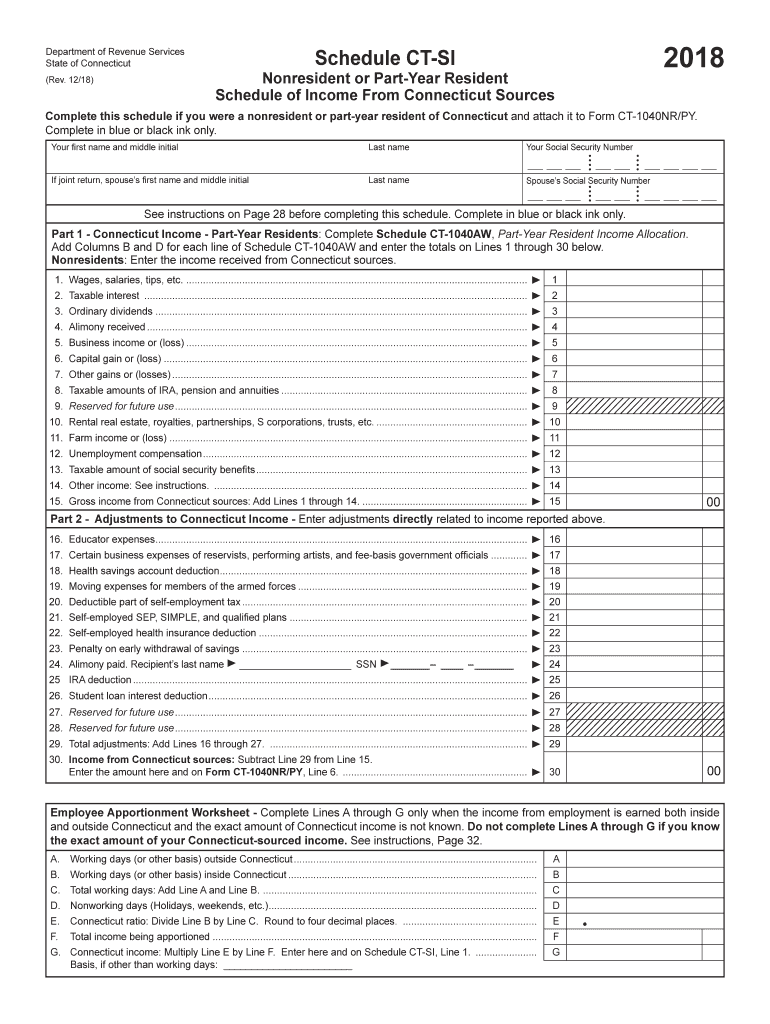







Definition & Purpose of Schedule CT-SI
Schedule CT-SI, also known as the Connecticut Supplemental Income Form, is a vital document used by nonresidents or part-year residents to report income derived from Connecticut sources. This form is an essential component of the Connecticut tax filing process for individuals who earn income from within the state while residing outside of it. The primary aim is to ensure accurate tax calculations and compliance with state tax obligations. By reporting income through this form, taxpayers can avoid potential legal issues and ensure fair contribution to the state's economy.
How to Obtain the Schedule CT-SI
Acquiring the Schedule CT-SI is a straightforward process. Taxpayers can download the form directly from the Connecticut Department of Revenue Services’ official website. Alternatively, those who prefer paper forms can request a printed version by contacting the Department of Revenue Services. Online tax preparation software may also provide the form as part of the tax filing package for Connecticut. Ensuring access to the correct form version for the relevant tax year is crucial for accurate compliance.
Steps to Complete the Schedule CT-SI
-
Gather Required Information: Before completing the form, collect all necessary documents, including W-2s, 1099s, and any other income statements that report Connecticut-sourced income.
-
Fill Out Personal Information: Include your name, Social Security Number, and filing status. Ensure this matches the information on your main tax return.
-
Report Income Sources: Provide details of all income earned from Connecticut sources. This includes wages, rental income, and business profits relevant to your registered business activities in Connecticut.
-
Adjustments and Deductions: Note any applicable adjustments and deductions that apply specifically to Connecticut income, such as retirement contributions or alimony payments.
-
Calculate Tax Liability: Use the instructions provided with Schedule CT-SI to calculate your tax liability accurately. Verify calculations to ensure correct tax computation.
-
Review and Submit: Double-check all entries for accuracy and completeness. Submit the form along with your state tax return by the filing deadline.
Key Elements of the Schedule CT-SI
- Personal Data Section: Captures identifying information necessary for processing and matching with your overall tax return.
- Connecticut Source Income: A detailed section explicitly for reporting all income derived from Connecticut activities or sources.
- Adjustments to Income: An area to report Connecticut-specific deductions or modifications influencing taxable income.
- Tax Calculation: The segment where the taxpayer determines how much tax is owed based on Connecticut earnings.
Legal Use and Compliance
Schedule CT-SI ensures legal compliance with Connecticut state tax laws for nonresidents and part-year residents. Filing this form prevents disputes over owed taxes and demonstrates a commitment to meeting Connecticut's tax obligations. Failure to file or inaccuracy can lead to penalties or additional audits. Understanding state-specific regulations is crucial for legal use.
Who Typically Uses the Schedule CT-SI
Nonresidents who earn income from Connecticut-based employment, business ventures, or property must use Schedule CT-SI to report such income accurately. It is also required for part-year residents who have transitioned their residence into or out of Connecticut during the tax year. This form is essential for individuals who need to separate out-of-state income from income earned within Connecticut borders.


Filing Deadlines and Important Dates
Taxpayers must file Schedule CT-SI in conjunction with their Connecticut state income tax return by the standard filing deadline, typically April 15th. Extensions may be available, but must be formally requested through the appropriate state channels before the original deadline. Keeping track of these dates is vital for avoiding late fees and interest charges.
Examples of Using Schedule CT-SI
-
Scenario 1: A resident of Massachusetts works in Connecticut. They must report their Connecticut earnings on Schedule CT-SI while filing their Massachusetts state return.
-
Scenario 2: A part-year resident moved from New York to Connecticut. Schedule CT-SI helps them report income generated in Connecticut during their residency period.
-
Scenario 3: An individual owns rental property in Hartford. Schedule CT-SI is necessary for reporting rental income to the Connecticut tax authorities.
Penalties for Non-Compliance
Failing to file Schedule CT-SI or submitting incorrect information can result in penalties. These may include fines, additional interest on unpaid taxes, and increased scrutiny in the form of state audits. Serious violations may lead to legal actions. Taxpayers must ensure accuracy and timeliness in their filings to avoid such repercussions.
Software Compatibility and Digital Filing
Many popular tax preparation software programs such as TurboTax and QuickBooks support Schedule CT-SI, providing users with guided assistance to ensure accurate completion. Digital filing is encouraged for faster processing and confirmation of receipt. Taxpayers should verify that their software is up-to-date and compliant with Connecticut tax regulations for the relevant tax year.




