



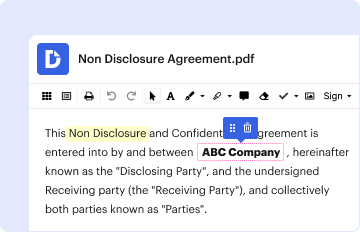
01. Edit your it 203 instructions 2018 online
Type text, add images, blackout confidential details, add comments, highlights and more.

Type text, add images, blackout confidential details, add comments, highlights and more.
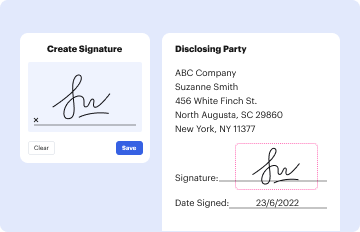
Draw your signature, type it, upload its image, or use your mobile device as a signature pad.

Send 2018 it 203 via email, link, or fax. You can also download it, export it or print it out.
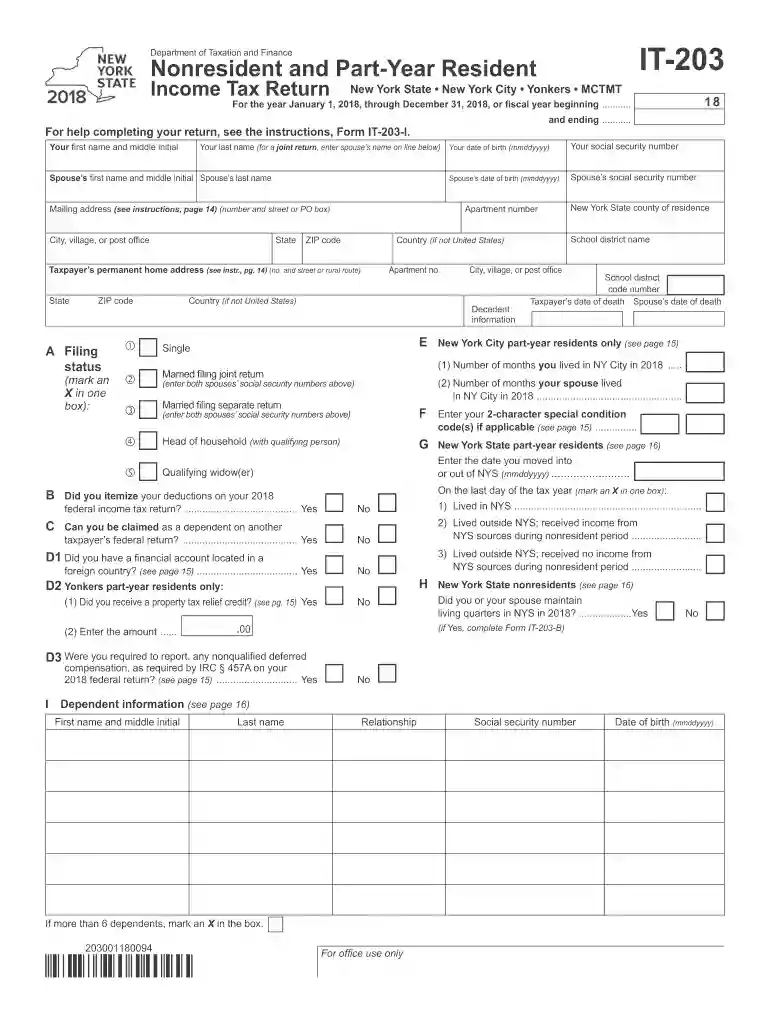
The IT-203, or the New York State Nonresident and Part-Year Resident Income Tax Return form, is specifically designed for individuals who have income from New York but do not reside in the state full-year. This form allows these taxpayers to report their income, calculate taxes owed, or determine refund eligibility. The IT-203 accommodates both nonresidents and individuals who were only part-year residents of New York, ensuring that they comply with state tax obligations accurately.
The use of the IT-203 form ensures that all income earned or sourced from New York is correctly reported and that any applicable deductions, credits, or refunds are handled according to New York State tax regulations. Residents of other states who have business transactions or employment in New York may need to use this form to report their yearly earnings to the New York State Department of Taxation and Finance.
To access and fill out the IT-203 form, taxpayers can download it directly from the official website of the New York State Department of Taxation and Finance. Printed copies are also available at certain state tax offices and public libraries. In addition to physical copies, many online tax preparation platforms, such as those akin to DocHub, offer downloadable versions of the form as part of their services.
Completing the IT-203 involves several detailed steps to ensure accuracy and compliance:
Enter Personal Information:
Detail Income Sources:
Deductions and Credits:
Tax Computation:
Signature and Submission:
The IT-203 form is primarily used by:


Understanding the terminology used in the IT-203 is crucial for accurate completion:
New York State has unique tax rules that affect how nonresidents and part-year residents file their taxes:
For the IT-203, alignment with the federal tax calendar is typical:
Not filing an IT-203 when necessary, or errors in filing, can lead to:
The IT-203 allows for various submission options to ensure taxpayers' convenience:
In summary, the IT-203 form is a critical element in ensuring compliance with New York State tax obligations for nonresidents and part-year residents. Understanding its requirements, processes, and deadlines is essential for accurate and legal tax reporting.
We've got more versions of the it 203 instructions 2018 form. Select the right it 203 instructions 2018 version from the list and start editing it straight away!
| Versions | Form popularity | Fillable & printable |
|---|---|---|
| 2025 | 4.6 Satisfied (39 Votes) | |
| 2024 | 4.6 Satisfied (43 Votes) | |
| 2023 | 4.1 Satisfied (44 Votes) | |
| 2022 | 4.9 Satisfied (24 Votes) | |
| 2021 | 4.8 Satisfied (81 Votes) | |
| 2020 | 4.4 Satisfied (264 Votes) | |
| 2019 | 4.4 Satisfied (214 Votes) | |
| 2018 | 4.3 Satisfied (118 Votes) | |
| 2017 | 4.2 Satisfied (66 Votes) | |
| 2015 | 4.5 Satisfied (49 Votes) | |
| 2011 | 4.3 Satisfied (74 Votes) | |
| 2010 | 4 Satisfied (51 Votes) | |
| 2002 | 4 Satisfied (26 Votes) |
At DocHub, your data security is our priority. We follow HIPAA, SOC2, GDPR, and other standards, so you can work on your documents with confidence.
NY State: Form IT-203. International Student Services (ISS). Thompson Hall E125 State University of New York at Fredonia Fredonia, NY 14063. Contact. 716-673Read more
Jan 6, 2026 You may be eligible for Free File of your income tax return. Visit our website to find out if you meet the certain requirements.
by HW Sites 2000 Cited by 1 The objective of the geophysical investigation was to determine the topographic relief of the clay layer and whether it was continuous across the site. GPR wasRead more


