






Definition and Meaning of DE Form 200
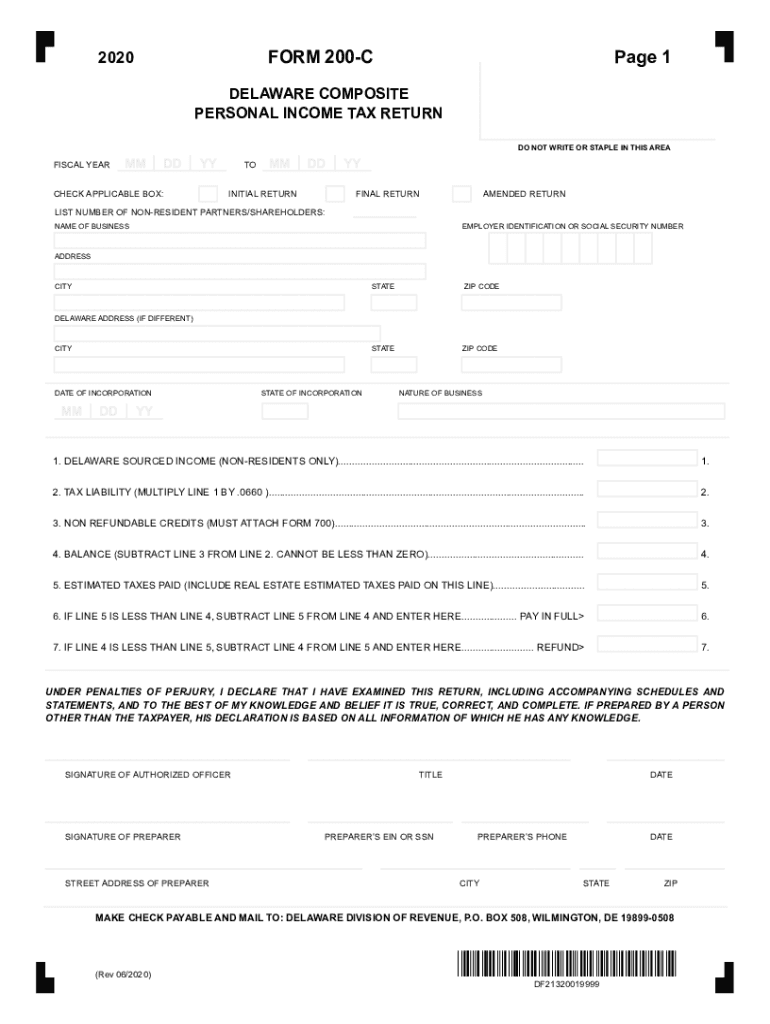
The DE Form 200 is a Delaware Composite Personal Income Tax Return form for non-resident partners or shareholders. It is used to report income sourced from Delaware and includes various sections for detailing the necessary information, calculations for tax liability, and instructions for submission. Understanding its structure and purpose is essential for accurate filing and compliance with state tax regulations.
Key Components of DE Form 200
-
Income Reporting: Non-resident partners or shareholders must report income derived from Delaware sources. This ensures that each party contributes to the state's tax revenues appropriately.
-
Tax Calculations: The form provides detailed sections for calculating tax liabilities, ensuring all figures are precise for compliance.
-
Submission Instructions: Guidelines on how to properly complete and submit the form are included, which help minimize errors and delays in filing.
How to Use the DE Form 200
Using the DE Form 200 involves several steps that include gathering necessary financial documents, completing income and tax sections, and ensuring all information is accurate before submission.
Steps to Complete the Form
-
Gather Documents: Collect all financial documents related to income sourced from Delaware, including partnership agreements or shareholder statements.
-
Calculate Tax Liability: Use the provided sections to compute any owed taxes accurately. This involves adjustable income figures, tax rate application, and permissible credits.
-
Review and Submit: Before submission, review the form for completeness and accuracy. Any errors could result in penalties or processing delays.
Practical Scenarios
-
Example 1: A non-resident shareholder in a Delaware-based corporation must report dividends received, alongside other sources of state-derived income, using the DE Form 200.
-
Example 2: A non-resident partner in a Delaware partnership needs to accurately report and calculate their share of the partnership's income on this form.
How to Obtain the DE Form 200
Accessing the DE Form 200 can be done through multiple channels, ensuring flexibility and convenience for users.
Methods to Access the Form
-
Online: Locate the form on the Delaware Division of Revenue's official website. Access is typically found under the forms or individual tax sections.
-
Mail: Request a physical copy by contacting the state's tax office. This method might require more time for delivery and returns.
-
In-Person: Physical copies can be collected from state taxation offices, providing immediate access without the wait associated with mail delivery.
Who Typically Uses the DE Form 200
The DE Form 200 is primarily geared toward non-resident partners and shareholders involved in business activities generating income from Delaware.


Common Users
-
Non-Resident Partners: Individuals engaged in partnership ventures in the state, who are not residents, need this form for reporting income derived from those activities.
-
Non-Resident Shareholders: Shareholders in corporations based in Delaware who do not reside in the state must file this form for their Delaware-sourced income.

Role of Non-Residents
Ensuring compliance involves understanding how the form applies to non-residents. These individuals may have diverse income types, complicating their filing needs.
Important Terms Related to DE Form 200
Understanding key terminologies is crucial for accurate completion and comprehension of the DE Form 200.
Glossary of Terms
-
Composite Return: A return filed on behalf of multiple taxpayers, collectively reporting income for simplicity and streamlined submission.
-
Non-Resident Partner/Shareholder: An individual who holds partnership or shareholder interests in Delaware but resides outside the state.
-
Tax Liability: The total amount of tax owed by an individual or entity based on applicable rates and credits.
Key Elements of the DE Form 200
This form is composed of critical sections that require careful attention to ensure all details are reported accurately.
Sections Breakdown
-
Income Detail: Specific sections for various income types, such as dividends, profits, or royalties sourced from state-based activities.
-
Non-Refundable Credits: Areas to claim eligible credits that reduce the amount of tax owed, directly impacting final tax liability.
-
Estimated Taxes Paid: Documentation of pre-paid taxes, useful in reconciling annual liabilities and avoiding penalties for underpayment.
Filing Deadlines and Important Dates
Timely submission of the DE Form 200 is crucial to avoid penalties and ensure compliance with state requirements.
Critical Dates
-
Filing Deadline: Typically aligns with federal tax deadlines; however, specific state guidelines may apply, impacting the due date.
-
Extension Periods: If available, extensions provide additional time for form completion without incurring penalties, subject to state approval.
Legal Use of the DE Form 200
Utilizing the DE Form 200 properly ensures legality and compliance with Delaware's tax requirements.
Legal Compliance
-
ESIGN Act Adherence: The form must comply with electronic signature regulations where applicable, ensuring legal acceptance of filed documents.
-
State Regulations: Complying with Delaware's specific tax laws is mandatory for non-residents leveraging this form for income reportings, such as dividends and royalties.
Compliance Consequences
Failure to appropriately understand and complete the DE Form 200 may lead to audits, penalties, or legal complications, emphasizing the importance of detailed verification and correct filing procedures.