







Definition & Meaning
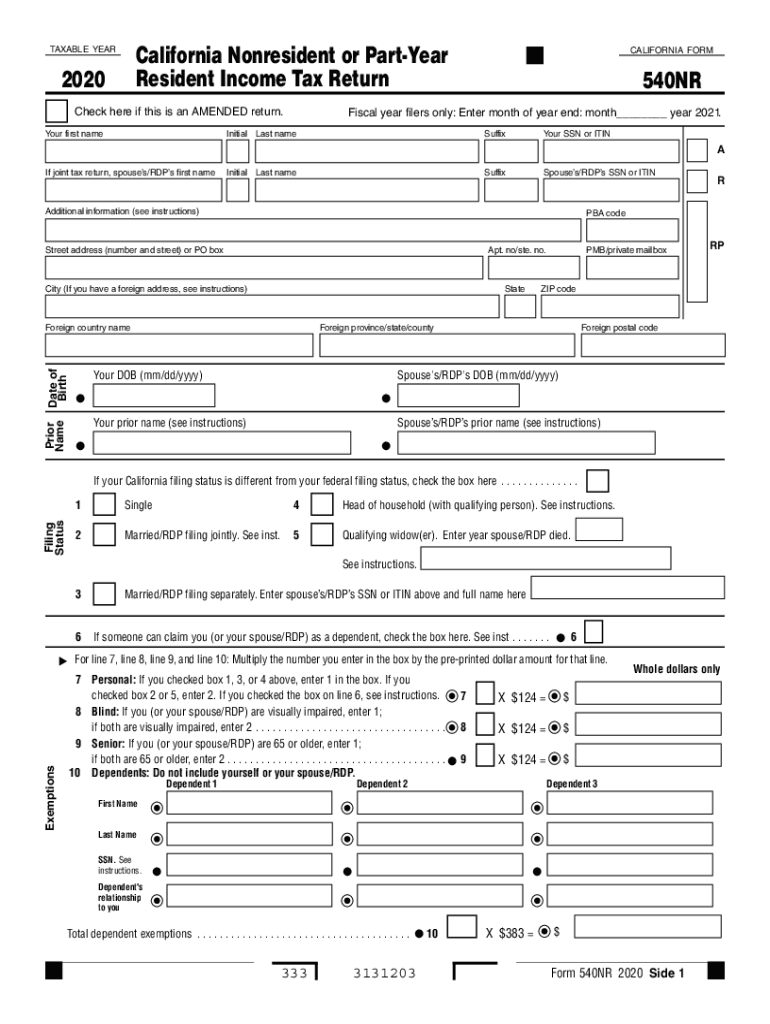
Form 540NR, the California Nonresident or Part-Year Resident Income Tax Return, is used by individuals who have income sourced from California but do not reside in the state for the entire year. It assists in calculating the tax owed to California based on the individual's total income and the portion attributable to California sources. This form ensures that California receives the appropriate tax revenue from nonresidents and part-year residents.
Key Elements of Form 540NR
- Filing Status: Determines tax rates and deductions.
- Income Calculation: Includes both California and total worldwide income.
- Exemptions: Factors like dependents and filing status impact deductions.
- Tax Credits: Claims for eligible credits to reduce overall tax liability.
How to Obtain the Form 540NR
Form 540NR is accessible online through the California Franchise Tax Board (FTB) website, allowing for seamless download. Many tax preparation software packages also include this form, offering guided completion and electronic submission. Physical copies can be requested from the FTB or picked up at their offices for those preferring manual filing.
Steps to Complete the Form 540NR
- Gather Required Documents: Collect all necessary information, such as W-2s, 1099s, and records of other income.
- Determine Filing Status: Choose the correct filing status as it affects tax rates and eligible deductions.
- Calculate Income: Separate California-sourced income from total worldwide income.
- Claim Allowable Deductions: Deduct items such as state income taxes and mortgage interests.
- Determine Tax Credits: Identify eligible tax credits like the California Earned Income Tax Credit (EITC).
- Finalize Calculations: Compute the total tax or refund amount based on provided data.
- Review and Submit: Double-check details for accuracy before filing electronically or by mail.
Who Typically Uses the Form 540NR
Form 540NR is primarily used by nonresidents or individuals residing part-time in California who earn income from the state. This includes professionals with California-based freelance work, investors with property in the state, and individuals with part-year residency due to life changes such as moving.


Examples of Using Form 540NR
- A consultant living in Nevada with clients in Los Angeles.
- An Arizona resident owning rental property in San Francisco.
- An individual living half the year in California.
Important Terms Related to Form 540NR
Understanding terminology specific to Form 540NR is crucial for accurate completion:
- California AGI: Adjusted Gross Income specific to California sources.
- Part-Year Resident: A taxpayer who lived in California for part of the year.
- Nonresident: A taxpayer with no permanent domicile in California.
State-Specific Rules for Form 540NR
California has unique tax regulations that impact Form 540NR. Nonresidents and part-year residents must apportion income generated within the state, guided by California-specific sourcing rules. State law also governs allowable deductions and credits distinct from federal rules.
Filing Deadlines / Important Dates
Form 540NR follows the California state income tax deadline, typically April 15. Extensions are available, which move the deadline to October 15; however, any taxes owed must be paid by the original deadline to avoid penalties.
Form Submission Methods
Online
The California FTB offers electronic filing through their website, providing a streamlined process with quick confirmation of receipt.
Taxpayers may mail in a completed Form 540NR. It’s advisable to use a service with delivery tracking for security.
In-Person
For those requiring assistance, forms can be submitted at designated FTB offices.
Penalties for Non-Compliance
Failing to file Form 540NR or pay owed taxes by the deadline can result in significant penalties, including:
- Late Filing Penalty: 5% of the unpaid tax for each month or part month the return is late, up to 25%.
- Late Payment Penalty: 0.5% per month on the unpaid tax balance.
- Interest: Charged on unpaid taxes from the original due date until the full payment is made.
Maintaining compliance is essential to avoid financial penalties and ensure good standing with California’s tax authorities.




