

Save Currency Document in Linux in no time

Aug 6th, 2022
forms filled out
0
forms filled out
forms signed
0
forms signed
forms sent
0
forms sent
Service screenshot
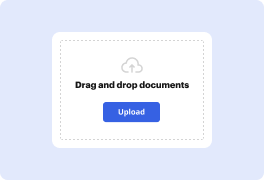
01. Upload a document from your computer or cloud storage.
Service screenshot
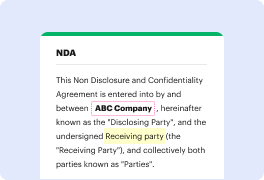
02. Add text, images, drawings, shapes, and more.
Service screenshot
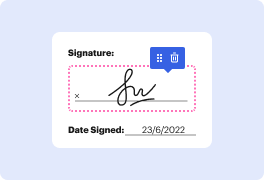
03. Sign your document online in a few clicks.
Service screenshot
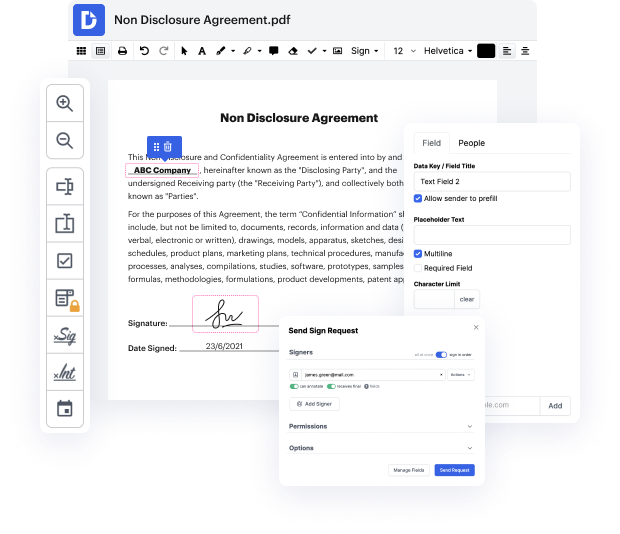
04. Send, export, fax, download, or print out your document.

How to Save Currency Document in Linux with DocHub

Form edit decoration

DocHub is a powerful online platform designed to streamline document management tasks such as editing, signing, and distribution. With its deep integration with Google Workspace, users can effortlessly manage their documents directly from familiar applications. Whether you're editing a currency document or completing forms, our editor allows for a smooth and efficient experience, making your work easier and faster, especially for users operating on Linux.

Follow the steps to save your currency document in Linux

  1. Open your web browser and navigate to the DocHub website. Log in using your credentials to access your document management dashboard.
  2. Once logged in, upload the currency document you wish to save. You can do this by selecting the upload option and choosing the file from your local storage.
  3. After the document is uploaded, use the editing tools available to make any necessary modifications. This includes adding text, signatures, or annotations as needed.
  4. Once you are satisfied with your edits, look for the option to save your changes. Ensure that you select the format in which you want to save the document.
  5. Finally, download the modified currency document to your device, or choose to print it or share it directly via email. This flexibility ensures your document is ready for use immediately.

Start managing your documents effortlessly with DocHub today!

PDF editing simplified with DocHub

icon
Seamless PDF editing
Editing a PDF is as simple as working in a Word document. You can add text, drawings, highlights, and redact or annotate your document without affecting its quality. No rasterized text or removed fields. Use an online PDF editor to get your perfect document in minutes.
icon
Smooth teamwork
Collaborate on documents with your team using a desktop or mobile device. Let others view, edit, comment on, and sign your documents online. You can also make your form public and share its URL anywhere.
icon
Automatic saving
Every change you make in a document is automatically saved to the cloud and synchronized across all devices in real-time. No need to send new versions of a document or worry about losing information.
icon
Google integrations
DocHub integrates with Google Workspace so you can import, edit, and sign your documents directly from your Gmail, Google Drive, and Dropbox. When finished, export documents to Google Drive or import your Google Address Book and share the document with your contacts.
icon
Powerful PDF tools on your mobile device
Keep your work flowing even when you're away from your computer. DocHub works on mobile just as easily as it does on desktop. Edit, annotate, and sign documents from the convenience of your smartphone or tablet. No need to install the app.
icon
Secure document sharing and storage
Instantly share, email, and fax documents in a secure and compliant way. Set a password, place your documents in encrypted folders, and enable recipient authentication to control who accesses your documents. When completed, keep your documents secure in the cloud.
dochub logo
google logo

Drive efficiency with the DocHub add-on for Google Workspace

Access documents and edit, sign, and share them straight from your favorite Google Apps.
Install now

How to Save Currency Document in Linux

5 out of 5
61 votes

[Music] do you need to write command output to a file in linux well im don pazette agitator at itprotv and im going to show you how in under a minute lets get started we can take the output from any command and redirect it to a text file by using the redirect functionality in bash its actually pretty easy first off im going to take a command im going to do df-h which shows my disk utilization but instead of writing it to screen i want to write it to a file so when i run that command im going to add a greater than sign to the end which means i want to redirect the output and then ill specify a file name im going to redirect this to file.txt when i run that i dont get any output on the screen because its all been sent to that file and if i take a look inside of that file by using for example the cat command i can see it right there now be careful when you use a greater than symbol thats going to create an all new file or overwrite an existing one if you want to append onto a

video background

Got questions?

Here are some common questions from our customers that may provide you with the answer you're looking for. If you can't find an answer to your question, please don't hesitate to reach out to us.
Contact us
We can simply redirect the output: $ command file. To append data to existing file: $ command file. For stderr (standard output) we use the following: $ command file. ## append ## $ /path/to/command arg1 arg2 21 | tee log.txt. For more information see the following man pages using the man command/help command:
To save (or write to) a file that youve made edits to, use the :w command. To quit Vi, use the :q command. To save and quit all at once, combine both commands into :wq.
For editing a file in Linux, we commonly used commands liike nano and vim. To edit a file using Nano, type nano filename in the terminal, make changes, press Ctrl + X to exit, and follow the prompts to save. For Vim, type vim filename, make changes, and use :wq to save and quit.
sh format, which is commonly used for shell scripts, you can follow these steps: Open a text editor or a terminal. Write or copy your shell script code into the editor or terminal. Save the file with a desired name, for example, myscript.sh. Make sure to include the .
In Vis Command mode, almost every letter on the keyboard has a function. To save a file, you must first be in Command mode. Press Esc to enter Command mode, and then type :wq to write and quit the file. The other, quicker option is to use the keyboard shortcut ZZ to write and quit.
To save (or write to) a file that youve made edits to, use the :w command. To quit Vi, use the :q command. To save and quit all at once, combine both commands into :wq. *NOTE: You can add an exclamation point ! to any command to force it.
0:23 1:44 Now hit the enter button on your keyboard. Now. If we check out my desktop. Youll see that theresMoreNow hit the enter button on your keyboard. Now. If we check out my desktop. Youll see that theres an export.
/ ( Root Directory) All files and folders on your Linux system are stored here and can be referenced from this directory, even when stored in various locations such as removable or virtual devices. NOTE: The root (/) directory is not to be confused with the root home directory ( /root ).

See why our customers choose DocHub

Great solution for PDF docs with very little pre-knowledge required.
"Simplicity, familiarity with the menu and user-friendly. It's easy to navigate, make changes and edit whatever you may need. Because it's used alongside Google, the document is always saved, so you don't have to worry about it."
Pam Driscoll F
Teacher
A Valuable Document Signer for Small Businesses.
"I love that DocHub is incredibly affordable and customizable. It truly does everything I need it to do, without a large price tag like some of its more well known competitors. I am able to send secure documents directly to me clients emails and via in real time when they are viewing and making alterations to a document."
Jiovany A
Small-Business
I can create refillable copies for the templates that I select and then I can publish those.
"I like to work and organize my work in the appropriate way to meet and even exceed the demands that are made daily in the office, so I enjoy working with PDF files, I think they are more professional and versatile, they allow..."
Victoria G
Small-Business

Security and compliance

At DocHub, your data security is our priority. We follow HIPAA, SOC2, GDPR, and other standards, so you can work on your documents with confidence.

Learn more
be ready to get more

Edit and sign PDFfor free

Get started now



