
Reorder PDF and Extract Pages from PDF in Ubuntu in no time
Aug 6th, 2022

0
forms filled out

0
forms signed

0
forms sent
01. Upload a document from your computer or cloud storage.
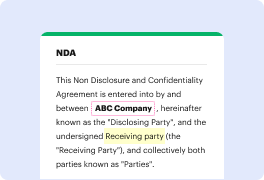
02. Add text, images, drawings, shapes, and more.
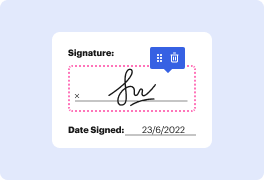
03. Sign your document online in a few clicks.
04. Send, export, fax, download, or print out your document.
Reorder PDF and Extract Pages from PDF in Ubuntu
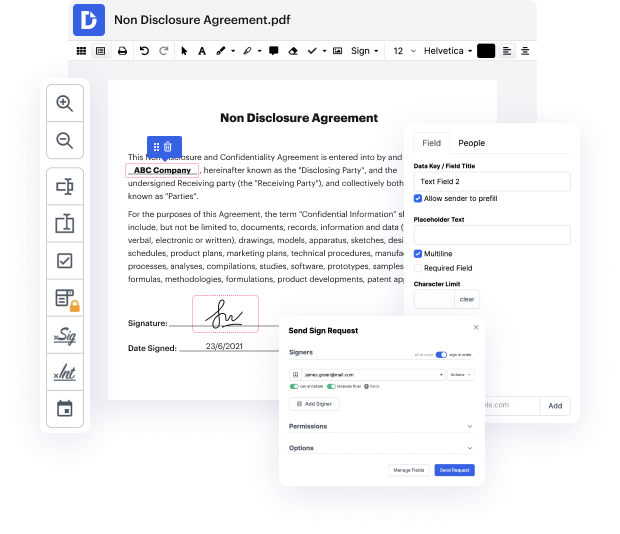
DocHub offers a powerful online platform for managing your documents effortlessly. With features designed to streamline editing, signing, and distribution, our editor empowers users to reorder PDFs and extract specific pages quickly. Whether you’re working on Ubuntu or any other operating system, DocHub's seamless integration with Google Workspace ensures a smooth workflow, making document management a breeze in today’s digital age.
Follow the steps to reorder PDF and extract pages from PDF in Ubuntu
- Open the DocHub website and log in using your credentials.
- Upload your PDF document to the editor by selecting the upload option.
- Once your document is loaded, navigate to the area where you can view the pages.
- To reorder the pages, simply drag and drop them into your desired order.
- For extracting specific pages, select the pages you want to keep and choose the option to extract or save those pages separately.
- After making your adjustments, review the document to ensure everything is in the correct order.
- Finally, download your modified PDF, print it, or share it directly via email.
Start using DocHub today to simplify your document management tasks for free!
PDF editing simplified with DocHub

Seamless PDF editing
Editing a PDF is as simple as working in a Word document. You can add text, drawings, highlights, and redact or annotate your document without affecting its quality. No rasterized text or removed fields. Use an online PDF editor to get your perfect document in minutes.

Smooth teamwork
Collaborate on documents with your team using a desktop or mobile device. Let others view, edit, comment on, and sign your documents online. You can also make your form public and share its URL anywhere.

Automatic saving
Every change you make in a document is automatically saved to the cloud and synchronized across all devices in real-time. No need to send new versions of a document or worry about losing information.

Google integrations
DocHub integrates with Google Workspace so you can import, edit, and sign your documents directly from your Gmail, Google Drive, and Dropbox. When finished, export documents to Google Drive or import your Google Address Book and share the document with your contacts.

Powerful PDF tools on your mobile device
Keep your work flowing even when you're away from your computer. DocHub works on mobile just as easily as it does on desktop. Edit, annotate, and sign documents from the convenience of your smartphone or tablet. No need to install the app.

Secure document sharing and storage
Instantly share, email, and fax documents in a secure and compliant way. Set a password, place your documents in encrypted folders, and enable recipient authentication to control who accesses your documents. When completed, keep your documents secure in the cloud.






Drive efficiency with the DocHub add-on for Google Workspace
Access documents and edit, sign, and share them straight from your favorite Google Apps.
Install now
Got questions?
Here are some common questions from our customers that may provide you with the answer you're looking for. If you can't find an answer to your question, please don't hesitate to reach out to us.
Contact us
How do I remove pages from a PDF in Ubuntu?
#4: Using Command Line (Linux) with pdftk (PDF Toolkit) pdftk on your Linux system. For Debian-based systems (like Ubuntu), you can use the following command: sudo apt-get pdftk. Use the following command to remove pages: pdftk input.pdf cat 1-4 7 end output output.pdf.
How do I change the order of pages in a PDF in Ubuntu?
How to rearrange pages in PDF in Ubuntu quickly Open any browser on your Ubuntu gadget. Visit the DocHub site and Log in to your profile. Once you find the Dashboard, you can add the file for editing from the gadget or link it from your cloud storage to rearrange pages in PDF in Ubuntu.
How to extract text from PDF in Ubuntu?
2 Methods to Convert PDF to Text on Linux sudo apt calibre. sudo apt poppler-utils [Works for Debian, Mint, Ubuntu, etc.] pdftotext -layout source.pdf target.txt [Source is the original PDF and Target is the final output] pdftotext -layout -f M -l N source. Windows:
How to separate PDF pages in Linux?
Steps to split a PDF using Linux. Open Acrobats online PDF splitting tool. Choose a file to upload or drag and drop. Select your divider lines to set up the page ranges you want to split or extract. Save. Download, share, and enjoy all of the time you saved.
How do I extract certain pages out of a PDF?
How to extract pages from a PDF Open the Organize Pages tool. Click the Select a File button. Open a PDF you want to extract pages from. Select Extract in the top menu. Highlight pages you want to extract. Click Extract to extract the selected pages. Save your new PDF.
How do you cut out specific pages from a PDF?
Select the pages you want to put into a new PDF. When youre ready, select Extract. Acrobat automatically creates a new, separate PDF file of your selected pages. Download the new document, get a link to share it, or give it a new file name.
How do I reorder pages of a PDF?
How to rearrange pages in a PDF: Open the Organize Pages tool from the top menu or the right pane (Tools Organize Pages) Select one or more page thumbnails (page numbers are underneath). Use Shift to select a page range. Do one of the following: Drag and drop pages to reorder PDF pages how you want. Save your file.
See why our customers choose DocHub
Great solution for PDF docs with very little pre-knowledge required.

A Valuable Document Signer for Small Businesses.

I can create refillable copies for the templates that I select and then I can publish those.

Security and compliance
At DocHub, your data security is our priority. We follow HIPAA, SOC2, GDPR, and other standards, so you can work on your documents with confidence.
Learn more




