
Negate token in jpg smoothly


How to Negate token in Jpg files anytime from anywhere
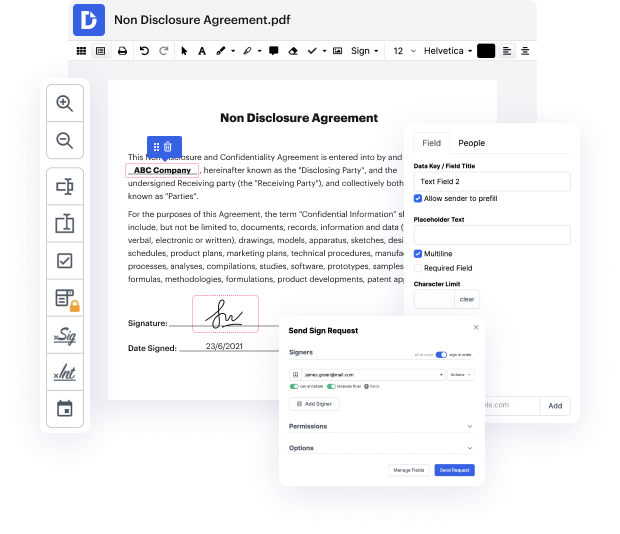
Have you ever had trouble with modifying your Jpg document while on the go? Well, DocHub has an excellent solution for that! Access this cloud editor from any internet-connected device. It enables users to Negate token in Jpg files rapidly and anytime needed.
DocHub will surprise you with what it provides you with. It has powerful capabilities to make any updates you want to your forms. And its interface is so easy-to-use that the whole process from start to finish will take you only a few clicks.
Discover DocHub’s features while you Negate token in Jpg files:
- Add your Jpg from your device, an email attachment, cloud storage, or via a link.
- Create new content by clicking on our Text button on the top, and change its color, size, and fonts as needed.
- Click on our Strikeout or Whiteout tools to erase details that just don’t make sense anymore.
- Make visual changes by drawing or inserting images, lines, and symbols.
- Highlight crucial details in your paperwork.
- Click on the Comment option to note your most significant changes.
- Transform your Jpg file into a fillable template by clicking on the Manage Fields tool.
- Add fields for different types of data.
- Assign Roles to your fields and set them mandatory or optional to guarantee parties fill them out properly.
- Add Signature Fields and click on Sign to approve your form yourself.
- Decide on how you share your form - via email or through a shareable link.
After you finish editing and sharing, you can save your updated Jpg document on your device or to the cloud as it is or with an Audit Trail that contains all changes applied. Also, you can save your paperwork in its original version or transform it into a multi-use template - accomplish any document management task from anywhere with DocHub. Sign up today!
PDF editing simplified with DocHub






Drive efficiency with the DocHub add-on for Google Workspace
How to Negate token in jpg
user authentication there are two main ways to get the job done sessions and s the traditional approach on the web is cookie-based server-side sessions the process begins with a user filling out their username and password and then submitting it to a server which then validates it creates a session in the database then responds with a session id the session id will be saved in the browsers cookie jar which is a place in the browser to save key value pairs that will be sent back to the server on each subsequent request it can then respond back with content designed for the currently logged end user in other words we have a stateful session between the front end client and backend server this approach works great but there are some drawbacks it can be vulnerable to an attack known as cross-site request forgery where the attacker points the user to a site theyre logged into to perform actions they didnt intend to like submitting a payment or changing their password although the risk is

See why our customers choose DocHub


Security and compliance
At DocHub, your data security is our priority. We follow HIPAA, SOC2, GDPR, and other standards, so you can work on your documents with confidence.
Learn more




