
Adapt design in tiff smoothly





How to adapt design in tiff faster
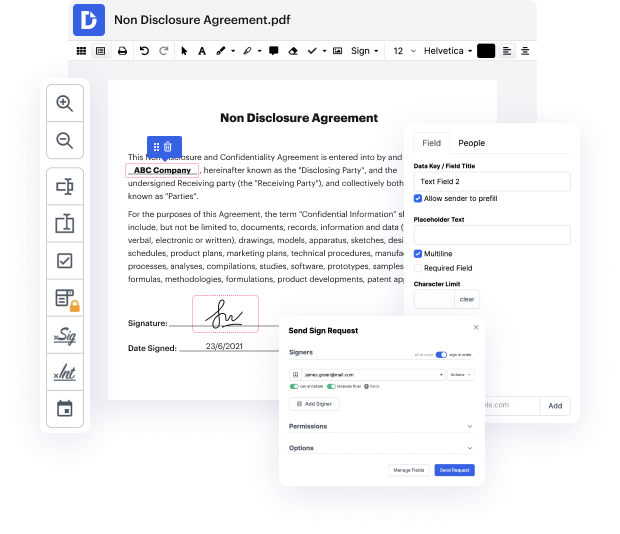
If you edit files in different formats daily, the universality of the document solution matters a lot. If your instruments work for only some of the popular formats, you might find yourself switching between application windows to adapt design in tiff and manage other file formats. If you wish to eliminate the headache of document editing, get a solution that can easily manage any format.
With DocHub, you do not need to concentrate on anything apart from actual document editing. You won’t need to juggle programs to work with various formats. It will help you revise your tiff as easily as any other format. Create tiff documents, modify, and share them in a single online editing solution that saves you time and boosts your productivity. All you have to do is sign up a free account at DocHub, which takes only a few minutes or so.
Take these steps to adapt design in tiff in a blink
- Open the DocHub website and sign up by clicking on the Create free account button.
- Enter your electronic mail and create a password to sign up your new account or connect your personal information via your Gmail account.
- Go to the Dashboard and add the tiff you have to revise. Do it by uploading your file or linking it from the cloud or wherever you have it placed.
- Open the file in editing mode and make all modifications using the upper toolbar.
- When done editing, make use of the easiest method to save your file: download it, keep it in your account, or send it straight to your recipient via DocHub.
You won’t have to become an editing multitasker with DocHub. Its functionality is enough for fast document editing, regardless of the format you want to revise. Begin with creating a free account and discover how easy document management can be having a tool designed specifically to suit your needs.
PDF editing simplified with DocHub






Drive efficiency with the DocHub add-on for Google Workspace
How to Adapt design in tiff
The TIF or Tagged Image File Format is used for storing multiple images in one file, supporting both 8 and 16 bits per channel for up to 48-bit images with varying transparency. It is commonly used as a larger container to keep many images together before transport, making it ideal for editing photos later. TIFs are often left uncompressed to maintain image quality, but they also offer two lossless compression algorithms for added functionality. Its benefits include support for various image depths and transparency levels, making it versatile for different needs.

See why our customers choose DocHub


Security and compliance
At DocHub, your data security is our priority. We follow HIPAA, SOC2, GDPR, and other standards, so you can work on your documents with confidence.
Learn more




