
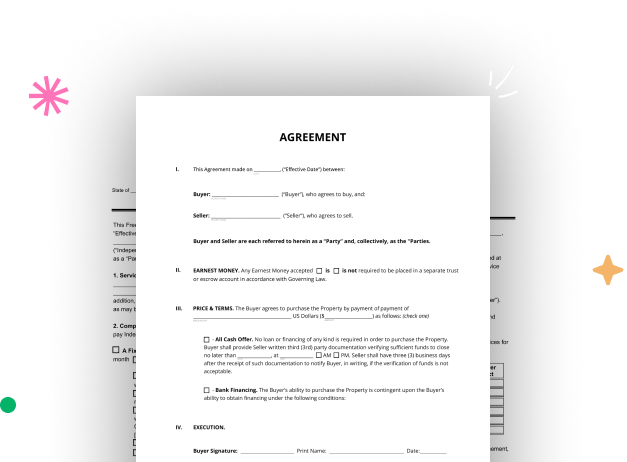

Create your US Legal Court Document from scratch

Start Building Now
Title decoration

Here's how it works

01. Start with a blank US Legal Court Document
Open the blank document in the editor, set the document view, and add extra pages if applicable.
02. Add and configure fillable fields
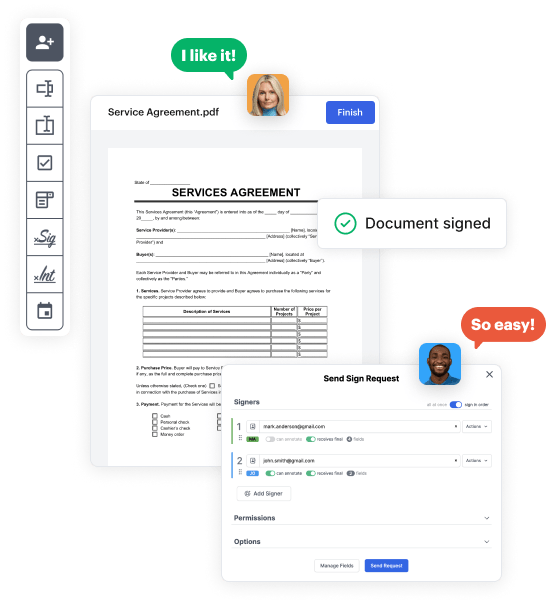
Use the top toolbar to insert fields like text and signature boxes, radio buttons, checkboxes, and more. Assign users to fields.
03. Distribute your form
Share your US Legal Court Document in seconds via email or a link. You can also download it, export it, or print it out.

Build US Legal Court Document from scratch with these detailed guidelines

Form edit decoration

Step 1: Start off by launching DocHub.

Begin by signing up for a free DocHub account using any offered sign-up method. Simply log in if you already have one.

Step 2: Register for a 30-day free trial.

Try out the whole suite of DocHub's advanced tools by signing up for a free 30-day trial of the Pro plan and proceed to craft your US Legal Court Document.

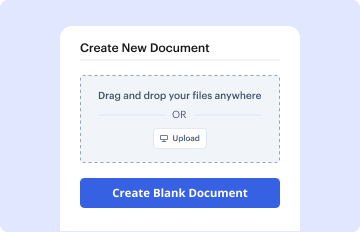
Step 3: Start with a new empty document.

In your dashboard, click the New Document button > scroll down and choose to Create Blank Document. You will be redirected to the editor.

Step 4: Organize the document’s view.

Utilize the Page Controls icon indicated by the arrow to toggle between two page views and layouts for more convenience.

Step 5: Start adding fields to design the dynamic US Legal Court Document.

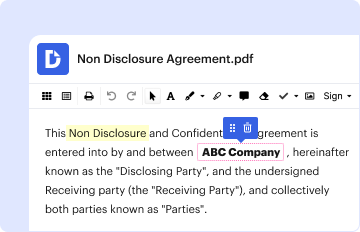
Navigate through the top toolbar to add document fields. Insert and arrange text boxes, the signature block (if applicable), embed images, etc.

Step 6: Prepare and configure the incorporated fields.

Arrange the fields you incorporated based on your chosen layout. Modify the size, font, and alignment to make sure the form is user-friendly and neat-looking.

Step 7: Finalize and share your form.

Save the completed copy in DocHub or in platforms like Google Drive or Dropbox, or design a new US Legal Court Document. Distribute your form via email or utilize a public link to engage with more people.


be ready to get more

Build your US Legal Court Document in minutes

Start creating now

Got questions?

We have answers to the most popular questions from our customers. If you can't find an answer to your question, please contact us.
Contact us
Minimum charges apply to all proceedings, including fees for nonappearances and cancellations received less than 24 hours prior to the commencement of proceedings on the preceding business day (for instance, a cancellation for a 10:00 a.m. local time Monday proceeding would need to be received by 10:00 a.m. local time
(2) Spacing: Lines of text must be 1.5 spaced. Footnotes, headings, subheadings, and quotations may be single-spaced. The lines of text must be unnumbered. (3) Margins: The margins must be set at 1-1/2 inches on the left and right and 1 inch on the top and bottom.
While those documents are usually 8.5 x 11 inches, legal documents are 8.5 x 14 inches. If youll be printing on that size paper, start your document formatting by choosing the right size for your document. Go to Layout and choose the Size option.
Heres how to write a legal document in 10 simple steps: Plan Out the Document Before You Begin. Write with Clear and Concise Language. Ensure the Correct Use of Grammar. Be as Accurate as Possible. Make Information Accessible. Ensure All Necessary Information Is Included. Always Use an Active Voice.
As one of the leading providers of litigation support services, U.S. Legal Support is the only litigation support company that provides a full suite of court reporting solutions, record retrieval, interpreting translations, trial services and transcription services to law firms, major corporations and insurance
be ready to get more

Build your US Legal Court Document in minutes

Start creating now

Related Q&A to US Legal Court Document

8 Essential Steps for Formatting a Word Document Pick the right font. Use standard page size and margins. Organize content for readability. Add section breaks. Set up headers, footers, and page numbering. Make sure line and paragraph formatting is consistent. Take advantage of styles for consistency. Keep it simple.
Legal forms address substantive matters, such as forms for contracts, wills, and leases. Pleading and practice forms provide language used in pleadings and motions filed with a court in litigation. These supply language for complaints, answers, motions to dismiss, and other motions.

Additional resources on building your forms