Create your Sample Legal Document from scratch

Start Building Now
Title decoration

Here's how it works

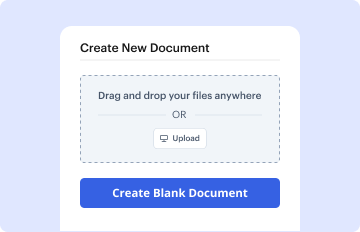
01. Start with a blank Sample Legal Document
Open the blank document in the editor, set the document view, and add extra pages if applicable.
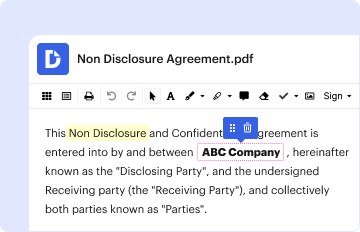
02. Add and configure fillable fields
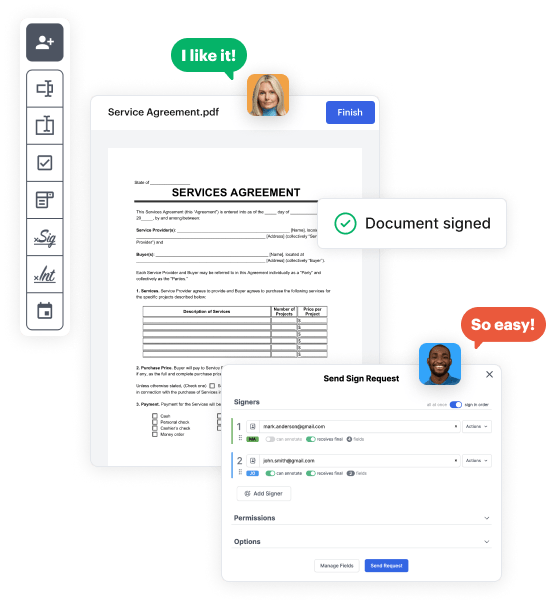
Use the top toolbar to insert fields like text and signature boxes, radio buttons, checkboxes, and more. Assign users to fields.
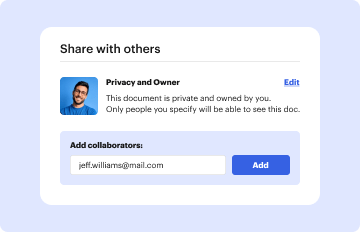
03. Distribute your form
Share your Sample Legal Document in seconds via email or a link. You can also download it, export it, or print it out.

A quick guide on how to build a professional-looking Sample Legal Document
Form edit decoration

Step 1: Log in to DocHub to create your Sample Legal Document.

First, sign in to your DocHub account. If you don't have one, you can easily register for free.

Step 2: Navigate to the dashboard.

Once signed in, head to your dashboard. This is your main hub for all document-related tasks.

Step 3: Initiate new document creation.

In your dashboard, hit New Document in the upper left corner. Pick Create Blank Document to craft the Sample Legal Document from the ground up.

Step 4: Add template fillable areas.

Place different fields like text boxes, photos, signature fields, and other elements to your template and designate these fields to particular recipients as necessary.

Step 5: Configure your template.

Personalize your form by inserting instructions or any other vital information utilizing the text feature.

Step 6: Review and tweak the form.

Thoroughly go over your created Sample Legal Document for any errors or essential adjustments. Leverage DocHub's editing capabilities to enhance your template.

Step 7: Send out or export the template.

After finalizing, save your file. You can opt to save it within DocHub, export it to various storage platforms, or send it via a link or email.


be ready to get more

Build your Sample Legal Document in minutes

Start creating now

Got questions?

We have answers to the most popular questions from our customers. If you can't find an answer to your question, please contact us.
Contact us
Important points to include in a legal document. Party details. List the names, numbers, addresses (email or physical), and any other relevant information of all parties involved. Background information. Motion. Roles and responsibilities. BdocHubes or contingencies. Dates and signatures.
Initialling a document involves marking each page with the parties initials to signify consent to the content on that page. It is not legally required to initial contracts in 2024, but it adds security by preventing page substitution and ensuring agreement on any changes made.
Legal Templates Overview Legal Templates is a Free Online Legal Form Document Creator.
Most word-processing programs have automatic formatting for margins and spacing, but law firms can also set the margins manually. Ideally, the top margin should be two inches and the bottom margin should be one inch. Most legal documentation uses 1.5 or double spacing.
0:00 1:20 For it slash. Free. There are a few legal templates. Available online forward to download and useMoreFor it slash. Free. There are a few legal templates. Available online forward to download and use the templates. Available online in word you must be connected to the Internet.
be ready to get more

Build your Sample Legal Document in minutes

Start creating now

Related Q&A to Sample Legal Document

While its technically possible to write a demand letter yourself, there are docHub advantages to seeking the guidance of a legal professional. Heres why. Professional expertise. An attorney specialized in personal injury law understands the nuances of relevant statutes, case law, and procedural requirements.
Some examples include individual contract clauses, licensing agreements, complaints, and interrogatories. Sample documents can be found in a number of places including law firm collections or knowledge management systems, and paid databases such as Lexis and Westlaw.
How to Format a Legal Document in Word Resize Your Document. Pick Your Fonts. Set the Line Spacing. Format Your Columns. Set Up Your Table of Contents. Create Your Table of Authorities. Automating Your Formatting. Creating a Style. Setting Up Autoformatting as You Type. A Note on Different Documents. Pleadings. Briefs. Manuscripts.

Additional resources on building your forms