

Create your Sample Case Legal Document from scratch

Start Building Now
Title decoration

Here's how it works

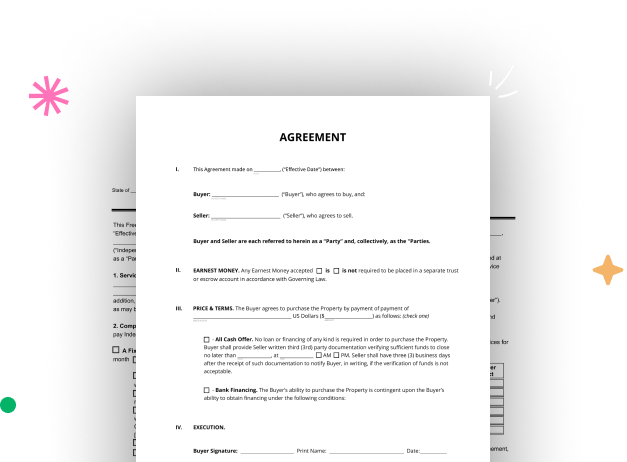
01. Start with a blank Sample Case Legal Document
Open the blank document in the editor, set the document view, and add extra pages if applicable.
02. Add and configure fillable fields
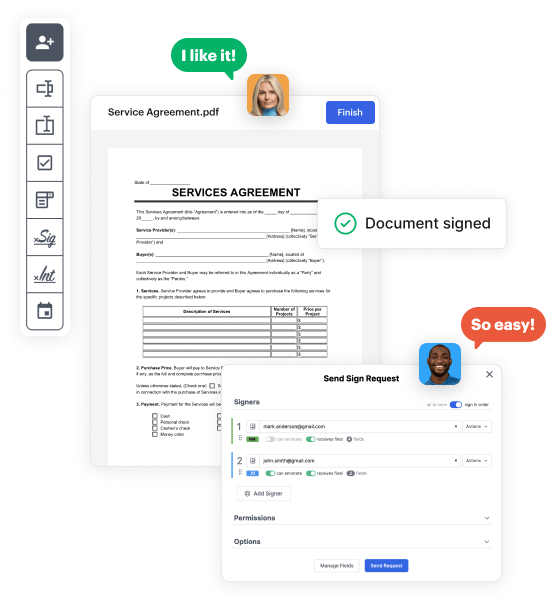
Use the top toolbar to insert fields like text and signature boxes, radio buttons, checkboxes, and more. Assign users to fields.
03. Distribute your form
Share your Sample Case Legal Document in seconds via email or a link. You can also download it, export it, or print it out.

A simple tutorial on how to set up a polished Sample Case Legal Document

Form edit decoration

Step 1: Log in to DocHub to begin creating your Sample Case Legal Document.

First, log in to your DocHub account. If you don't have one, you can easily register for free.

Step 2: Go to the dashboard.

Once you’re in, head to your dashboard. This is your main hub for all document-related tasks.

Step 3: Initiate new document creation.

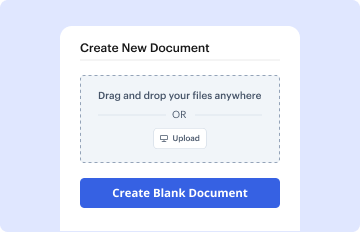
In your dashboard, click on New Document in the upper left corner. Choose Create Blank Document to craft the Sample Case Legal Document from scratch.

Step 4: Insert form fillable areas.

Place different fields like text boxes, images, signature fields, and other fields to your form and designate these fields to certain individuals as required.

Step 5: Configure your document.

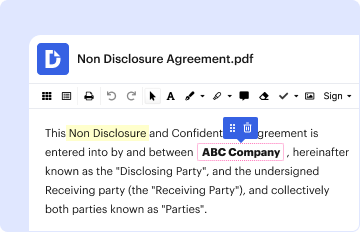
Refine your template by inserting walkthroughs or any other necessary information utilizing the text tool.

Step 6: Double-check and correct the document.

Thoroughly go over your created Sample Case Legal Document for any typos or necessary adjustments. Take advantage of DocHub's editing capabilities to perfect your document.

Step 7: Distribute or download the document.

After completing, save your copy. You can opt to keep it within DocHub, export it to various storage platforms, or forward it via a link or email.


be ready to get more

Build your Sample Case Legal Document in minutes

Start creating now

Got questions?

We have answers to the most popular questions from our customers. If you can't find an answer to your question, please contact us.
Contact us
Writing up your case study Executive Summary/Synopsis. Introduce the topic area of the report. Introduction. Summarise the your task. Findings. Identify the key problems you have identified by: Discussion. Summarise the major problem(s). Conclusion. Recommendations. References. Appendices (if any)
Components of a Case Brief A case brief is made up of 7 main components. The main components include the case name, facts, procedural history, issue, holding, reasoning, and rule. You will pick up on what your professor focuses on in their courses regarding cases as the semester goes on.
A civil suit can also result if someone is injured or property is damaged. For example, someone who breaks a leg when he or she slips on an icy stairwell may sue for compensation. The person who sues is called the plaintiff.
The following is the suggested format for case summary: Citation Name of the case. (e. Nature of the. case. The facts Include facts that are relevant to the legal issues. Issue State the legal issue in a form of question. Rule of law Provide a statement of the general principle of law. Holding or.
How to write a case brief Choose the right case brief format. There are several similar formats you might choose for your legal case. Start with the title, citation and author. State the facts of the case. Declare the legal issue. Outline the rule of law. Explain the holding and reasoning. Concurrences and dissents.
be ready to get more

Build your Sample Case Legal Document in minutes

Start creating now

Related Q&A to Sample Case Legal Document

Steps to briefing a case Select a useful case brief format. Use the right caption when naming the brief. Identify the case facts. Outline the procedural history. State the issues in question. State the holding in your words. Describe the courts rationale for each holding. Explain the final disposition.
How to write a case brief Choose a formatting style that is easy to read and understand. Add the title and citation. Outline the facts concisely and clearly. Include the procedural history. Highlight the legal issues. Explain the decision. Add the reasoning that supports the decision. Include the legal ratio.

Additional resources on building your forms