
Create your Property Law from scratch

Start Building Now
Title decoration

Here's how it works

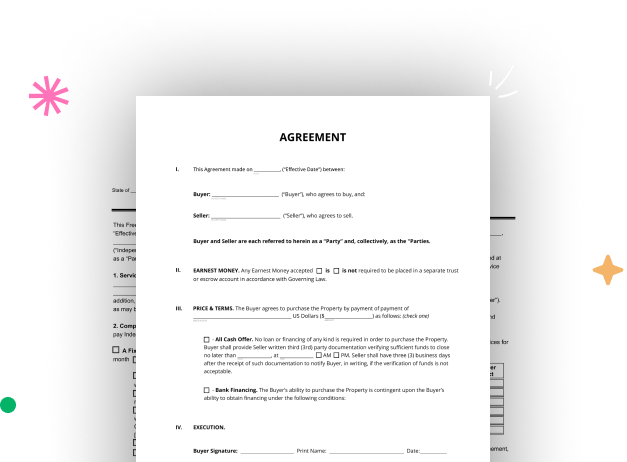
01. Start with a blank Property Law
Open the blank document in the editor, set the document view, and add extra pages if applicable.
02. Add and configure fillable fields
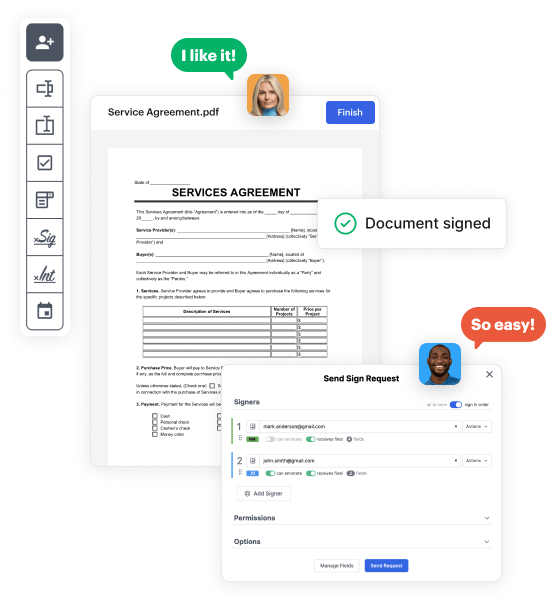
Use the top toolbar to insert fields like text and signature boxes, radio buttons, checkboxes, and more. Assign users to fields.
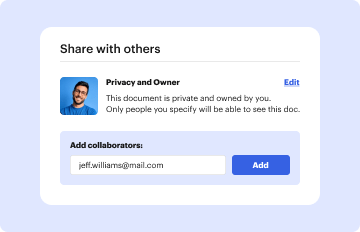
03. Distribute your form
Share your Property Law in seconds via email or a link. You can also download it, export it, or print it out.

A brief guide on how to create a professional-looking Property Law

Form edit decoration

Step 1: Sign in to DocHub to begin creating your Property Law.

First, log in to your DocHub account. If you don't have one, you can easily register for free.

Step 2: Navigate to the dashboard.

Once you’re in, navigate to your dashboard. This is your main hub for all document-centric tasks.

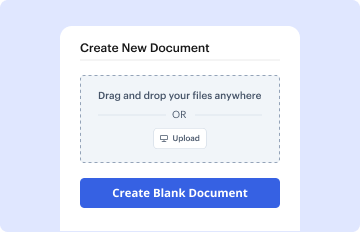
Step 3: Start new document creation.

In your dashboard, click on New Document in the upper left corner. Opt for Create Blank Document to design the Property Law from the ground up.

Step 4: Insert form fillable areas.

Place various elements like text boxes, photos, signature fields, and other fields to your form and assign these fields to certain recipients as necessary.

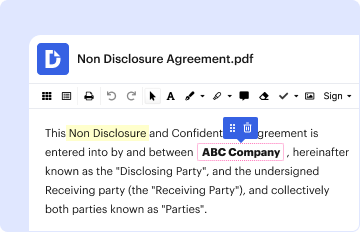
Step 5: Personalize your template.

Customize your template by inserting walkthroughs or any other necessary information leveraging the text option.

Step 6: Go over and modify the form.

Carefully examine your created Property Law for any typos or needed adjustments. Leverage DocHub's editing capabilities to fine-tune your template.

Step 7: Distribute or export the template.

After completing, save your file. You can select to keep it within DocHub, transfer it to various storage options, or send it via a link or email.


be ready to get more

Build your Property Law in minutes

Start creating now

Got questions?

We have answers to the most popular questions from our customers. If you can't find an answer to your question, please contact us.
Contact us
Thus, the three basic elements of private property are (1) exclusivity of rights to choose the use of a resource, (2) exclusivity of rights to the services of a resource, and (3) rights to exchange the resource at mutually agreeable terms.
The American Constitution established property rights for all citizens. The Fifth Amendment specifies that the government cannot seize private property for public use without providing fair compensation.
Property law in the United States is complex and multifaceted, but these laws pertain specifically to three distinct types of property. Both state and federal laws exist to protect real property, personal property, and intellectual property.
Create a properties file Right-click a directory where you would like to create the file. From the context menu of the target directory, choose New | File. In the New File dialog, type the filename with the corresponding extension . properties, and click OK.
Property rights give the owner or right holder the ability to do with the property what they choose. That includes holding on to it, selling or renting it out for profit, or transferring it to another party.
be ready to get more

Build your Property Law in minutes

Start creating now

Related Q&A to Property Law

Legal rights, in contrast, are based on a societys customs, laws, statutes or actions by legislatures. An example of a legal right is the right to vote of citizens. Citizenship, itself, is often considered as the basis for having legal rights, and has been defined as the right to have rights.

Additional resources on building your forms