

Create your Pennsylvania Real Estate Legal Form from scratch

Start Building Now
Title decoration

Here's how it works

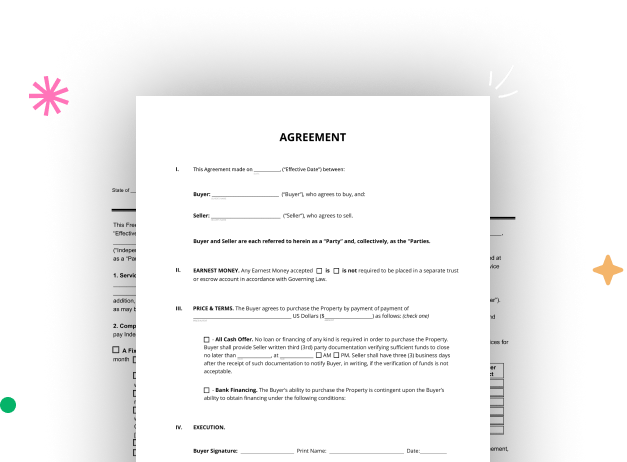
01. Start with a blank Pennsylvania Real Estate Legal Form
Open the blank document in the editor, set the document view, and add extra pages if applicable.
02. Add and configure fillable fields
Use the top toolbar to insert fields like text and signature boxes, radio buttons, checkboxes, and more. Assign users to fields.
03. Distribute your form
Share your Pennsylvania Real Estate Legal Form in seconds via email or a link. You can also download it, export it, or print it out.

A brief tutorial on how to build a professional-looking Pennsylvania Real Estate Legal Form

Form edit decoration

Step 1: Log in to DocHub to create your Pennsylvania Real Estate Legal Form.

First, sign in to your DocHub account. If you don't have one, you can easily register for free.

Step 2: Head to the dashboard.

Once logged in, access your dashboard. This is your central hub for all document-focused tasks.

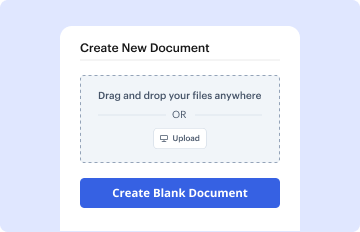
Step 3: Initiate new document creation.

In your dashboard, choose New Document in the upper left corner. Select Create Blank Document to put together the Pennsylvania Real Estate Legal Form from scratch.

Step 4: Add form fillable areas.

Add different fields like text boxes, images, signature fields, and other options to your form and designate these fields to specific recipients as necessary.

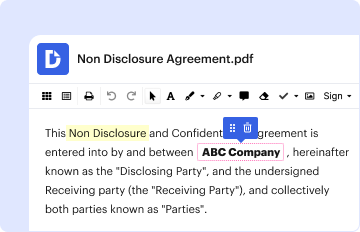
Step 5: Personalize your form.

Refine your document by inserting walkthroughs or any other vital information leveraging the text feature.

Step 6: Review and correct the form.

Meticulously go over your created Pennsylvania Real Estate Legal Form for any discrepancies or required adjustments. Make use of DocHub's editing features to polish your form.

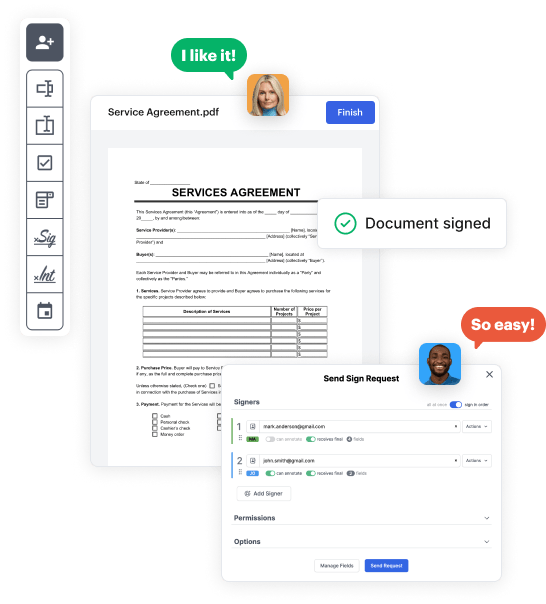
Step 7: Send out or download the form.

After completing, save your file. You can opt to retain it within DocHub, transfer it to various storage services, or forward it via a link or email.


be ready to get more

Build your Pennsylvania Real Estate Legal Form in minutes

Start creating now

Got questions?

We have answers to the most popular questions from our customers. If you can't find an answer to your question, please contact us.
Contact us
Among the elements of any valid listing contract are: In Writing. All real estate contracts must be in writing. Employment. The listing contract is a personal services contract between you and the broker. Compensation. For any contract to be valid, there has to be compensation. Title. Marketing and MLS Plan. Termination Date.
A listing agreement is a legally binding agreement between the seller and real estate agent or REALTOR, so all parties must sign it.
A contract can either be written or verbal, and while both can be legally binding, some contracts are required to be written in a designated format to be enforceable.
This statute, codified at 33 P.S. 1, provides in essence that all conveyances of an interest in land, including leases for periods in excess of three years, must be in the form of a signed writing in order to be enforceable in a court of law.
However, real estate contracts also have some common elements that must be included to make the agreement valid; this includes price, contingencies, earnest money, and a closing date. Its essential for real estate agents and the buyers and sellers to review the agreements to make sure theyre outlined clearly.
be ready to get more

Build your Pennsylvania Real Estate Legal Form in minutes

Start creating now

Related Q&A to Pennsylvania Real Estate Legal Form

Communicating acceptance orally is less reliable than by writing. To guard against the uncertainties of oral agreements, Pennsylvania has a statute of frauds that requires agreements for the sale of real estate to be evidenced by a writing.
(a) An agreement of sale, other than for a cemetery lot, mausoleum or cremation space or opening, shall contain: (1) The date of the agreement. (2) The names of the buyer and seller. (3) A description of the property and the interest to be conveyed.
A purchase agreement (PA) is a written agreement between a buyer and seller to purchase and sell real estate. It protects both parties in a real estate transaction by defining their rights and responsibilities and setting appropriate expectations.

Additional resources on building your forms