

Create your Pennsylvania Real Estate Form from scratch

Start Building Now
Title decoration

Here's how it works

01. Start with a blank Pennsylvania Real Estate Form
Open the blank document in the editor, set the document view, and add extra pages if applicable.
02. Add and configure fillable fields
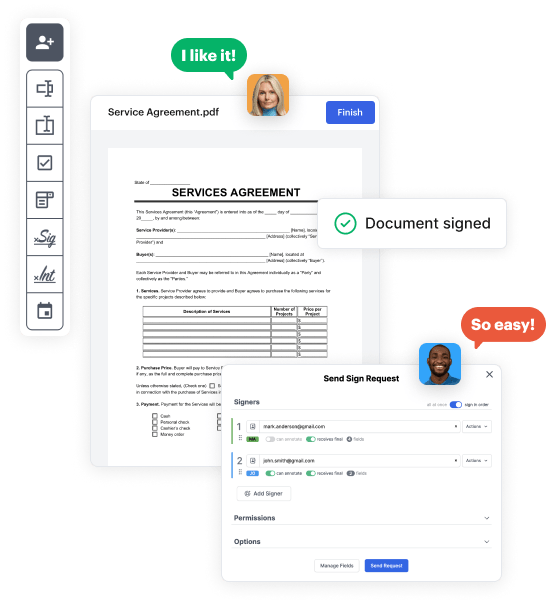
Use the top toolbar to insert fields like text and signature boxes, radio buttons, checkboxes, and more. Assign users to fields.
03. Distribute your form
Share your Pennsylvania Real Estate Form in seconds via email or a link. You can also download it, export it, or print it out.

A quick tutorial on how to set up a polished Pennsylvania Real Estate Form

Form edit decoration

Step 1: Log in to DocHub to begin creating your Pennsylvania Real Estate Form.

First, sign in to your DocHub account. If you don't have one, you can simply sign up for free.

Step 2: Head to the dashboard.

Once signed in, navigate to your dashboard. This is your central hub for all document-based activities.

Step 3: Kick off new document creation.

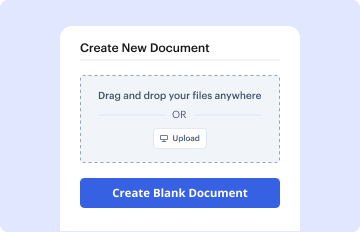
In your dashboard, select New Document in the upper left corner. Choose Create Blank Document to build the Pennsylvania Real Estate Form from a blank slate.

Step 4: Insert form fillable areas.

Add numerous fields like text boxes, photos, signature fields, and other elements to your form and designate these fields to particular individuals as necessary.

Step 5: Personalize your template.

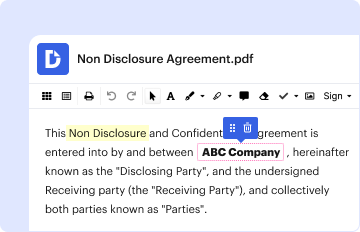
Customize your form by adding directions or any other necessary details utilizing the text feature.

Step 6: Review and correct the document.

Attentively go over your created Pennsylvania Real Estate Form for any mistakes or needed adjustments. Leverage DocHub's editing capabilities to fine-tune your template.

Step 7: Send out or export the template.

After completing, save your copy. You can select to keep it within DocHub, transfer it to various storage solutions, or send it via a link or email.


be ready to get more

Build your Pennsylvania Real Estate Form in minutes

Start creating now

Got questions?

We have answers to the most popular questions from our customers. If you can't find an answer to your question, please contact us.
Contact us
PA Definition Overview A Professional Association in real estate refers to a formal organization that represents and supports professionals working in the field. These associations often include real estate brokers, sales associates, and other individuals involved in the industry.
Pursuant to BPC section 3502.3, a practice agreement shall include the following provisions: The types of medical services the PA is authorized to perform. Policies and procedures to ensure adequate supervision of the PA. Methods for the continuing evaluation of the competency and qualifications of the PA.
Termination. In some cases, the best remedy may be termination of the real estate contract. In such cases, the buyer is refunded the deposit and all expenses incurred during the failed transaction. These expenses may include but are not limited to attorney fees, survey fees, and title inspection.
Oregon REALTORS forms are available on docHub, SkySlope, and Transactions (zipForm Edition). If you already have an account with one of these platforms, you do not need to create a new account. Simply login to your account and add the Oregon REALTORS forms library.
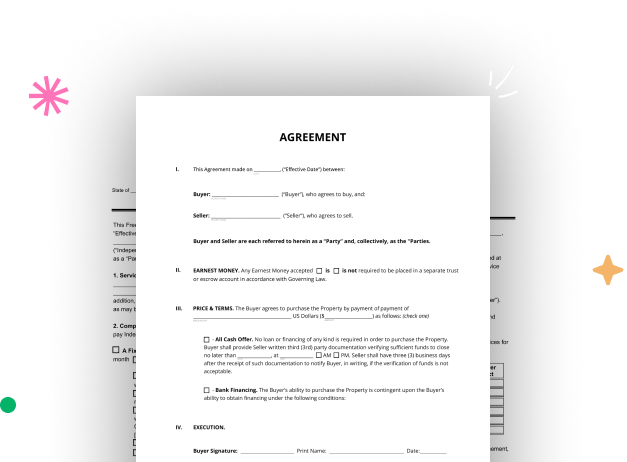
A purchase agreement (PA) is a written agreement between a buyer and seller to purchase and sell real estate. It protects both parties in a real estate transaction by defining their rights and responsibilities and setting appropriate expectations.
be ready to get more

Build your Pennsylvania Real Estate Form in minutes

Start creating now

Related Q&A to Pennsylvania Real Estate Form

The PA stands for Professional Association, so the DDPR or the state allows you to operate as a corporation either under a PA or an LLC. Most agents like to be a PA, this way they can be taxed as a corporation, and they like to be treated as an S Corp to limit their self-employment taxes.
Form A - Agent/Seller Agreement This is perhaps the most common type of form, which serves as a contract between the agent and the seller of the property. This form legally mandates the agent to act on the sellers behalf by marketing the property and managing interested buyers.
Purchase Orders. More than once, when I review Purchase Agreements (PA) that buyers have already signed with his or her supplier, Ive found that actually what he signed is a Purchase Order (PO).

Additional resources on building your forms