Create your North Dakota Legal Form from scratch

Start Building Now
Title decoration

Here's how it works

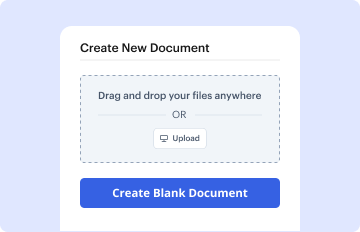
01. Start with a blank North Dakota Legal Form
Open the blank document in the editor, set the document view, and add extra pages if applicable.
02. Add and configure fillable fields
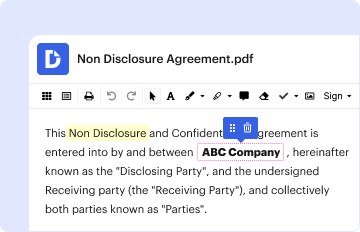
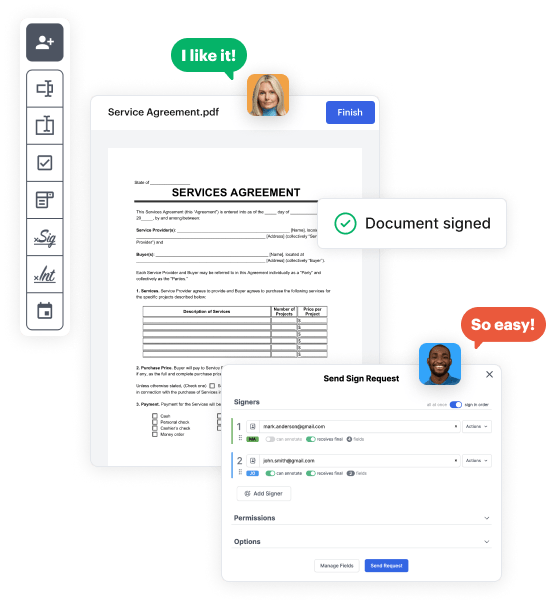
Use the top toolbar to insert fields like text and signature boxes, radio buttons, checkboxes, and more. Assign users to fields.
03. Distribute your form
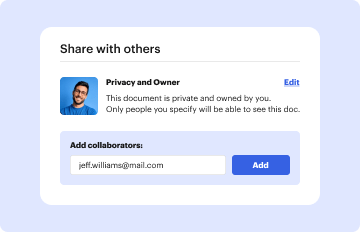
Share your North Dakota Legal Form in seconds via email or a link. You can also download it, export it, or print it out.

A detailed guide on how to design your North Dakota Legal Form online
Form edit decoration

Step 1: Start with DocHub's free trial.

Go to the DocHub website and sign up for the free trial. This provides access to every feature you’ll require to create your North Dakota Legal Form with no upfront cost.

Step 2: Access your dashboard.

Log in to your DocHub account and go to the dashboard.

Step 3: Craft a new document.

Click New Document in your dashboard, and select Create Blank Document to design your North Dakota Legal Form from the ground up.

Step 4: Utilize editing tools.

Place different elements such as text boxes, radio buttons, icons, signatures, etc. Arrange these elements to match the layout of your document and designate them to recipients if needed.

Step 5: Organize the form layout.

Rearrange your document easily by adding, repositioning, deleting, or combining pages with just a few clicks.

Step 6: Set up the North Dakota Legal Form template.

Turn your freshly crafted form into a template if you need to send multiple copies of the same document numerous times.

Step 7: Save, export, or distribute the form.

Send the form via email, distribute a public link, or even publish it online if you wish to collect responses from more recipients.


be ready to get more

Build your North Dakota Legal Form in minutes

Start creating now

Got questions?

We have answers to the most popular questions from our customers. If you can't find an answer to your question, please contact us.
Contact us
Proof of service shows the state district court when, how, and where the other parties were served. Proof of service also shows the documents that were served. An affidavit, declaration of service, or certificate of service gives the court proof of service.
A certificate of good standing in the State of North Dakota is also called a Certificate of Fact. You can order by fax, mail, email, phone or in person, but we recommend faxing. Normal processing takes up to 2 days, plus additional time for mailing, and costs approximately $20, depending on the type of business entity.
In North Dakota, a state district court civil action, or case, starts with service of a summons on the Defendant. A copy of the complaint must be served with the summons. Filing a summons and complaint with the state district court doesnt start a civil action.
If the Affidavit doesnt meet the first requirement above, the Affidavit must be signed and dated in the presence of a notary public, clerk of court, or other notarial officer by the individual making the written statement.
A motion is an application to the court made by the prosecutor or defense attorney, requesting that the court make a decision on a certain issue before the trial begins. The motion can affect the trial, courtroom, defendants, evidence, or testimony. Only judges decide the outcome of motions.
be ready to get more

Build your North Dakota Legal Form in minutes

Start creating now

Related Q&A to North Dakota Legal Form

Service of the motion requires that the moving party arrange delivery of the motion documents to the opposing party. The moving party is required to notify the opposing party of the motion and to give the opposing party time to respond.
Is a motion the same as a hearing? No, a motion is a formal request to the court, while a hearing is the proceeding where the court considers and decides on that request.
A motion is the method used to speak to the judge about a matter in your case. For example, a motion may be brought to ask the court to set aside a default or vacate a default judgment, or it may be brought to ask the court to order a judgment to be paid in installments.

Additional resources on building your forms