Create your Michigan Legal Form from scratch

Start Building Now
Title decoration

Here's how it works

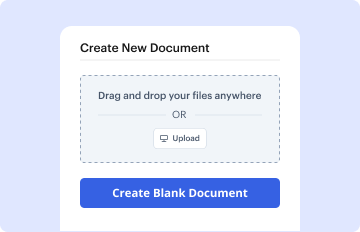
01. Start with a blank Michigan Legal Form
Open the blank document in the editor, set the document view, and add extra pages if applicable.
02. Add and configure fillable fields
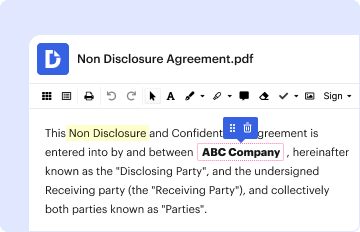
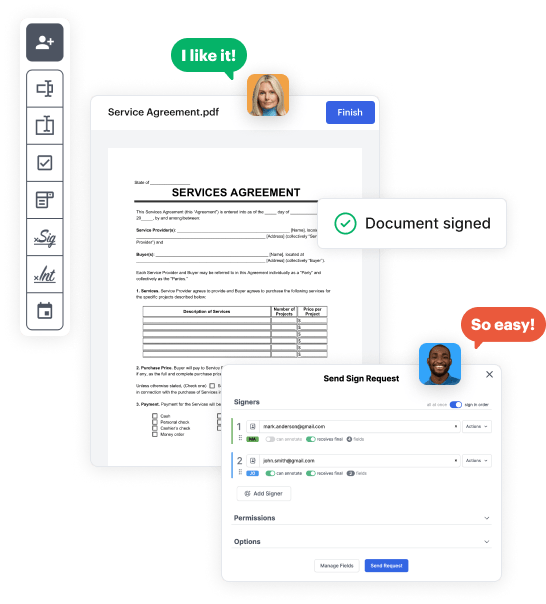
Use the top toolbar to insert fields like text and signature boxes, radio buttons, checkboxes, and more. Assign users to fields.
03. Distribute your form
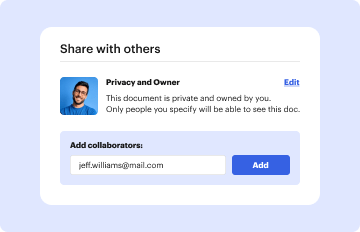
Share your Michigan Legal Form in seconds via email or a link. You can also download it, export it, or print it out.

A detailed walkthrough of how to design your Michigan Legal Form online
Form edit decoration

Step 1: Start with DocHub's free trial.

Navigate to the DocHub website and sign up for the free trial. This provides access to every feature you’ll need to create your Michigan Legal Form without any upfront cost.

Step 2: Access your dashboard.

Log in to your DocHub account and proceed to the dashboard.

Step 3: Initiate a new document.

Click New Document in your dashboard, and select Create Blank Document to craft your Michigan Legal Form from scratch.

Step 4: Use editing tools.

Place various fields such as text boxes, radio buttons, icons, signatures, etc. Organize these fields to suit the layout of your form and designate them to recipients if needed.

Step 5: Modify the form layout.

Rearrange your form in seconds by adding, moving, removing, or combining pages with just a few clicks.

Step 6: Create the Michigan Legal Form template.

Transform your freshly designed form into a template if you need to send many copies of the same document multiple times.

Step 7: Save, export, or share the form.

Send the form via email, share a public link, or even publish it online if you aim to collect responses from more recipients.

be ready to get more

Build your Michigan Legal Form in minutes

Start creating now

Got questions?

We have answers to the most popular questions from our customers. If you can't find an answer to your question, please contact us.
Contact us
File your Motion and the copies with the court clerks office in the court where your case was heard. File a copy of the proposed order with your Motion. Contact your court to find out which filing methods are available. Depending on your court, you may be able to file electronically.
Official transcripts of courtroom proceedings must be ordered from the Court Reporter. Copies of official transcripts already on file with the court are available through the Court Reporter or through the PACER Service Center. A transcript to be delivered within thirty (30) calendar days after receipt of an order.
Check with the clerk of the court to confirm whats required, but in most courts youll need to file a: Petition (Consent Judgment) Domestic violence screening form. Confidential Case Inventory (if you have any other pending or resolved family division cases), and a. Proposed Consent Judgment/Order.
A subpoena must: (1) be entitled in the name of the People of the State of Michigan; (2) be imprinted with the seal of the Supreme Court of Michigan; (3) have typed or printed on it the name of the court in which the matter is pending; (4) state the place where the trial or hearing is scheduled; (5) state the title of
Transcripts and recordings can be ordered through the Online Registry Website launch, provided users have an account. Anyone who is a party to a case can order a transcript or recording online. You will be able to order, track, process, pay and receive transcripts in one location.
be ready to get more

Build your Michigan Legal Form in minutes

Start creating now

Related Q&A to Michigan Legal Form

Public Access. Generally, unless access to a file is restricted by statute, court rule or an order pursuant to MCR 8.119(I), any person may inspect pleadings and other papers in a court clerks office and may obtain copies as provided in MCR 8.119(J).
Public court records can be viewed online at . Requests for copies of a public record must be submitted on a File / Copy Request Form (PDF). A specific case number or the party name is required to provide requested information.
Federal case files are maintained electronically and are available through the internet-based Public Access to Court Electronic Records (PACER) service. PACER allows anyone with an account to search and locate appellate, district, and bankruptcy court case and docket information. Register for a PACER account.

Additional resources on building your forms