Create your Legal Summons Document from scratch

Start Building Now
Title decoration

Here's how it works

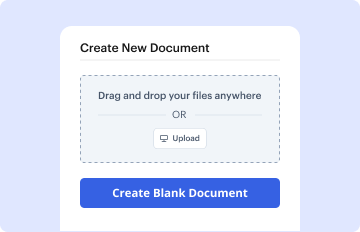
01. Start with a blank Legal Summons Document
Open the blank document in the editor, set the document view, and add extra pages if applicable.
02. Add and configure fillable fields
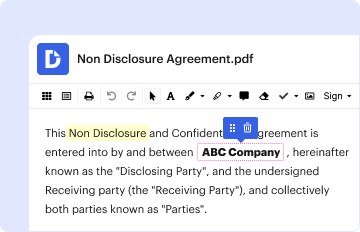
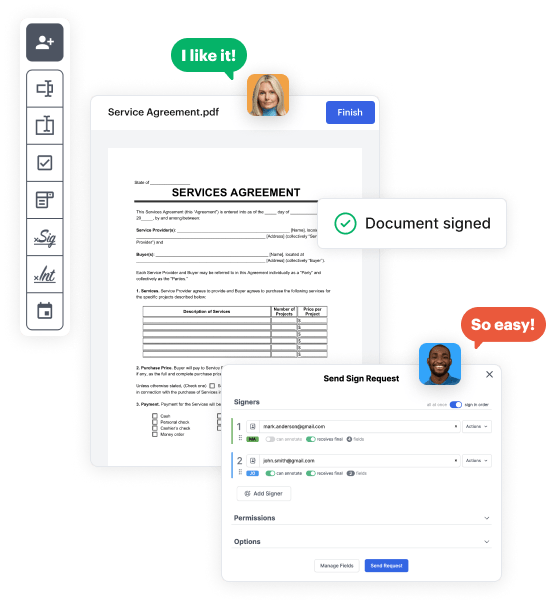
Use the top toolbar to insert fields like text and signature boxes, radio buttons, checkboxes, and more. Assign users to fields.
03. Distribute your form
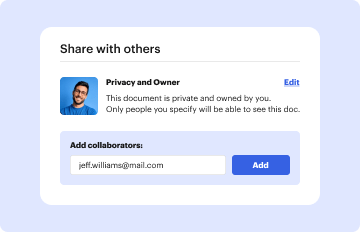
Share your Legal Summons Document in seconds via email or a link. You can also download it, export it, or print it out.

A quick tutorial on how to create a polished Legal Summons Document
Form edit decoration

Step 1: Sign in to DocHub to create your Legal Summons Document.

First, log in to your DocHub account. If you don't have one, you can easily sign up for free.

Step 2: Go to the dashboard.

Once signed in, go to your dashboard. This is your central hub for all document-based activities.

Step 3: Launch new document creation.

In your dashboard, hit New Document in the upper left corner. Pick Create Blank Document to create the Legal Summons Document from scratch.

Step 4: Insert template elements.

Place different fields like text boxes, photos, signature fields, and other fields to your template and assign these fields to certain users as required.

Step 5: Personalize your form.

Customize your template by including guidelines or any other crucial information leveraging the text feature.

Step 6: Review and modify the form.

Attentively check your created Legal Summons Document for any typos or necessary adjustments. Utilize DocHub's editing capabilities to polish your form.

Step 7: Send out or export the form.

After finalizing, save your copy. You may choose to keep it within DocHub, transfer it to various storage services, or forward it via a link or email.


be ready to get more

Build your Legal Summons Document in minutes

Start creating now

Got questions?

We have answers to the most popular questions from our customers. If you can't find an answer to your question, please contact us.
Contact us
(a) Except as otherwise required by statute, a summons shall be directed to the defendant, signed by the clerk and issued under the seal of the court in which the action is pending, and it shall contain: (1) The title of the court in which the action is pending. (2) The names of the parties to the action.
You can motion the court for an alternative form of service. Depending on the judge and the jurisdiction, a judge can give you the OK to have the process server simply leave it at her house or email it to her or fax it.
If you receive a form called a Summons (form SUM-100) it means that someone is suing you in court. In addition to the Summons, youll also receive another document, called a Complaint. The Complaint says why you are being sued.
Alternative methods of service: If the person attempting to serve court papers is unable to locate or serve the defendant, the court may allow alternative methods of service, such as publication in a newspaper or post on the defendants door.
In some situations where the process server truly failed to serve you the court papers properly, the court cannot pass a judgment against you because it has no personal jurisdiction over you. Thus, they will postpone the case to another court date where the process server will attempt to serve you again.
be ready to get more

Build your Legal Summons Document in minutes

Start creating now

Related Q&A to Legal Summons Document

If the papers are not served in the correct way at the correct time, the court cannot go forward with the case. A person is served when they officially receive the papers. Papers which start an action (Summons, Petition, Order to Show Cause, etc.) must be filed first and then served on the other person(s).
Failure to receive and respond to legal documents may result in missed court appearances, leading to judgments made in your absence, which may eventually limit the ability to defend your case effectively.
A summons will formally require you to attend court at a particular time and date. The summons must identify you by name and should contain your address and date of birth (if known).

Additional resources on building your forms