Create your Defendant Legal Form from scratch

Start Building Now
Title decoration

Here's how it works

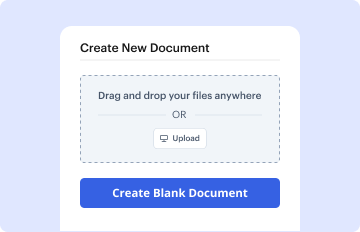
01. Start with a blank Defendant Legal Form
Open the blank document in the editor, set the document view, and add extra pages if applicable.
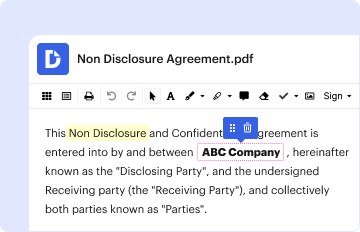
02. Add and configure fillable fields
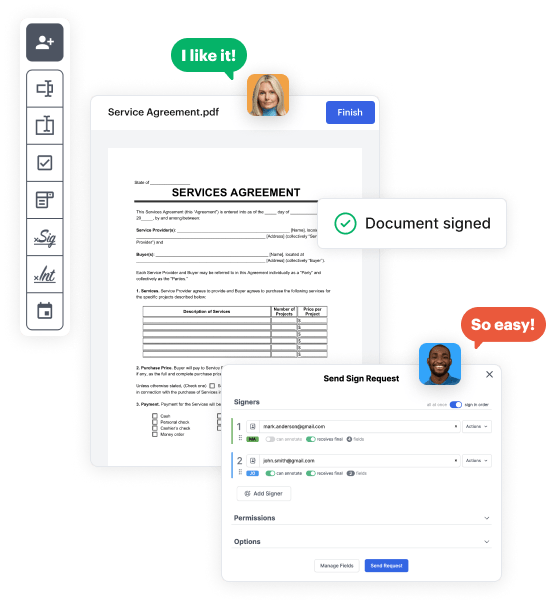
Use the top toolbar to insert fields like text and signature boxes, radio buttons, checkboxes, and more. Assign users to fields.
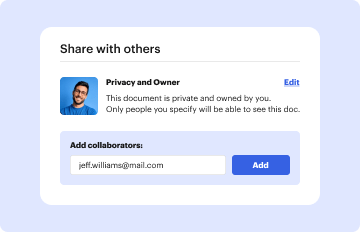
03. Distribute your form
Share your Defendant Legal Form in seconds via email or a link. You can also download it, export it, or print it out.

A simple tutorial on how to build a professional-looking Defendant Legal Form
Form edit decoration

Step 1: Sign in to DocHub to create your Defendant Legal Form.

First, sign in to your DocHub account. If you don't have one, you can simply register for free.

Step 2: Navigate to the dashboard.

Once signed in, navigate to your dashboard. This is your central hub for all document-related activities.

Step 3: Kick off new document creation.

In your dashboard, choose New Document in the upper left corner. Opt for Create Blank Document to create the Defendant Legal Form from scratch.

Step 4: Add form fillable areas.

Add various elements like text boxes, images, signature fields, and other elements to your form and designate these fields to certain individuals as needed.

Step 5: Customize your template.

Customize your template by adding directions or any other required details utilizing the text feature.

Step 6: Double-check and adjust the document.

Carefully examine your created Defendant Legal Form for any mistakes or necessary adjustments. Take advantage of DocHub's editing features to polish your template.

Step 7: Share or download the template.

After completing, save your copy. You can choose to keep it within DocHub, transfer it to various storage solutions, or send it via a link or email.


be ready to get more

Build your Defendant Legal Form in minutes

Start creating now

Got questions?

We have answers to the most popular questions from our customers. If you can't find an answer to your question, please contact us.
Contact us
The best tips for drafting an Answer to your debt lawsuit The Answer isnt the place to tell your side of the story in depth. Deny, deny, deny. Include your affirmative defenses. Use standard formatting or style Include the Certificate of Service. Sign the Answer.
When drafting an answer, one must: (1) follow the local, state, and federal court rules; (2) research the legal claims in the adversarys complaint; (3) respond to the adversarys factual allegations; and (4) assert affirmative defenses, counterclaims, cross-claims, or third-party claims, if applicable.
Your answer should include the court name, case name, case number, and your affirmative defenses. Print three copies of your answer. File one with the clerks office and mail (or serve) one to the plaintiff or plaintiffs attorney.
On a separate page or pages, write a short and plain statement of the answer to the allegations in the complaint. Number the paragraphs. The answer should correspond to each paragraph in the complaint, with paragraph 1 of the answer corresponding to paragraph 1 of the complaint, etc.
You have 30 days after you were served the Summons and Complaint to respond. This means mail the Answer and file it with the court. Mail your Answer far enough in advance to docHub the court by the deadline.
be ready to get more

Build your Defendant Legal Form in minutes

Start creating now

Related Q&A to Defendant Legal Form

If substituted or nail and mail service were used, the affidavit of service must be filed with the County Clerk within 20 days of the date of service.
The rules state that service can be done by delivering the summons within the state to a person of suitable age and discretion at the actual place of business, dwelling place or usual place of abode of the person to be served and by either mailing the summons to the person to be served at his or her last known
Pleadings: Written statements filed with the court that describe a partys legal or factual assertions about the case. Pleadings may include a complaint, an answer, a motion, or a brief.

Additional resources on building your forms