Create your Company Policy Document from scratch

Start Building Now
Title decoration

Here's how it works

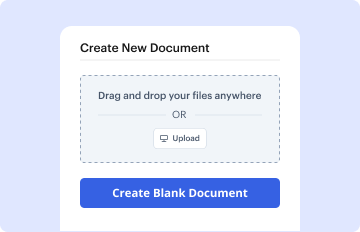
01. Start with a blank Company Policy Document
Open the blank document in the editor, set the document view, and add extra pages if applicable.
02. Add and configure fillable fields
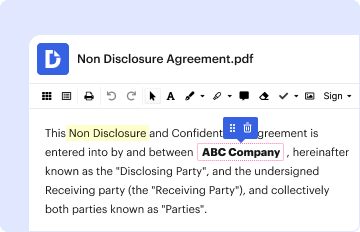
Use the top toolbar to insert fields like text and signature boxes, radio buttons, checkboxes, and more. Assign users to fields.
03. Distribute your form
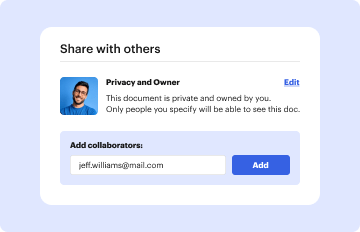
Share your Company Policy Document in seconds via email or a link. You can also download it, export it, or print it out.

Create your Company Policy Document in a matter of minutes
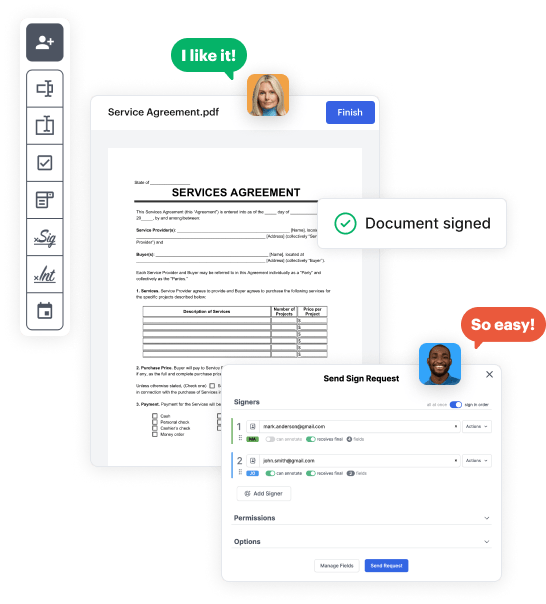
Form edit decoration

Step 1: Access DocHub to set up your Company Policy Document.

Start by logging into your DocHub account. Explore the advanced DocHub functionality at no cost for 30 days.

Step 2: Go to the dashboard.

Once logged in, go to the DocHub dashboard. This is where you'll create your forms and handle your document workflow.

Step 3: Design the Company Policy Document.

Click on New Document and choose Create Blank Document to be redirected to the form builder.

Step 4: Design the form layout.

Use the DocHub features to insert and arrange form fields like text areas, signature boxes, images, and others to your form.

Step 5: Insert text and titles.

Add needed text, such as questions or instructions, using the text tool to assist the users in your document.

Step 6: Customize field settings.

Adjust the properties of each field, such as making them compulsory or arranging them according to the data you expect to collect. Designate recipients if applicable.

Step 7: Review and save.

After you’ve managed to design the Company Policy Document, make a final review of your form. Then, save the form within DocHub, export it to your chosen location, or distribute it via a link or email.

be ready to get more

Build your Company Policy Document in minutes

Start creating now

Got questions?

We have answers to the most popular questions from our customers. If you can't find an answer to your question, please contact us.
Contact us
General policy statement: All employees must participate in safety and health program activities. Employees must not come to work with any signs of sickness until complete recovery. Employees must be familiar with first aid facilities available in the company building.
Examples of company policies include employee conduct policies, dress code, attendance policies, equal opportunity policies, and other areas related to the terms and conditions of employment.
Clearly state the policys purpose and define its scope. Explain why the policy is essential and who it applies to within the organization. This section sets the context for the entire policy. Outline the roles and responsibilities of individuals or departments involved in implementing and enforcing the policy.
The policy document serves as the vehicle for communicating the policy to relevant stakeholders and contains the following: (1) purpose, (2) definitions, (3) policy statement, (4) procedures that explain its implementation and operation, (5) stakeholders, and (6) when applicable, additional information.
Code of conduct A code of conduct is a common policy found in most businesses. It is a set of rules that companies expect employees to follow. The rules establish the expected behavioural standards for all employees.
be ready to get more

Build your Company Policy Document in minutes

Start creating now

Related Q&A to Company Policy Document

A complete 5-step guide on developing effective policies and proceduresfrom writing to implementation: Step 1: Define the Purpose of the Policy. Step 2: Write the Policy Using a Template. Step 3: Prepare for Policy Implementation. Step 4: Get Feedback and Assign Enforcers. Step 5: Implement and Improve on the Policy.
How to Write Effective Policies and Procedures Step 1: Get organized. Identify key policies. Step 2: Find reliable source material. You dont have to start from scratch when creating a new policy. Step 3: Create a policy structure. Step 4: Distribute the policy for feedback. Step 5: Distribute the policy to staff.

Additional resources on building your forms