
Create your Child Custody Agreement Template from scratch

Start Building Now
Title decoration

Here's how it works

01. Start with a blank Child Custody Agreement Template
Open the blank document in the editor, set the document view, and add extra pages if applicable.
02. Add and configure fillable fields
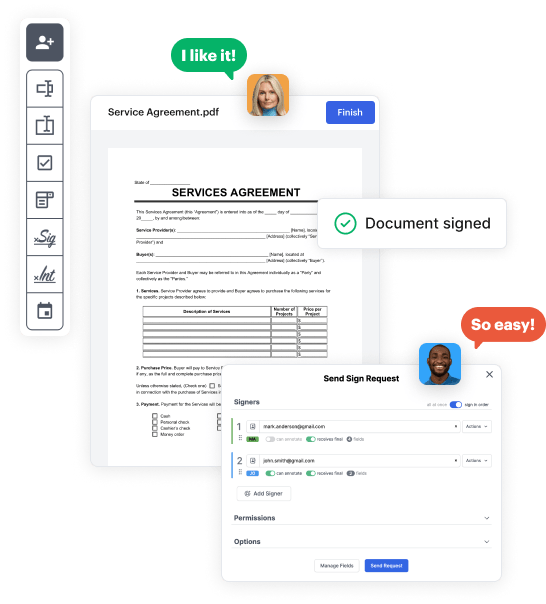
Use the top toolbar to insert fields like text and signature boxes, radio buttons, checkboxes, and more. Assign users to fields.
03. Distribute your form
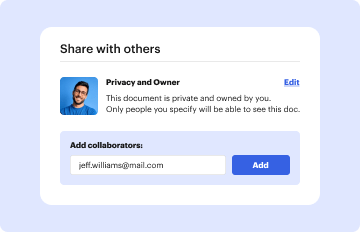
Share your Child Custody Agreement Template in seconds via email or a link. You can also download it, export it, or print it out.

Build Child Custody Agreement Template from scratch with these comprehensive guidelines

Form edit decoration

Step 1: Open DocHub and get going.

Begin by creating a free DocHub account using any offered sign-up method. Simply log in if you already have one.

Step 2: Register for a free 30-day trial.

Try out the entire set of DocHub's advanced tools by registering for a free 30-day trial of the Pro plan and proceed to build your Child Custody Agreement Template.

Step 3: Build a new blank document.

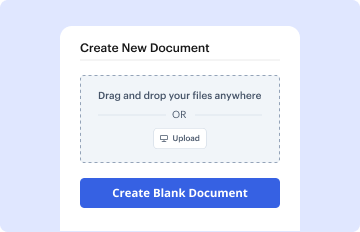
In your dashboard, click the New Document button > scroll down and choose to Create Blank Document. You’ll be taken to the editor.

Step 4: Organize the document’s view.

Use the Page Controls icon indicated by the arrow to switch between two page views and layouts for more convenience.

Step 5: Start adding fields to design the dynamic Child Custody Agreement Template.

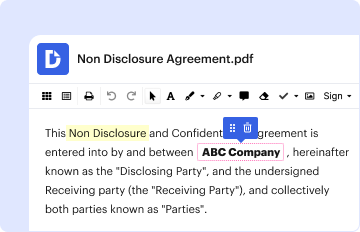
Explore the top toolbar to add document fields. Add and format text boxes, the signature block (if applicable), embed images, etc.

Step 6: Prepare and customize the incorporated fields.

Organize the fillable areas you incorporated based on your preferred layout. Adjust each field's size, font, and alignment to ensure the form is easy to use and polished.

Step 7: Finalize and share your form.

Save the completed copy in DocHub or in platforms like Google Drive or Dropbox, or design a new Child Custody Agreement Template. Share your form via email or get a public link to engage with more people.


be ready to get more

Build your Child Custody Agreement Template in minutes

Start creating now

Got questions?

We have answers to the most popular questions from our customers. If you can't find an answer to your question, please contact us.
Contact us
A Parenting Plan is a written agreement to support a co-parenting approach that covers the practical issues for your child. It works even better if you involve your child. A Parenting Plan can help because it shows clearly what arrangements and actions you have agreed to meet the needs of your child.
A letter of agreement between two parents should clearly state the terms of their co-parenting arrangement, including custody, visitation, decision-making responsibilities, and financial obligations. Both parents should sign the letter, which should be docHubd to ensure enforceability.
In order to change an existing decision-making responsibility or parenting time arrangement (if your matter is governed by the Childrens Law Reform Act) or parenting time and decision-making arrangement (if your matter is governed by the Divorce Act), you must apply to the court to vary (change) the previous order.
How to draft a contract between two parties: A step-by-step checklist Know your parties. Agree on the terms. Set clear boundaries. Spell out the consequences. Specify how you will resolve disputes. Cover confidentiality. Check the legality of the contract. Open it up to negotiation.
Guidelines for creating a family contract Date of agreement. Clear expectations of the child abstaining from all illegal substances. Clear consequences for violating the contract. Signatures of all parties agreeing to the contract.
be ready to get more

Build your Child Custody Agreement Template in minutes

Start creating now

Related Q&A to Child Custody Agreement Template

How To Write a Letter Agreement Step 1 - Formatting. Format your document the way a formal letter would appear and use the same font throughout. Step 2 - Topic. Write Re: and right after that briefly type in the purpose of your letter highlighting the key points. Step 3 - Greeting. Step 4 - Body. Step 5 - Signatures.

Additional resources on building your forms