
Create your Sublease agreement Canada Form from scratch

Start Building Now
Title decoration

Here's how it works

01. Start with a blank Sublease agreement Canada Form
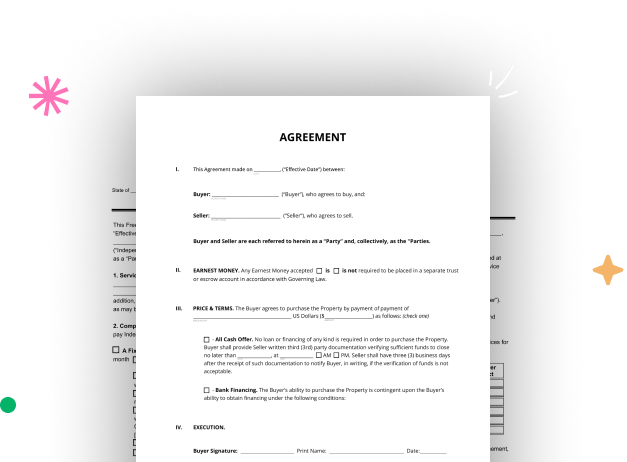
Open the blank document in the editor, set the document view, and add extra pages if applicable.
02. Add and configure fillable fields
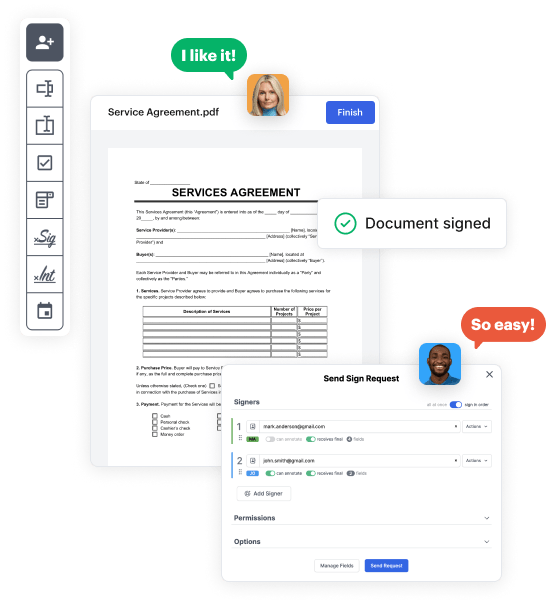
Use the top toolbar to insert fields like text and signature boxes, radio buttons, checkboxes, and more. Assign users to fields.
03. Distribute your form
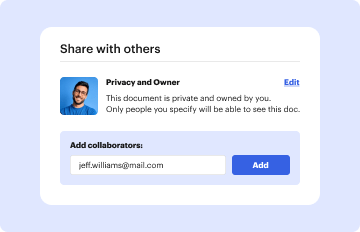
Share your Sublease agreement Canada Form in seconds via email or a link. You can also download it, export it, or print it out.

A detailed walkthrough of how to design your Sublease agreement Canada Form online

Form edit decoration

Step 1: Start with DocHub's free trial.

Go to the DocHub website and register for the free trial. This gives you access to every feature you’ll require to create your Sublease agreement Canada Form with no upfront cost.

Step 2: Navigate to your dashboard.

Sign in to your DocHub account and go to the dashboard.

Step 3: Initiate a new document.

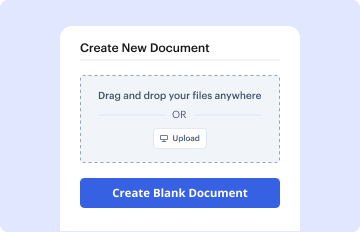
Hit New Document in your dashboard, and select Create Blank Document to craft your Sublease agreement Canada Form from scratch.

Step 4: Use editing tools.

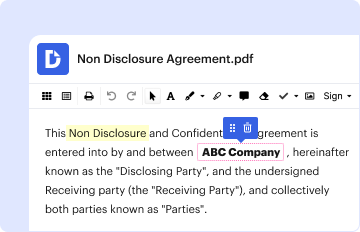
Insert various fields such as text boxes, radio buttons, icons, signatures, etc. Organize these elements to suit the layout of your document and designate them to recipients if needed.

Step 5: Organize the form layout.

Rearrange your document in seconds by adding, repositioning, removing, or merging pages with just a few clicks.

Step 6: Create the Sublease agreement Canada Form template.

Turn your freshly designed form into a template if you need to send multiple copies of the same document numerous times.

Step 7: Save, export, or distribute the form.

Send the form via email, distribute a public link, or even post it online if you aim to collect responses from more recipients.


be ready to get more

Build your Sublease agreement Canada Form in minutes

Start creating now

Got questions?

We have answers to the most popular questions from our customers. If you can't find an answer to your question, please contact us.
Contact us
In Ontario, the Residential Tenancies Act governs tenancy agreements, including subletting. Generally speaking, a sublease agreement is a legally binding contract, and both parties are expected to uphold their respective parts of the agreement.
A tenant must have their landlords written permission before subletting or assigning their tenancy. A landlord cant unreasonably refuse a sublet or assignment if there are six months or more remaining on the tenancy term.
Gather all necessary information such as the names of the parties involved, the address of the rental property, and the dates of the sublease agreement. Include specific details about the sublease arrangement, such as the duration of the sublease, the amount of rent to be paid, and any additional terms or conditions.
The Legal Framework of Subletting in Canada Landlords Approval: In most cases, tenants must obtain written consent from their landlord before they can sublet their rental unit. Rental Agreement Clauses:Some rental agreements may include clauses that specifically allow or prohibit subletting.
The new tenant (or subtenant) becomes a tenant under the Residential Tenancies Act, so a landlord has the authority to evict the subtenant for the reasons listed in the Act. The original tenant may also be able to evict the subtenant if they assumed the role of landlord for the subtenant.
be ready to get more

Build your Sublease agreement Canada Form in minutes

Start creating now

Related Q&A to Sublease agreement Canada Form

How to write a sublease contract Provide a description of the property. Add the names of the tenant and subtenant. Lay out the terms. Discuss any additional information. Decide the amount of rent. Determine the security deposit amount. State any late fees. List the policies and/or conditions.
Your landlord can refuse to let you sublet or assign to a particular person only if there is a good reason. For example, the person caused problems for a landlord in the past, such as damaging property or not paying rent. Or, the person has a poor credit history.

Additional resources on building your forms