Create your Envelope address Canada Form from scratch

Start Building Now
Title decoration

Here's how it works

01. Start with a blank Envelope address Canada Form
Open the blank document in the editor, set the document view, and add extra pages if applicable.
02. Add and configure fillable fields
Use the top toolbar to insert fields like text and signature boxes, radio buttons, checkboxes, and more. Assign users to fields.
03. Distribute your form
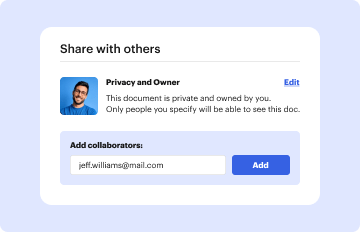
Share your Envelope address Canada Form in seconds via email or a link. You can also download it, export it, or print it out.

Design your Envelope address Canada Form in a matter of minutes
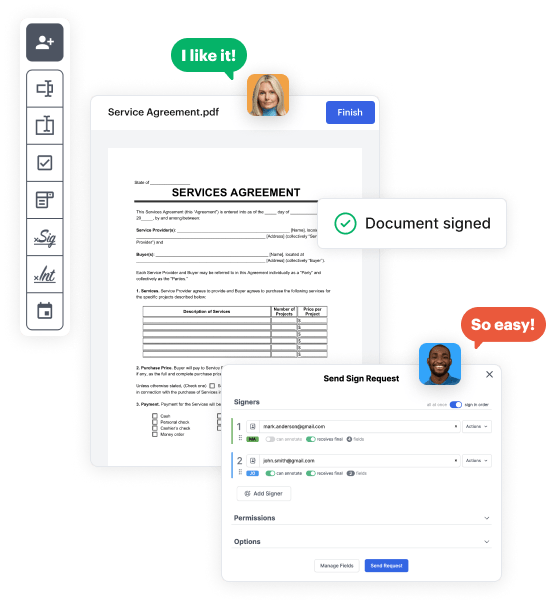
Form edit decoration

Step 1: Access DocHub to set up your Envelope address Canada Form.

Start signining into your DocHub account. Try out the advanced DocHub functionality at no cost for 30 days.

Step 2: Go to the dashboard.

Once signed in, go to the DocHub dashboard. This is where you'll create your forms and handle your document workflow.

Step 3: Design the Envelope address Canada Form.

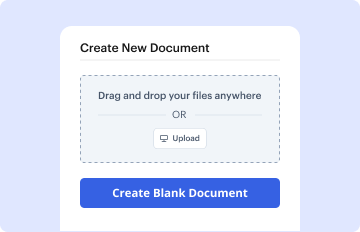
Hit New Document and choose Create Blank Document to be taken to the form builder.

Step 4: Design the form layout.

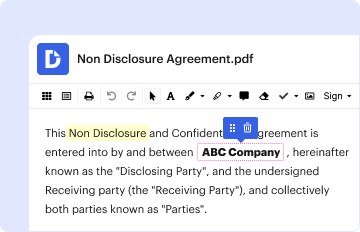
Use the DocHub tools to add and configure form fields like text areas, signature boxes, images, and others to your form.

Step 5: Insert text and titles.

Include necessary text, such as questions or instructions, using the text tool to assist the users in your document.

Step 6: Configure field settings.

Alter the properties of each field, such as making them required or formatting them according to the data you plan to collect. Designate recipients if applicable.

Step 7: Review and save.

After you’ve managed to design the Envelope address Canada Form, make a final review of your form. Then, save the form within DocHub, export it to your preferred location, or distribute it via a link or email.


be ready to get more

Build your Envelope address Canada Form in minutes

Start creating now

Got questions?

We have answers to the most popular questions from our customers. If you can't find an answer to your question, please contact us.
Contact us
1 Recipients Name: First and last name of the person or company to whom the mail is addressed. 2 Apartment Number: This is usually written as Apt. or #, followed by the apartment number (e.g., Apt. 203, #405). 3 Street Address: The name of the street or avenue where the apartment is located.
Canadian provinces have two-letter abbreviations, e.g. QC for Quebec. The city, province and postal code should be written on one line. CANADA in capital letters should be on the last line. Return address: The senders name and address must appear on the item.
The postal code is a six-character code defined and maintained by Canada Post Corporation (CPC) for the purpose of sorting and delivering mail. The characters are arranged in the form ANA NAN, where A represents an alphabetic character and N represents a numeric character ( e.g. , K1A 0T6).
Correct address formats Write STREET ADDRESS in uppercase letters. Write POSTAL CODES in uppercase letters and separate the first 3 characters from the last 3 characters with 1 space. Place the municipality, province or territory and postal code on the same line.
How to write an address to Canada on personal envelopes Print the name of the recipient. Include the apartment number and street address on the next line. Determine the proper postal code and province or territory. Include Canada on the last line. Write your return address.
be ready to get more

Build your Envelope address Canada Form in minutes

Start creating now

Related Q&A to Envelope address Canada Form

Address Not Registered All Canada Post does is keep track of the records accurately so that they know where the postal mail needs to be sent. There are no special treatments when it comes to Canadas postal service, and any address that is not registered in the Canada Post system will turn up invalid.
The addressee (first line) 1. Delivery address (second line) 2. Municipality name, state or province, and postal or ZIP Code (third line) 3. Country name (fourth line) 4.

Additional resources on building your forms