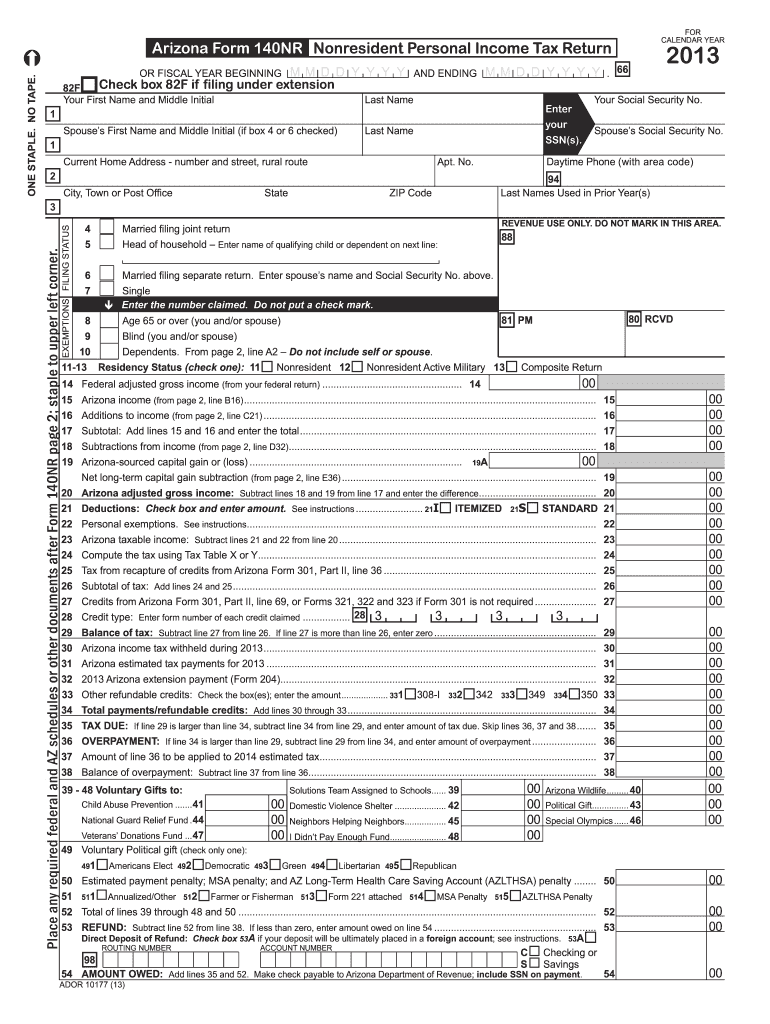







Definition and Purpose of the 2013 Arizona Form 140NR
The 2013 Arizona Form 140NR is a vital document for nonresidents to file their personal income tax returns in relation to income sourced in Arizona. Specifically, it is designed to determine the tax obligations or potential refunds for income earned within the state by individuals who do not reside there. The form encompasses various sections that gather crucial information such as personal details, filing status, income sources, and tax deductions applicable to nonresidents.
Structure of the Form
- Personal Information: Includes name, Social Security number, and contact details.
- Filing Status: Specifies whether you are filing as single, married filing jointly, or married filing separately.
- Income Details: Requires reporting of Arizona-sourced income, including wages and business earnings.
- Exemptions and Deductions: Allows for claims of personal exemptions and itemized deductions specific to Arizona tax laws.
Steps to Complete the 2013 Arizona Form 140NR
Completing the 2013 Arizona Form 140NR involves several detailed steps. Each section requires careful attention to ensure accuracy and compliance with Arizona regulations.
- Gather Required Documentation: Collect W-2s, 1099s, and any other income statements showing Arizona-sourced income.
- Personal Details: Enter your name, Social Security number, and address.
- Determine Filing Status: Choose the applicable filing status which can affect tax rates and deductions.
- Report Arizona Income: List all income earned from Arizona sources.
- Claim Exemptions: Deduct any personal exemptions applicable to your situation.
- Calculate Tax Liability: Use the form's tax tables to determine how much tax is owed or to calculate any refund.
- Review and Submit: Double-check all entries for accuracy before submission.
Obtaining the 2013 Arizona Form 140NR
Accessing the 2013 Arizona Form 140NR is straightforward. The form can be downloaded from the Arizona Department of Revenue's official website, where it is available in a fillable PDF format for ease of completion. Alternatively, individuals may request a physical copy by contacting the department directly.
Online Access
- Visit the Arizona Department of Revenue website.
- Search for "Form 140NR 2013" in the forms section.
- Download the PDF version.
Mailing Request
- Contact the Arizona Department of Revenue office via phone or email.
- Request a printed version to be mailed to your address.
Importance of Using the 2013 Arizona Form 140NR
Filing the 2013 Arizona Form 140NR is essential for legal compliance and to accurately report income subject to Arizona tax. It ensures that nonresidents meet their tax obligations and provides a mechanism for claiming any applicable refunds.
- Legal Compliance: Avoid penalties and maintain a good standing with state tax authorities.
- Financial Accuracy: Determine and settle any tax liabilities accurately.
- Potential Refunds: Claim refunds for overpaid taxes due to Arizona-sourced income.
Key Elements in the 2013 Arizona Form 140NR
Understanding the critical components within the 2013 Form 140NR helps taxpayers remain compliant and maximize their tax benefits.
Important Sections
- Income Reporting: Accurate detailing of all Arizona-derived income is required.
- Exemptions: Correctly claiming all eligible exemptions can reduce tax liability.
- Deductions: Taxpayers may choose to itemize deductions specific to Arizona nonresidents.
Examples of Eligible Income
- Wages from Arizona Employment: Include salary earned while working in Arizona.
- Business Income: Report earnings from operating a business or partnership in Arizona.
Filing Deadlines and Penalties for Non-Compliance
The deadline for submitting the 2013 Arizona Form 140NR is typically April 15 of the following calendar year. Failure to file by this deadline could result in penalties and interest charges.
Filing Extensions
- Taxpayers can request an extension if more time is required to prepare the form.
- An extension relieves late filing penalties but not the obligation to pay taxes owed by the original deadline.
Consequences of Non-Compliance
- Penalties: Financial penalties can accrue for late filing or payment.
- Interest: Unpaid taxes will accumulate interest over time, increasing the amount owed to the state.
Legal Use and IRS Compliance
Adhering to the guidelines and stipulations of the form ensures that all reported information is in compliance with state and federal tax laws, specifically aligning with the ESIGN Act for electronic submissions.
- Legal Validity: Electronic submissions are recognized as legally binding under U.S. law.
- IRS Compatibility: Ensure data reported aligns with federal tax filings to avoid discrepancies.
Who Typically Uses the 2013 Arizona Form 140NR
The form is primarily used by individuals who earned income from Arizona but reside in another state. Typical users include:
- Seasonal Workers: Individuals who work temporary jobs in Arizona.
- Remote Employees: Those who perform work for Arizona-based companies from out-of-state locations.
- Partners or Shareholders: Individuals with stakes in Arizona-based partnerships or corporations.