




01. Edit your 140nr instructions online
Type text, add images, blackout confidential details, add comments, highlights and more.

Type text, add images, blackout confidential details, add comments, highlights and more.

Draw your signature, type it, upload its image, or use your mobile device as a signature pad.

Send arizona 140nr via email, link, or fax. You can also download it, export it or print it out.
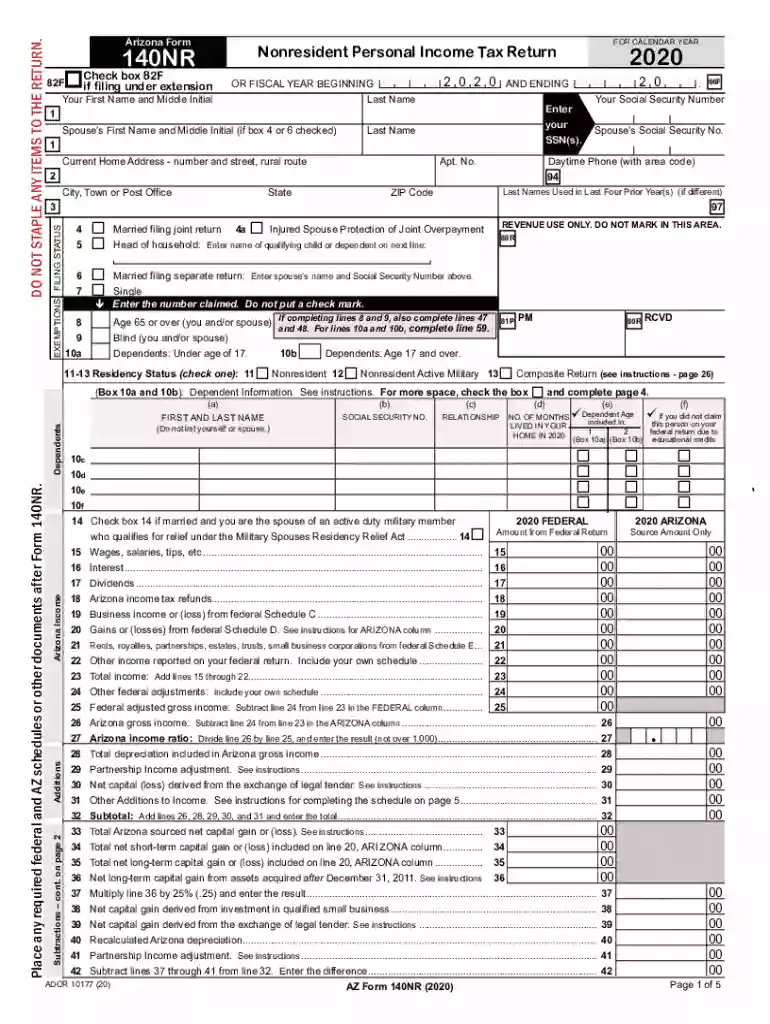
The Arizona Form 140NR is a state tax form designed for nonresidents who have earned income from Arizona sources. This form is used to report and calculate the income tax obligations of individuals who do not reside in Arizona but have generated income within the state during the tax year. It includes important sections for detailing income, deductions, and tax credits specific to nonresidents. Understanding this form is essential for ensuring compliance with Arizona tax laws and avoiding potential penalties for misreporting.
To effectively use the Arizona 140NR form, nonresident taxpayers must follow specific guidelines to ensure all income from Arizona sources is reported accurately. The form requires the taxpayer to itemize various types of income, including wages, business income, and rental income, while allowing for applicable deductions and credits. Users should be familiar with both Arizona tax regulations and federal tax concepts like adjusted gross income, as both are necessary for accurate completion. Typically, the completed form is filed along with any due payment to the Arizona Department of Revenue.
The Arizona 140NR form is primarily used by individuals who live outside of Arizona but earn income from within the state. This includes:


Completing the Arizona 140NR necessitates a variety of documents to ensure accurate reporting. These may include:
Similar to federal tax deadlines, the standard due date for submitting the Arizona 140NR is typically April 15th. If the date falls on a weekend or holiday, the deadline shifts to the next business day. Taxpayers who require additional time can request an extension, though estimated taxes must still be paid by the original deadline to avoid interest and penalties.
Failure to accurately file the Arizona 140NR or meet payment obligations can result in several penalties:
There are multiple options for submitting the Arizona 140NR form:
Selecting the correct submission method can expedite processing and is particularly crucial when close to filing deadlines.
We've got more versions of the 140nr instructions form. Select the right 140nr instructions version from the list and start editing it straight away!
| Versions | Form popularity | Fillable & printable |
|---|---|---|
| 2024 | 4.4 Satisfied (44 Votes) | |
| 2023 | 4.4 Satisfied (60 Votes) | |
| 2022 | 4.2 Satisfied (35 Votes) | |
| 2021 | 4.9 Satisfied (56 Votes) | |
| 2020 | 4.3 Satisfied (93 Votes) | |
| 2019 | 4.3 Satisfied (146 Votes) | |
| 2017 | 4.3 Satisfied (136 Votes) | |
| 2014 | 4 Satisfied (27 Votes) | |
| 2013 | 4.2 Satisfied (36 Votes) | |
| 2012 | 4 Satisfied (20 Votes) |
At DocHub, your data security is our priority. We follow HIPAA, SOC2, GDPR, and other standards, so you can work on your documents with confidence.
AZ 140 NR form. If you transferred from another U.S. institution and/or earned income in another state, you must file a state income tax return for everyRead more
Form is used by non-residents to report income derived from Arizona sources and related expenses, allowable deductions and credits.Read more


