Information concerning claims for treaty based exemptions schedule 91 2011-2026

Get Form
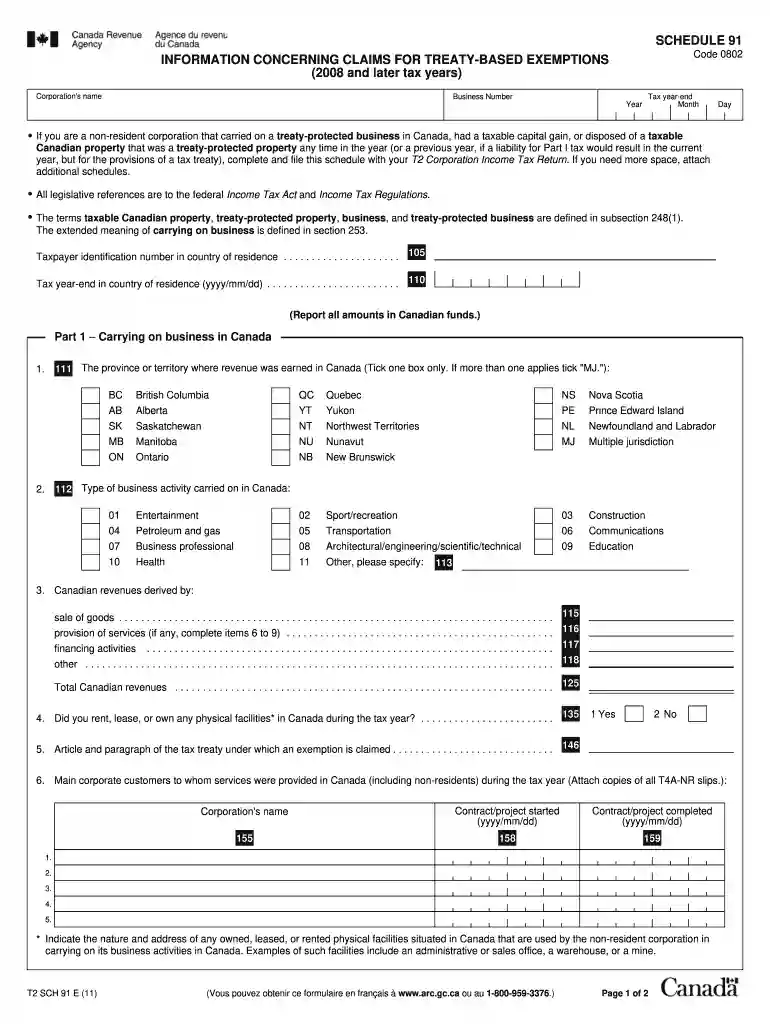
schedule 91 canada Preview on Page 1

Here's how it works

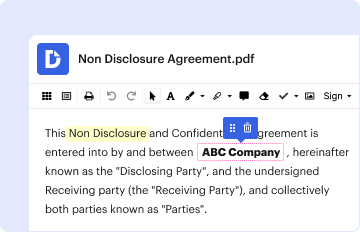
01. Edit your schedule 91 canada online
Type text, add images, blackout confidential details, add comments, highlights and more.

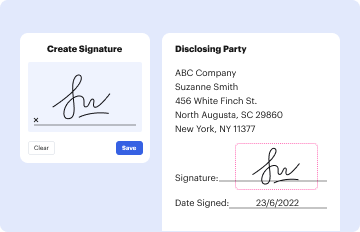
02. Sign it in a few clicks
Draw your signature, type it, upload its image, or use your mobile device as a signature pad.

03. Share your form with others
Send it via email, link, or fax. You can also download it, export it or print it out.

How to use or fill out information concerning claims for treaty-based exemptions schedule 91 2011

Form edit decoration
9.5
Ease of Setup
DocHub User Ratings on G2
9.0
Ease of Use
DocHub User Ratings on G2
  1. Click ‘Get Form’ to open it in the editor.
  2. Begin by entering the corporation's name, business number, and tax year-end date. Ensure all information is accurate as this sets the foundation for your claim.
  3. In Part 1, indicate the province where revenue was earned by ticking the appropriate box. This helps identify jurisdictional tax obligations.
  4. Specify the type of business activity carried on in Canada. Choose from options like entertainment or construction to clarify your operations.
  5. Detail Canadian revenues derived from sales or services. Report amounts in Canadian funds and ensure accuracy for compliance.
  6. If applicable, provide information about physical facilities used in Canada during the tax year, including nature and address.
  7. Complete sections regarding employee engagement and subcontractor payments, ensuring to include dates and amounts paid.
  8. Finally, review all entries for completeness before submitting your form with your T2 Corporation Income Tax Return.

Start using our platform today to streamline your document editing and form completion process for free!

See more information concerning claims for treaty based exemptions schedule 91 2011 versions

We've got more versions of the information concerning claims for treaty based exemptions schedule 91 2011 form. Select the right information concerning claims for treaty based exemptions schedule 91 2011 version from the list and start editing it straight away!
Versions Form popularity Fillable & printable
2014 4.8 Satisfied (121 Votes)
2011 4.4 Satisfied (31 Votes)
be ready to get more

Complete this form in 5 minutes or less

Get form

Got questions?

We have answers to the most popular questions from our customers. If you can't find an answer to your question, please contact us.
Contact us
Tax credits and exemptions: The treaty allows you to claim credits or exemptions for taxes paid to the other country. Tie-breaker rules: If both countries consider you a tax resident, the treaty provides rules to determine your primary residency and avoid double taxation.
Some of the states that do not allow treaty benefits are: Alabama, Arkansas, California, Connecticut, Hawaii, Kansas, Kentucky, Maryland, Mississippi, Montana, New Jersey, North Dakota, and Pennsylvania.
List of U.S. organizations exempt under paragraph 1 Identification No.Organization NameCity 101469 American Museum of Natural History New York 101899 Trustees of Amherst College North Quincy 102426 The Art Institute of Chicago V94 X2N9 103697 Claude Worthington Benedum Foundation Inc. New York6 more rows Mar 31, 2024
A treaty-based tax return is filed by taxpayers who wish to claim benefits under Canadas tax treaty with another country. These treaties generally apply to individuals and entities that earn income from Canadian sources while residing in a treaty partner country.
As a non-resident of Canada, you pay tax on income you receive from sources in Canada. The type of tax you pay and the requirement to file an income tax return depend on the type of income you receive. Generally, Canadian income received by a non-resident is subject to Part tax or Part I tax.

Security and compliance

At DocHub, your data security is our priority. We follow HIPAA, SOC2, GDPR, and other standards, so you can work on your documents with confidence.

Learn more
ccpa2
pci-dss
gdpr-compliance
hipaa
soc-compliance
be ready to get more

Complete this form in 5 minutes or less

Get form

People also ask

Canada. The tax treaty with Canada exempts all earned income if a taxpayer coming from Canada earned up to $10,000 in the tax year, but taxes all income if the taxpayer earned over $10,000. This treaty benefit is lost if a nonresident becomes a resident for tax purposes.
What is the 90% Rule? In a nutshell, the 90% rule is simple: if 90% or more of your worldwide income is from Canadian sources in the tax year, youre eligible for non-refundable tax credits reserved for residents.

Related links