Schedule 91 canada 2026

Get Form
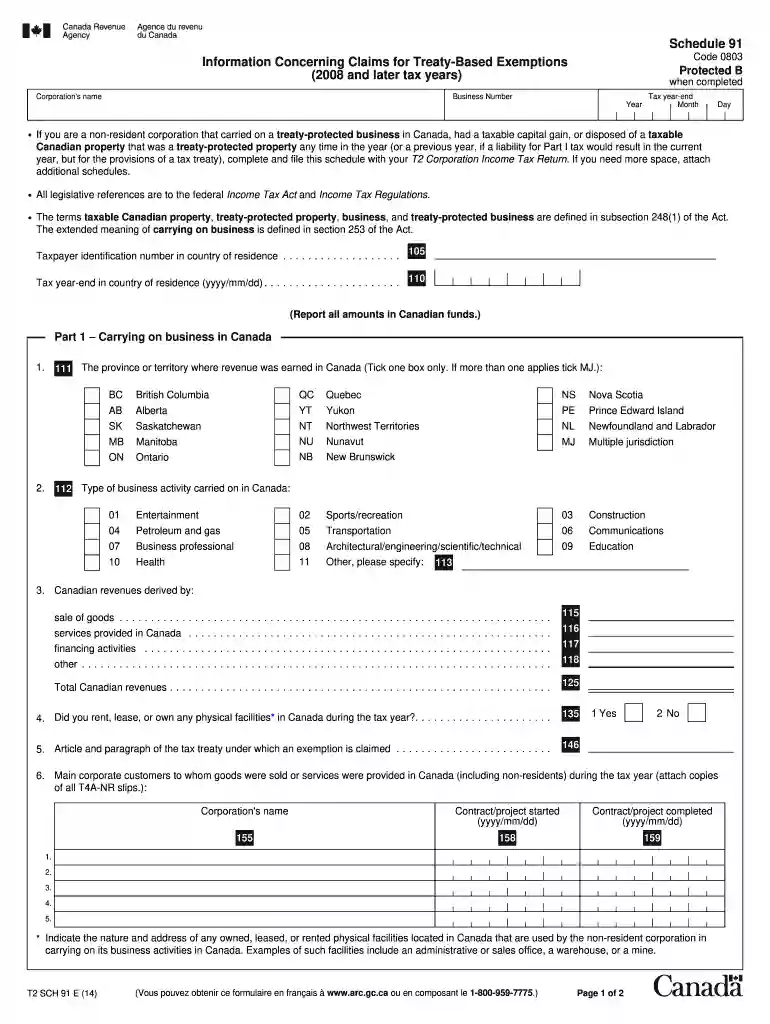
canada schedule 91 Preview on Page 1

Here's how it works

01. Edit your canada schedule 91 online
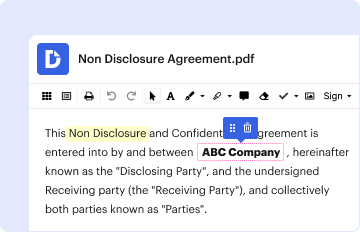
Type text, add images, blackout confidential details, add comments, highlights and more.

02. Sign it in a few clicks
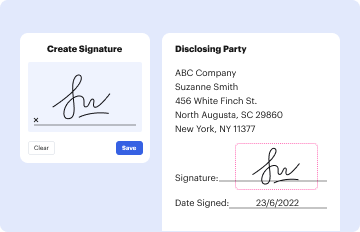
Draw your signature, type it, upload its image, or use your mobile device as a signature pad.

03. Share your form with others
Send canada form t2 schedule 91 via email, link, or fax. You can also download it, export it or print it out.

Definition and Meaning

Schedule 91 is a form used by non-resident corporations to claim treaty-based exemptions related to Canadian business activities and taxable property disposals. It provides a structured method for corporations to outline their compliance with tax treaty articles, ensuring they do not overpay taxes on income generated in Canada. This form is essential for ensuring that corporations benefit from applicable tax treaties between their home country and Canada, which might include exemptions or reductions in withholding tax rates.

Key Components

  • Non-Resident Status: Pertains to corporations not physically based in Canada.
  • Treaty-Based Exemptions: Details the tax benefits available under specific treaties.
  • Taxable Property Disposals: Involves disposals of assets subject to Canadian taxes.
  • Income Sources: Requires information on revenue generated within Canada.

How to Use the Schedule 91 Canada

The use of Schedule 91 is crucial for non-resident corporations aiming to reduce their Canadian tax burden by leveraging existing treaties. To effectively use the form, corporations must first understand the specific tax treaty applicable between their home country and Canada. Once understood, the corporation must detail income sources relevant to the treaty, ensuring each income stream aligns with the treaty conditions.

Step-by-Step Usage

  1. Identify Applicable Treaty: Review the tax agreement between your home country and Canada.
  2. Gather Required Information: Collect details on income sources, property disposals, and corporate presence in Canada.
  3. Complete the Form: Fill in required sections with accurate and precise information.
  4. Submit with T2 Return: Attach Schedule 91 to the T2 Corporation Income Tax Return.

Steps to Complete the Schedule 91 Canada

Completing Schedule 91 involves several decisive steps to ensure accurate and compliant reporting. Each step must be followed diligently to claim any possible deductions legitimately.

  1. Collect Corporate Documents: Assemble all relevant corporate information and tax records.
  2. Review Treaty Benefits: Ensure your corporation qualifies for benefits under the tax treaty.
  3. Fill Out the Form: Input all required data into the designated sections, including income sources and treaty articles.
  4. Cross-Verify Information: Double-check all information for accuracy to avoid errors or omissions.
  5. Attach to T2 Filing: Include the completed schedule with the annual T2 filing.

Common Mistakes to Avoid

  • Failing to understand treaty nuances which may lead to incorrect exemption claims.
  • Ignoring the need for comprehensive record-keeping to support the claims made.

Who Typically Uses the Schedule 91 Canada

Schedule 91 is primarily used by non-resident corporations engaged in business or holding property in Canada. Various business types find this form necessary, depending on their operations in Canada.


decoration image ratings of Dochub

Benefiting Entities

  • Multinational Corporations: Engaged in cross-border trade involving Canada.
  • Real Estate Investors: Holding significant property assets in Canada.
  • Resource Extraction Companies: Operating in Canada’s natural resources sectors.

Legal Use of the Schedule 91 Canada

The legal use of Schedule 91 is guided by international tax agreements and Canadian tax laws. It is used to clarify the tax treaty provisions applicable to a non-resident corporation, ensuring compliance with both Canadian law and international agreements.

Compliance Checklist

  • Understand Treaty Applications: Know which treaty provisions apply to your corporation.
  • Abide by Canadian Tax Laws: Ensure the form is consistent with Canadian reporting requirements.
  • Maintain Accurate Records: Keep detailed records supporting all claims made under the form.

Key Elements of the Schedule 91 Canada

The form consists of specific sections that require precise information, ensuring alignment with treaty conditions. Understanding these elements is critical for effective form submission.

Major Sections

  • Identification Information: Basic corporate details.
  • Treaty Provisions: Specific articles and paragraphs applied.
  • Income Verification: Detailed breakdown of income sources and related exemptions.
  • Property Transactions: Disclosures of any exempt property disposals.

Examples of Using the Schedule 91 Canada

Examples offer insight into practical application of the form and highlight typical scenarios faced by corporations.

  • A U.S. tech company using Schedule 91 to benefit from reduced withholding tax on royalties.
  • A UK-based real estate firm claiming treaty benefits on property sale capital gains in Canada.

Case Studies

  • Manufacturing Sector: Claiming lower taxes on machinery sales due to treaty provisions.
  • Consulting Firms: Leveraging exemption on fees for services rendered in Canada.

Filing Deadlines and Important Dates

Filing Schedule 91 requires adherence to strict deadlines as part of the broader tax filing obligations of non-resident corporations in Canada. Missing these deadlines can incur penalties and interest charges, reducing the potential treaty benefits.

Crucial Dates

  • Annual T2 Filing Deadline: Coordinate submission of Schedule 91 with this date.
  • Extension Provisions: Check if extensions apply under certain conditions.

Understanding these elements enables corporations to utilize Schedule 91 effectively, ensuring compliance with tax obligations while maximizing treaty benefits.

See more schedule 91 canada versions

We've got more versions of the schedule 91 canada form. Select the right schedule 91 canada version from the list and start editing it straight away!
Versions Form popularity Fillable & printable
2014 4.8 Satisfied (121 Votes)
2011 4.4 Satisfied (31 Votes)
be ready to get more

Complete this form in 5 minutes or less

Get form

Got questions?

We have answers to the most popular questions from our customers. If you can't find an answer to your question, please contact us.
Contact us
You can take the winnings as a lump sumall at onceor spread them across several years with annuity payments. The IRS requires lottery agencies to withhold taxes of 24% on winnings of more than $5,000. Form W-2G reports lottery winnings over $5,000, which flows to Schedule 1 (1040).
Youll need to pay tax to the US on your winnings - Canada doesnt tax lottery winnings, but the US does. This means youll need an ITIN to even be able to pay the taxes - youll need some professional legal and accounting help here.
In fact, all foreign tourists to the U.S. are eligible to buy Mega Millions tickets, not just Canadians.
If you are a nonresident alien, the IRS imposes a flat 30% tax on the total winnings, not just your net profit. So, if you win $1,000,000 in a US lottery as a nonresident: $300,000 is withheld for federal tax. Additional state tax may also be withheld depending on the state.
Suppose youre a U.S. citizen living in Toronto, working for a Canadian employer. You pay Canadian taxes on your salary. Thanks to the treaty, you can use the taxes paid in Canada to offset your U.S. tax liability, so youre not taxed twice on the same income.

Security and compliance

At DocHub, your data security is our priority. We follow HIPAA, SOC2, GDPR, and other standards, so you can work on your documents with confidence.

Learn more
ccpa2
pci-dss
gdpr-compliance
hipaa
soc-compliance

People also ask

Filing and payment obligations Corporations must file an annual T2 corporate tax return with the Canada Revenue Agency (CRA). Taxes are generally due within two or three months after the fiscal year-end, depending on the corporations size.
Yes. However, in some cases, Canadians can get a refund on taxes withheld in the U.S. by filing a U.S. non-resident tax form.
You are eligible for a personal exemption if you are one of the following: a Canadian resident returning from a trip outside Canada; a former resident of Canada returning to live in this country; or. a temporary resident of Canada returning from a trip outside Canada.

schedule 91