



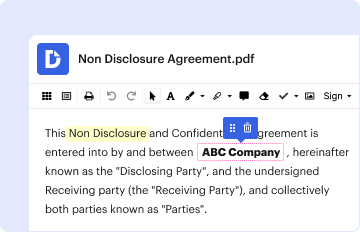
01. Edit your form w3c fillable online
Type text, add images, blackout confidential details, add comments, highlights and more.

Type text, add images, blackout confidential details, add comments, highlights and more.
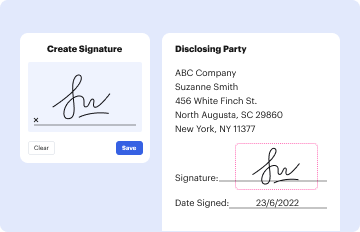
Draw your signature, type it, upload its image, or use your mobile device as a signature pad.

Send w 3c fillable form via email, link, or fax. You can also download it, export it or print it out.
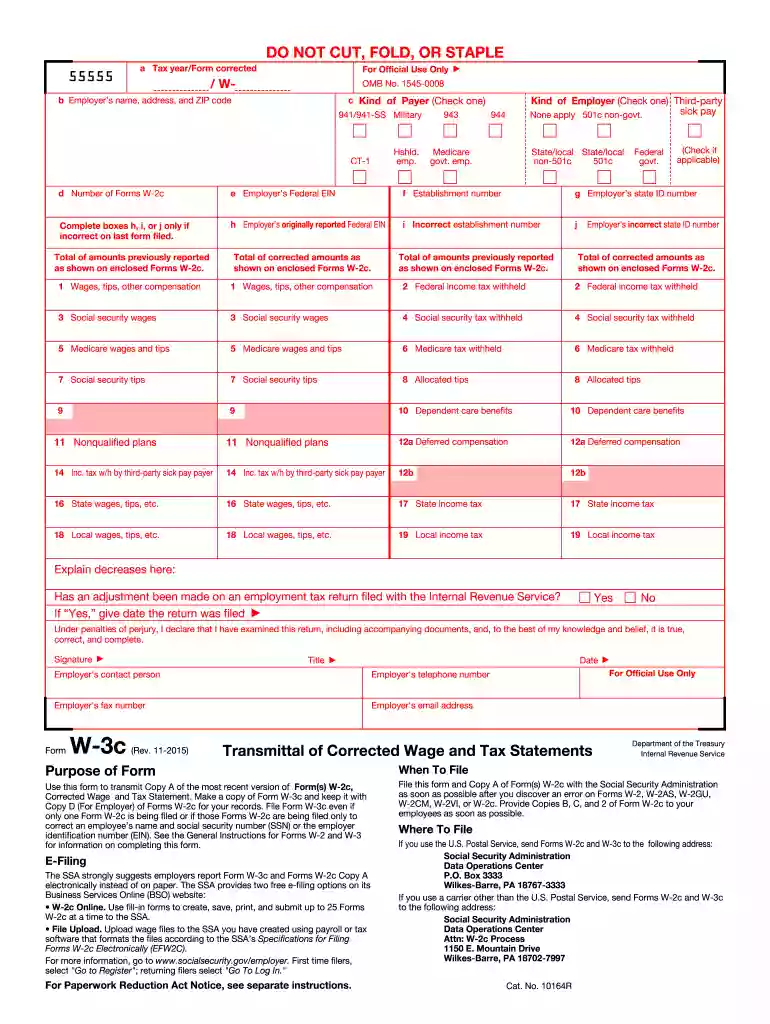
The W-3c form, also known as the Transmittal of Corrected Wage and Tax Statements, is essential for employers needing to correct errors on previously filed W-2 forms. Unlike the standard W-3 form, which aggregates information from multiple W-2 forms for a given year, the W-3c is used specifically when corrections are necessary. This form provides the Social Security Administration (SSA) with a summary of the amendments, ensuring that an employee's earnings and tax information remain accurate.
The W-3c form is used in conjunction with the corrected W-2c forms. Employers should fill out the W-3c whenever they have made corrections to any employee’s W-2. This ensures that both the Internal Revenue Service (IRS) and the SSA receive the updated employee tax data, which is crucial for maintaining accurate records of taxpayer earnings and taxes withheld.
Employers can obtain the W-3c form from the IRS website or from tax professionals. The form is available for download in PDF format and can also be requested in paper format by calling relevant IRS support services. For digital filings, employers can utilize the Business Services Online (BSO) portal of the SSA, which facilitates electronic submissions.
Each W-2c form must correspond with the information in the W-3c, delivering a comprehensive view of corrections across all employee tax documents.
The W-3c form requires detailed information to ensure it accurately reflects any necessary corrections. Essential sections of the form include:
While the W-3c does not have a specific deadline, it should be submitted as soon as possible once errors in filed W-2 forms are identified. Timely filing is critical to avoid discrepancies in employee’s tax accounts and potential fines.
Employers who fail to submit corrected W-3c forms in a timely fashion risk facing penalties from the IRS. These penalties can vary based on the size of the employer and the timing of the submission. Submitting corrections as soon as inaccuracies are discovered can help mitigate these risks.
While the W-3c is a federal form, some states may have their own requirements for correcting wage and tax information. It is vital for employers to consult state-specific regulations to ensure compliance at all levels. Some states might require additional forms or specific submission methods, which must be adhered to carefully.
Employers can submit the W-3c form electronically through the SSA's Business Services Online portal or via mail. Electronic filings are typically more efficient and provide confirmation of receipt, helping prevent any delays that could occur with paper submissions. However, those preferring traditional methods can still use mail for their corrections, ensuring all original justice copies are included.
The W-3c form is compatible with many payroll and tax software platforms, such as QuickBooks and TurboTax. These programs often provide integrated support for preparing and submitting tax corrections, simplifying the process for employers who manage large volumes of employee data and require accurate amendments.
We've got more versions of the form w3c fillable form. Select the right form w3c fillable version from the list and start editing it straight away!
At DocHub, your data security is our priority. We follow HIPAA, SOC2, GDPR, and other standards, so you can work on your documents with confidence.



W3C is an international community where member organizations, a full-time staff, and the public work together to develop web standards.Read more
Information about Form W-3C, Transmittal of Corrected Wage and Tax Statements, including recent updates, related forms, and instructions on how to file.


