




01. Edit your non filers stimulus form online
Type text, add images, blackout confidential details, add comments, highlights and more.

Type text, add images, blackout confidential details, add comments, highlights and more.

Draw your signature, type it, upload its image, or use your mobile device as a signature pad.

Send form 12508 via email, link, or fax. You can also download it, export it or print it out.
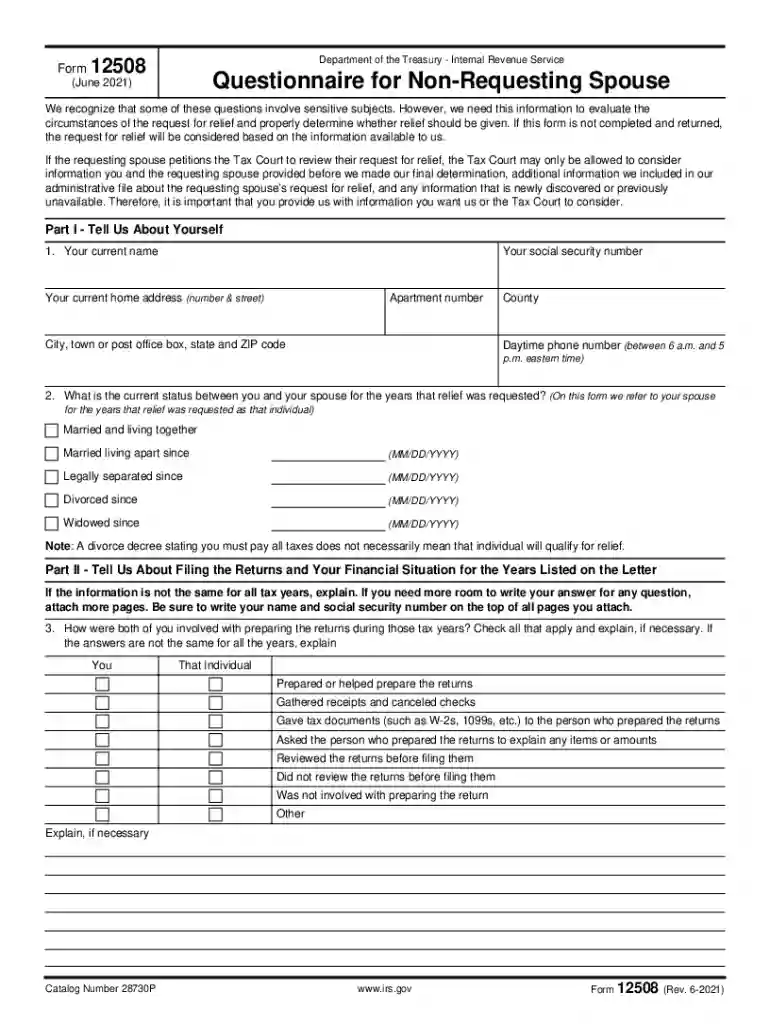
The "non requesting person search" is a term primarily associated with tax forms that involve determining the responsibility of a non-requesting spouse for tax liabilities. This specific search is particularly relevant when one spouse seeks relief from joint tax obligations, but the other does not join the request. It plays a crucial role in identifying and evaluating the non-requesting spouse's role and responsibility in shared financial matters. Understanding this term can assist individuals in navigating complex tax scenarios efficiently.
Utilizing the non requesting person search typically involves accessing tax forms and records that help clarify the non-requesting spouse's financial involvement. This process often requires gathering comprehensive documentation, such as past tax returns, marital agreements, and any relevant communication about financial obligations. By methodically compiling these documents, taxpayers and their representatives can better assess whether relief provisions apply. Professional guidance is often recommended due to the intricacies involved.
Conducting a non requesting person search is essential for individuals dealing with shared tax liabilities. It provides clarity on personal financial responsibilities, offering assurance that one is not unfairly held accountable for a partner's obligations. It's particularly beneficial in cases of divorce or separation, helping protect personal financial interests by verifying accurate allocation of tax responsibilities. This search also assists in qualifying for tax relief, ensuring compliant and fair tax handling.
This search is predominantly utilized by individuals facing shared tax responsibilities, such as spouses or former spouses. Tax advisors and attorneys often conduct these searches on behalf of their clients to offer expert insights and ensure compliance with tax laws. Additionally, individuals who suspect discrepancies in shared tax liabilities or are undergoing divorce proceedings may proactively engage in this search to safeguard their financial interests.


Successfully performing a non requesting person search necessitates assembling several key documents:
Each document contributes to a comprehensive understanding of the non-requesting spouse's financial involvement and responsibilities.
The non requesting person search is legally sanctioned under U.S. tax law to ensure equitable accountability for tax liabilities. It aids in implementing relief provisions accurately and fairly, as outlined by the IRS. Using this search ensures compliance and facilitates due diligence in determining liability for shared tax debts. Understanding the legal boundaries and seeking professional advice are paramount to utilizing this tool correctly.
Consider a scenario where a recently divorced individual discovers they are liable for unpaid taxes due on prior joint returns. By conducting a non requesting person search, they can gather evidence to argue for relief, demonstrating that their ex-spouse was primarily responsible for the financial decisions leading to the tax debt. Another example involves a taxpayer being audited; they use this search to clarify the division of financial responsibilities and refute improper liability claims.
We've got more versions of the non filers stimulus form form. Select the right non filers stimulus form version from the list and start editing it straight away!
At DocHub, your data security is our priority. We follow HIPAA, SOC2, GDPR, and other standards, so you can work on your documents with confidence.
A warrant may be issued for any of the following: (1) evidence of a crime; (2) contraband, fruits of crime, or other items illegally possessed;Read more
This site can help you determine if filing a FOIA request is the best option for you and help you create your request when youre ready.Read more
Duty to segregate and release non-exempt information. Under the federal FOIA, agencies cannot withhold non-exempt information found in a record merelyRead more


