




01. Edit your form online
Type text, add images, blackout confidential details, add comments, highlights and more.

Type text, add images, blackout confidential details, add comments, highlights and more.

Draw your signature, type it, upload its image, or use your mobile device as a signature pad.

Send it via email, link, or fax. You can also download it, export it or print it out.
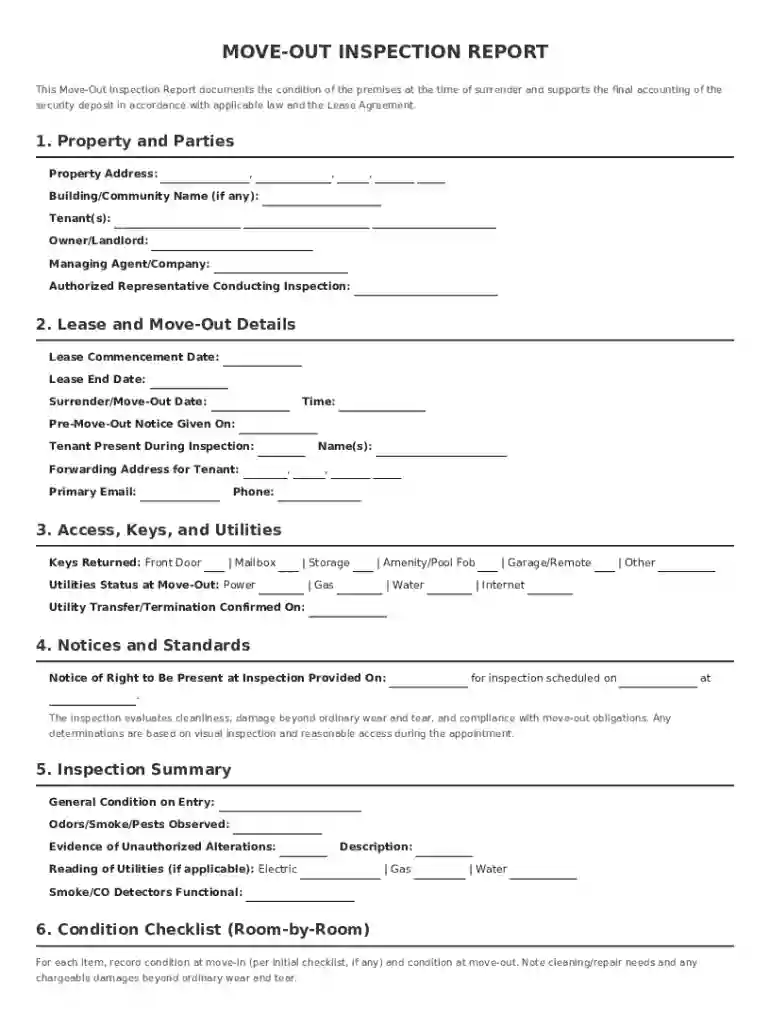
The Move-Out Inspection Report is a vital document used in the rental process to evaluate the condition of a property when a tenant decides to leave. This report aims to document the property's state at the tenant's departure, offering a detailed account that can compare with the property's condition at the lease's start. This comparison helps determine the property's wear and tear and assesses any damage beyond expected usage. Critical information includes the property address, tenant and landlord details, and the lease dates. The report ultimately aids in establishing financial responsibilities and is an essential tool in resolving disputes related to the security deposit.
Preparation Before Inspection:
Conducting the Inspection:
Documentation:
Finalizing the Report:
The report plays a crucial legal role in delineating financial responsibilities between tenants and landlords. It serves as a documented agreement that can be used in disputes over the security deposit, often in alignment with local landlord-tenant regulations. Various states have specific laws that mandate the completion of a move-out inspection to protect the rights of both parties. Ensuring compliance with these legal standards is paramount for both tenants and landlords to avoid future complications.
The primary users are landlords and property managers who wish to maintain their properties in optimal condition and accurately document any tenant-imposed damages. Tenants also rely on the report to ensure they aren't unfairly charged for damages they didn't cause. Additionally, various third-party companies that offer property management services might use this document to provide comprehensive service to landlords and tenants alike.


Utilizing a Move-Out Inspection Report ensures transparency and fairness in handling potential damage costs. It provides a documented account of the property's condition, offering a defense for tenants against unfair charges and empowering landlords to make legitimate claims for repair costs. This ensures a smoother transition for both parties and can significantly reduce disputes concerning the security deposit.
State laws can significantly impact the process and content of a Move-Out Inspection Report. For instance, some states mandate specific timelines for returning a security deposit, which influences when the inspection must occur. In others, specific guidelines may dictate what constitutes wear and tear versus chargeable damage. Understanding and complying with these rules is essential for legal protection and fulfilling the standardized requirements applicable to landlords and tenants operating within that state.
At DocHub, your data security is our priority. We follow HIPAA, SOC2, GDPR, and other standards, so you can work on your documents with confidence.



The inspection date must occur within 5 days before or 5 days after the date of moving as designated in the tenants notice. The rental property must be leftRead more
This Motorcycle Operator Manual has been developed to assist you in becoming a better motorcycle rider. This manual does not give a complete statement ofRead more
Before you move-in and upon moving-out, be sure to carefully complete this check-list. Tenant Name(s):. City: State: Zip: Time: By: TimeRead more


