






Definition and Purpose of Form FT-943
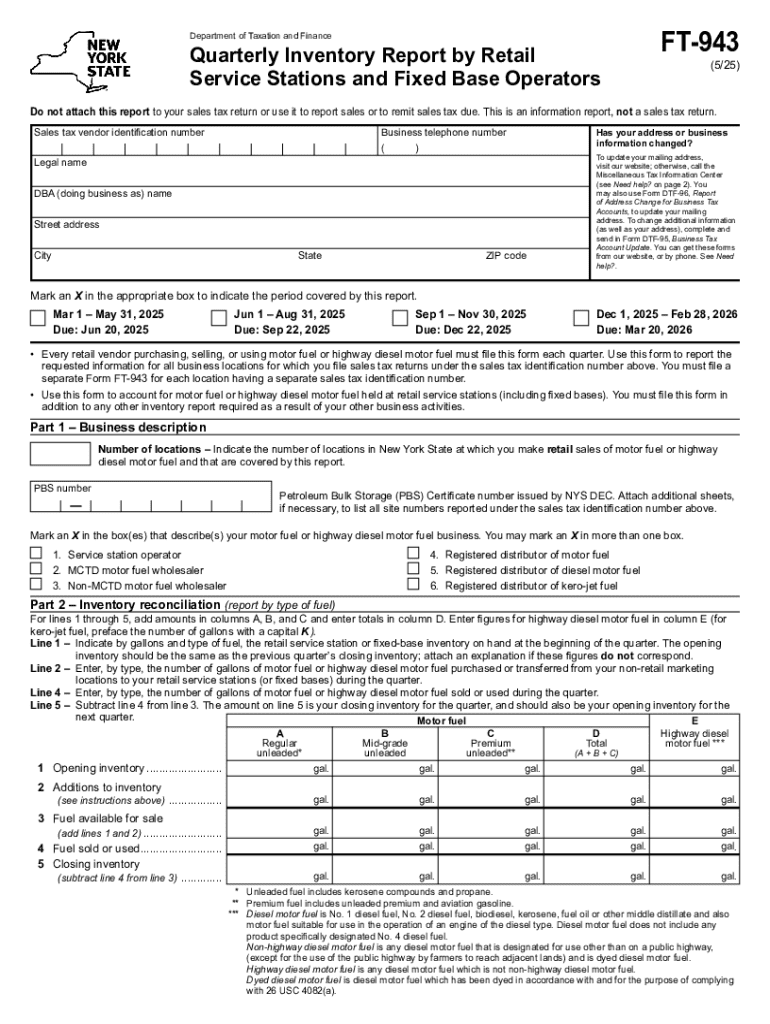
Form FT-943, also known as the Quarterly Inventory Report by Retail Service Stations and Fixed Base Operators Revised 5, is an essential document mandated by the New York State Department of Taxation and Finance. It is specifically designed for retail vendors involved in the sale of motor fuel and highway diesel fuel. The primary purpose of this report is to track and reconcile the inventory, purchases, and sales of fuel at each business location separately, ensuring accurate taxation and regulatory compliance.
Key Objectives of Form FT-943
- Inventory Tracking: Helps in monitoring fuel stock levels over a quarter.
- Reconciliation: Ensures the matching of purchase records with sales and inventory.
- Regulatory Compliance: Aids in adhering to state taxation laws.
How to Use Form FT-943
Utilizing Form FT-943 involves several steps, each crucial for the accuracy and compliance of your fuel business operations.
Step-by-Step Submission Process
- Gathering Data: Collect all relevant data for the reporting period, such as opening inventory, purchases, and sales.
- Input Details: Enter business identification details and inventory figures in the specified sections of the form.
- Review and Reconcile: Ensure all figures align, highlighting discrepancies for further review.
- Submission: Complete and submit the form as required, ensuring timely delivery to the New York State Department of Taxation and Finance.
Steps to Complete Form FT-943
Completing Form FT-943 accurately is essential for maintaining compliance with state regulations. Follow these steps for a comprehensive submission.
-
Business Identification
- Fill out your business name, address, and identification number.
- Specify the location of operations if your business has multiple outlets.
-
Inventory Reconciliation
- Begin with the opening inventory at the start of the quarter.
- Add total fuel purchases made during the period to calculate available stock.
-
Sales and Closing Inventory
- Record sales data, subtracting from total available stock to ascertain closing inventory.
- Verify that these numbers reconcile correctly against physical counts.
-
Supplier Information
- List details of all suppliers from whom purchases were made during the quarter.
- Include supplier names, addresses, and purchase amounts.
Important Terms Related to Form FT-943
Understanding critical terms related to the form enhances accuracy and compliance.
Essential Terminology
- Motor Fuel: Any fuel product used for operating engines in vehicles.
- Highway Diesel: Specialized diesel used in highway vehicles.
- Reconciliation: The process of ensuring recorded data matches actual stock and transactions.
- Supplier: Entities supplying fuel products for resale by retail vendors.
Legal Considerations for Form FT-943
Legal compliance is paramount when handling Form FT-943, as it pertains to regulated substances like motor fuels.
Compliance Requirements
- Ensure all reported figures meet standards set by the New York State Department of Taxation and Finance.
- Maintain thorough records for all entries to substantiate the reported data if audited.
Filing Deadlines and Important Dates
Staying mindful of deadlines is crucial in the submission of Form FT-943 to avoid penalties.
Key Dates
- Quarterly Deadlines: Form FT-943 must be filed after each fiscal quarter's end, with deadlines falling at the end of the month following each quarter.
- Penalty Implications: Failure to file on time can result in financial penalties, hindering your business operations.
Submission Methods for Form FT-943
Choose the suitable submission method to ensure timely delivery of your report.
Available Submission Options
- Online Filing: Submit electronically for quicker processing and confirmation.
- Mail Submission: Option available for those preferring traditional methods.
- In-Person: Directly submit to a local office if immediate confirmation is required.
Penalties for Non-Compliance
Neglecting the proper submission of Form FT-943 carries serious ramifications.
Potential Consequences
- Financial Penalties: Fines and interest may be imposed for late filing or inaccurate reporting.
- Legal Actions: Continued non-compliance could lead to stricter legal measures against the business.
- Operational Risks: A lapse in compliance can affect future business certifications and operator licenses.
Understanding the comprehensive nature of Form FT-943 and its correct usage ensures that retail vendors remain compliant with state regulations, avoiding potential penalties and maintaining smooth business operations.