






Definition & Meaning
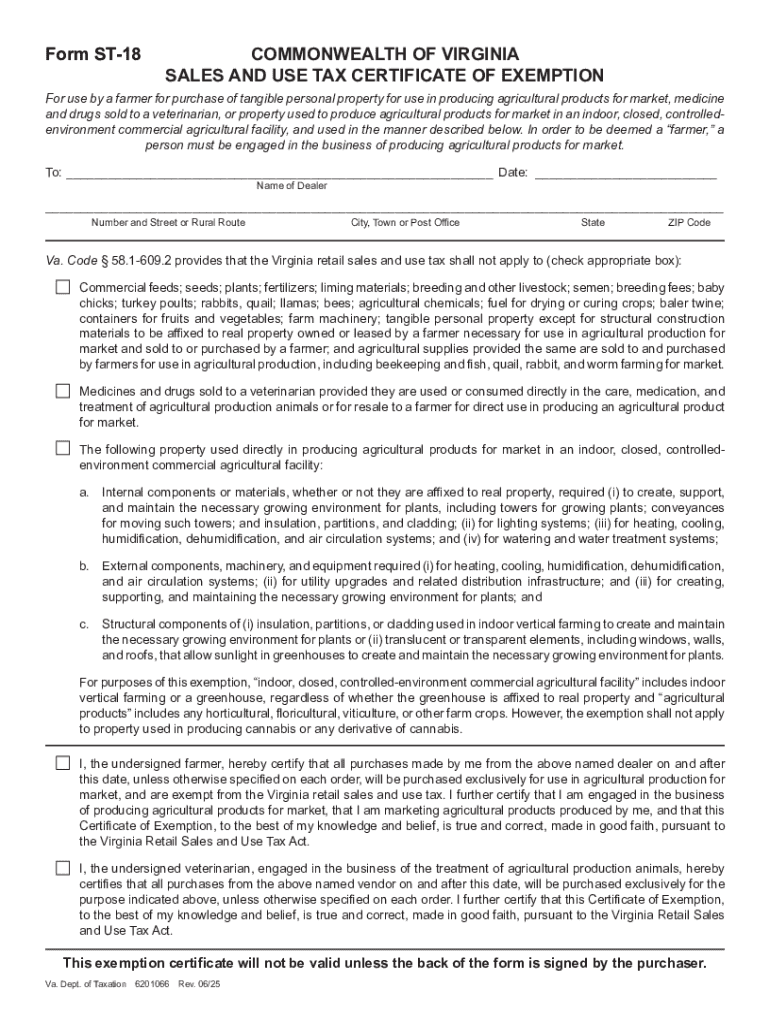
The Form ST-18, known as the Agricultural Sales Tax Exemption Certificate, is a crucial document used by farmers in the United States to purchase goods tax-free for agricultural production. This form serves as a certification that the buyer is exempt from sales tax on purchases of tangible personal property intended for use in farming operations. It's particularly beneficial for those in the agricultural sector as it reduces the cost of essential goods, enhancing profitability and sustainability.
How to Use the Form ST-18 - Agricultural Sales Tax Exemption Certificate
Using the Form ST-18 involves presenting it at the point of purchase to document the tax-exempt status. Buyers must ensure the form is accurately completed with details such as the name of the purchaser, description of the agricultural goods, and purpose of use in farming activities. Retailers will retain this document as proof of the tax-exempt transaction. It's important for buyers to confirm the eligibility of the items they are purchasing under the exemption to comply with state regulations and avoid potential liabilities.
How to Obtain the Form ST-18 - Agricultural Sales Tax Exemption Certificate
Obtaining the Form ST-18 can typically be done through the state's department of taxation or revenue. Many states offer downloadable versions of the form from their official websites. Farmers might need to provide proof of their agricultural operations, such as a tax ID number, before receiving the certificate. It's advisable to thoroughly review any instructions provided by the state to ensure compliance with the specific requirements for obtaining and maintaining the exemption status.
Steps to Complete the Form ST-18 - Agricultural Sales Tax Exemption Certificate
- Gather Necessary Information: Prepare all required information, including your business name, address, and tax identification numbers.
- Fill Out Purchaser Information: Enter details such as the name, address, and type of business operation.
- Describe Purchased Goods: Clearly list the items being purchased and their intended use in agricultural production.
- Sign and Date the Form: Ensure the certificate is signed and dated by an authorized representative of the farming operation.
- Provide to Vendor: Submit the completed Form ST-18 to your vendor at the time of purchase to validate your tax-exempt status.
Eligibility Criteria
Eligibility for using the Form ST-18 generally includes being actively engaged in farming activities with the intent to produce goods for market sale rather than personal consumption. Eligibility may extend to related industries, like certain veterinary services that directly support agricultural production. Each state may have unique criteria, so contacting the relevant state department or consulting with a tax professional is recommended to verify specific eligibility details.


Who Typically Uses the Form ST-18 - Agricultural Sales Tax Exemption Certificate
The primary users of Form ST-18 include farmers, ranchers, and others involved in agricultural production who require goods such as feed, seeds, fertilizers, and farm machinery. Additionally, veterinarians who support agricultural activities can also use this form if they meet the criteria defined by their state. This widespread application underpins the form's utility in supporting diverse agricultural entities by alleviating tax burdens.

Legal Use of the Form ST-18 - Agricultural Sales Tax Exemption Certificate
Legally, Form ST-18 must be used in strict accordance with state laws governing agricultural exemptions. Misuse can lead to penalties, including fines and loss of tax-exempt status. It's crucial for purchasers to ensure that all declarations made on the form are accurate and truthful. Retailers, too, must verify the legitimacy of the form before exempting sales. Compliance with all legal stipulations is essential to maintain the integrity of the tax exemption.
Key Elements of the Form ST-18 - Agricultural Sales Tax Exemption Certificate
- Purchaser Information: Includes the buyer's name, business identification number, and address.
- Certification Statement: Attests to the use of purchased items for qualified agricultural purposes.
- Description of Goods: Documents the specific items purchased and their use in farming.
- Signatures: Required from an authorized representative, affirming the validity of the exemption claim.
- State-specific Instructions: Offers guidance to both the buyer and vendor on the appropriate usage and retention of the form.
State-Specific Rules for the Form ST-18 - Agricultural Sales Tax Exemption Certificate
While the fundamental principles of the Form ST-18 are similar across states, specific rules may differ. Each state sets its own guidelines concerning what constitutes an exempt purchase. Some states may require additional documentation or registration, while others may have distinct lists of eligible items. It's vital for buyers to consult their state's administrative code or tax agency to understand local requirements and updates regarding agricultural sales tax exemptions.