






Definition and Purpose of IRS Form 940
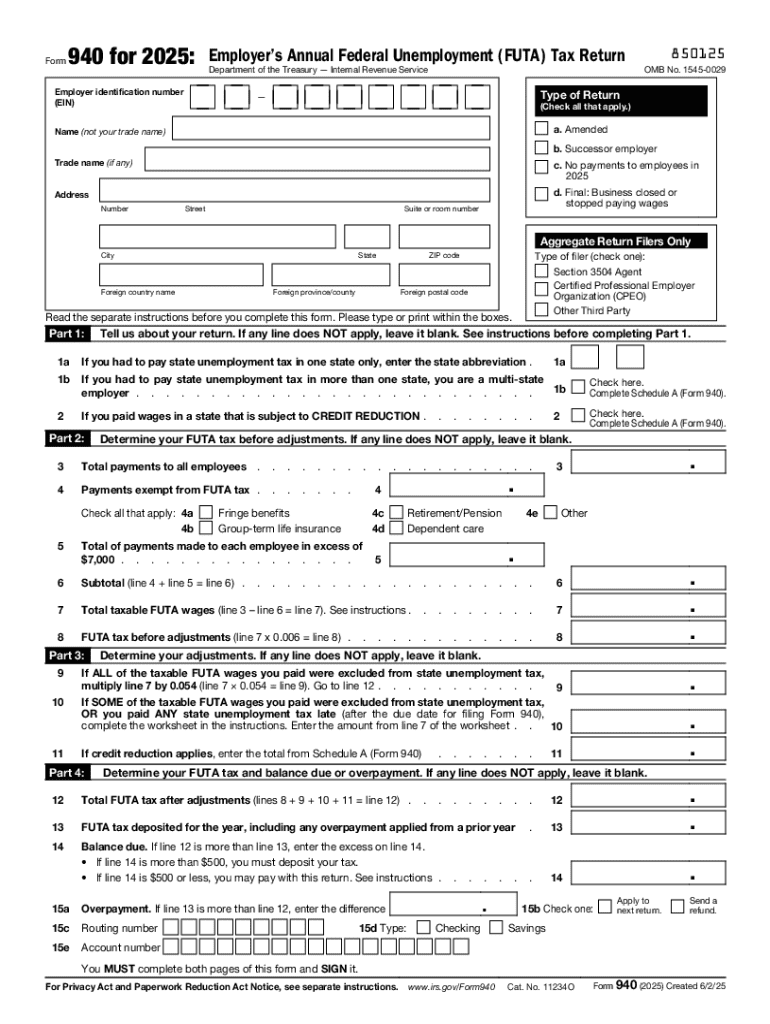
IRS Form 940, known as the Employer's Annual Federal Unemployment (FUTA) Tax Return, is a critical document used by employers in the United States to report their annual FUTA tax obligations. This form serves to outline the employer's liability in funding the federal unemployment compensation program, which provides temporary financial assistance to unemployed workers. The FUTA tax is separate from federal income tax and Social Security tax and is paid solely by employers. Its purpose is to ensure that unemployment benefits are available at both the federal and state levels.
Obtaining IRS Form 940
Employers can access IRS Form 940 through several channels. The form is available for free on the official IRS website, where it can be downloaded as a PDF. Employers who prefer a physical copy can request one from the IRS by phone or through mail. Additionally, many tax preparation software programs, such as TurboTax and QuickBooks, include the form as part of their offerings, allowing users to complete and file it electronically.
Steps to Complete IRS Form 940
Filing Form 940 requires careful attention to detail to ensure compliance with IRS guidelines. Here are the essential steps:
-
Gather Required Information:
- Employer Identification Number (EIN)
- Total annual payroll figures
- Any state unemployment tax amounts paid
-
Calculate FUTA Tax Liability:
- Consider the federal wage base limits and apply the applicable FUTA tax rate.
- Adjust for any state unemployment tax credits, if qualified.
-
Complete the Form:
- Fill in the personal and financial information sections accurately.
- Ensure all federal and state adjustment details are precisely calculated.
-
Review for Accuracy:
- Double-check all entries for tax calculations and identities.
- Confirm that reported amounts align with payroll records.
-
Submit the Form:
- File by the IRS deadline, usually at the end of January following the reporting year.
- Consider electronic submission for faster processing and confirmation.
Filing Deadlines and Important Dates
Employers should be mindful of key dates concerning Form 940 to avoid late-filing penalties. The form is due by January 31st for the prior calendar year; however, if an employer has made all required FUTA payments throughout the year by the January deadline, they may qualify for a ten-day extension. It is crucial to adhere to these deadlines to maintain compliance and avoid accruing fines or interest.
Penalties for Non-Compliance
Failure to file IRS Form 940, or inaccuracies within the form, can lead to significant penalties. Common issues that result in penalties include late filing, underpayment of FUTA taxes, and providing incorrect information. Penalties can comprise a percentage of the tax amount due, compounded daily until corrected, which underscores the importance of timely and accurate submissions.
Key Elements of IRS Form 940
Understanding the main components of Form 940 is essential for accurate completion:
- Employer Information: Includes the Employer Identification Number and legal entity details.
- Tax Computation: Covers details such as total payments to employees, exemptions, and state tax adjustments.
- Adjustments for State Unemployment: Allows employers to claim credits for state unemployment taxes, which can lower federal liability.
- Payment Voucher: The 940-V section is used if submitting payments by check or money order.
Digital vs. Paper Submission Options
Employers have multiple submission options for Form 940, each with specific advantages:
- Online Submission: Digital filing is faster and more efficient, reducing errors with built-in checks. Electronic receipts confirm submission.
- Paper Filing: Although acceptable, paper forms may encounter delays in processing time and lack the immediate confirmation of digital methods.
Software Compatibility for Form Preparation
Numerous tax preparation software programs streamline the Form 940 filing process, offering integrated assistance for calculations and submissions. Programs like TurboTax and QuickBooks effectively process and file Form 940, addressing errors and automatically calculating the tax obligations. These platforms offer user support and simplify compliance for businesses of all sizes.
Eligibility Criteria for Employers
Form 940 applies to all employers under specific conditions, particularly those who have paid wages of $1,500 or more in any calendar quarter, or who have employed one or more workers for at least part of a day for 20 weeks or more in a calendar year. Understanding these criteria helps firms determine their obligation to file and pay the FUTA tax.
This comprehensive approach ensures that employers understand both the requirements and procedures for the IRS Form 940, navigating tax responsibilities with precision while leveraging tools that simplify the process.