




Definition and Meaning
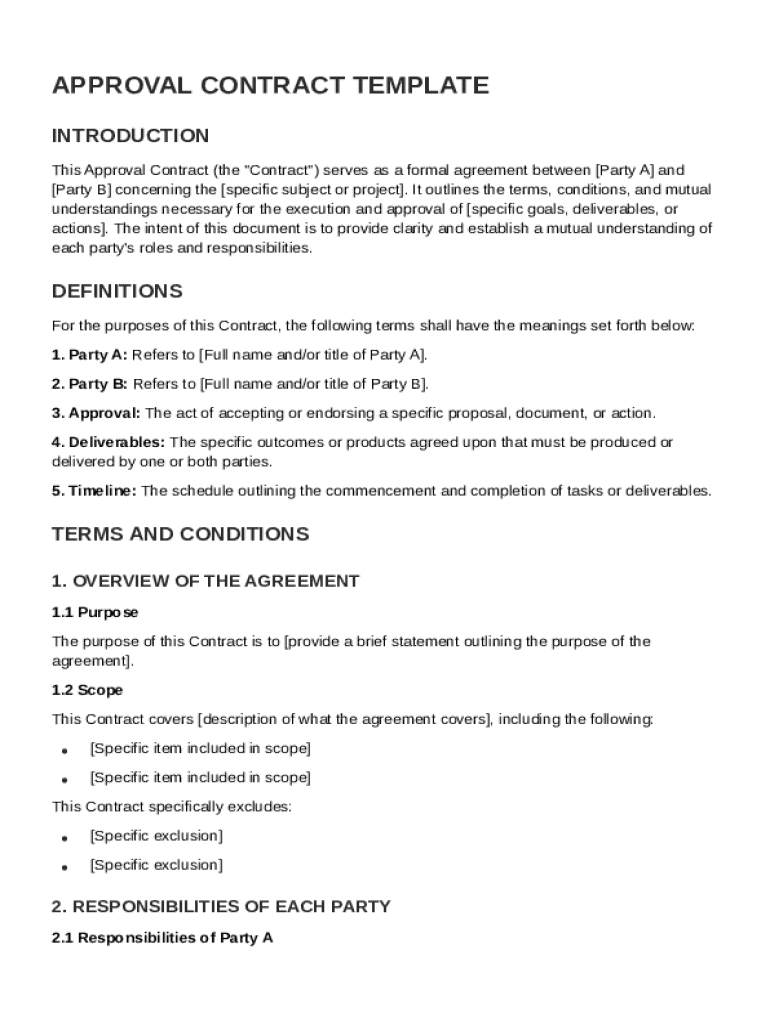
The Approval Contract Template is a formal legal document that establishes a clear agreement between two parties regarding specific obligations and activities. This template outlines the roles, responsibilities, and expectations of each party, ensuring mutual understanding and reducing the potential for conflicts. It covers essential aspects such as the scope of work, approval processes, confidentiality clauses, and conditions for amending or terminating the agreement. Employed widely across various industries, this template is crucial for projects requiring structured approval mechanisms and contractual clarity.
Key Elements of the Approval Contract Template
An Approval Contract Template includes several critical components, each serving a distinct purpose to facilitate a smooth contractual relationship. These elements typically involve:
- Scope of Work: Clearly defined tasks and objectives that the parties agree to accomplish.
- Approval Process: Step-by-step procedures for obtaining necessary approvals, including designated approvers and timelines.
- Confidentiality Clauses: Provisions to safeguard sensitive information shared among the parties involved.
- Amendment Procedures: Guidelines for modifying the contract terms, requiring mutual consent to maintain transparency.
- Termination Conditions: Circumstances under which the contract may be legally dissolved by either party.
These elements are integral to ensuring that all parties have a structured and comprehensive framework to follow throughout the course of their collaboration.
Steps to Complete the Approval Contract Template
Completing the Approval Contract Template involves meticulous attention to detail to ensure accuracy and compliance with relevant guidelines. Generally, the process includes:
- Identify Parties Involved: Specify the names and roles of the organizations or individuals entering the contract.
- Define Objectives: Clearly articulate the goals and deliverables agreed upon.
- Outline the Approval Process: Detail the method of obtaining approvals, including any necessary documentation or prior conditions.
- Draft Confidentiality Obligations: Specify the types of information that require protection and methods for safeguarding it.
- Agree on Amendment and Termination Rules: Establish clear procedures for amending the terms or terminating the contract and any associated penalties.
By following these steps systematically, users can ensure the agreement’s effectiveness and enforceability.
How to Use the Approval Contract Template
Using the Approval Contract Template involves several practical steps to ensure it is tailored to your specific requirements. Start by reviewing the template thoroughly to understand its structure and components. Next, customize the sections to reflect the particular context of your project, ensuring that the roles and responsibilities are clearly defined. Make adjustments to the approval process as necessary to align with organizational workflows. It is advisable to consult with legal counsel to verify that the filled template complies with relevant legal standards and effectively safeguards your interests.
Legal Use of the Approval Contract Template
The Approval Contract Template must be crafted and utilized in compliance with applicable laws to ensure it is legally binding. Adherence to the Electronic Signatures in Global and National Commerce (ESIGN) Act, for instance, is crucial if the document is executed electronically. Legal use also involves proper documentation of consent, adherence to confidentiality obligations, and ensuring that both parties have a clear understanding of the terms. It is essential to note that variations in state laws may require modifications to the template to ensure local compliance.
Important Terms Related to the Approval Contract Template
Familiarity with specific terminology is essential when working with an Approval Contract Template. Key terms include:
- Conditions Precedent: Stipulations that must be satisfied before certain elements of the contract become effective.
- Mutual Indemnification: Provisions where parties agree to compensate each other for potential losses or damages.
- Force Majeure: Clauses releasing parties from liability in the event of extraordinary events that prevent the fulfillment of contract obligations.
Understanding these terms helps in navigating the template effectively and ensures clarity throughout the contract lifecycle.
Examples of Using the Approval Contract Template
The Approval Contract Template finds application across various scenarios, including:
- Project Collaborations: Facilitating partnerships between companies undertaking joint ventures with clearly defined scopes and approval processes.
- Consulting Engagements: Providing a structured framework for consultants and clients to outline deliverables and payment terms clearly.
- Supplier Agreements: Offering a template for clients and suppliers to establish terms related to product deliveries, quality standards, and payment schedules.
These examples highlight the versatility and utility of the template in addressing diverse business needs.
Business Types That Benefit Most from the Approval Contract Template
Several business types can benefit from using the Approval Contract Template, particularly those that regularly engage in collaborative projects or require formal approval stages. These include:
- Construction Firms: For managing vendor relationships and project milestones.
- IT Companies: When implementing software projects that necessitate multiple approval levels.
- Marketing Agencies: Ensuring clarity in service agreements and campaign execution plans.
Leveraging this template ensures these businesses maintain robust documentation processes aligned with their operational requirements.